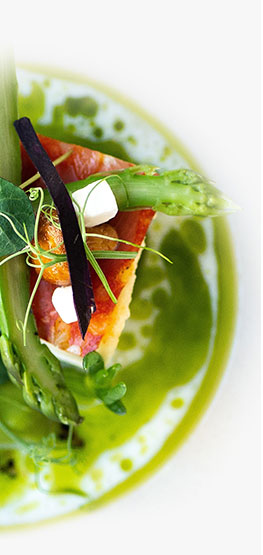
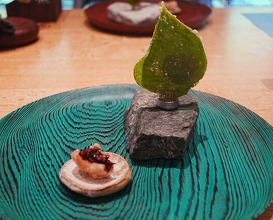
Located in Amano Village, Nara Prefecture, SÉN is a restaurant that opened in 2025 after renovating a traditional inn's banquet hall. The name comes from a single water "line" that flows from Amano to Kumano-nada. The restaurant promotes "watershed cuisine," which incorporates the entire region's nature, culture, and memories into its dishes. While the term local gastronomy is not uncommon today, this establishment goes beyond mere farm-to-table.Supporting this philosophy is Chef Toshiharu Sunayama. He honed his skills along the northern coast and in the Alpine regions of France, and upon returning to Japan, he pursued local gastronomy at a restaurant in Kanazawa. After reaching the pinnacle of his career, he moved to Amano Village, where his wife’s family resides. However, instead of opening a restaurant immediately, he dedicated the first two years to deeply understanding the land. The wild flavors of the coast, the culinary philosophy of the mountains, local expressions, and observations in Amano—all of these elements culminate in the watershed cuisine that flows from Amano to Kumano River and the sea.The meal begins with a moment by the river. Enjoying "Kuro Moji Tea" and "Imobota" while listening to the sound of the flowing water serves as an introduction to this restaurant's world. The local dish, beloved in Amano, is grilled to a crisp like hash browns, infused with the aroma of firewood and a perfect touch of salt. It’s astonishing how such simple food can be elevated to this level. You’ll find yourself wanting another.Now, let’s move to our seats and enjoy the watershed cuisine."Bōshu"Tempura of kudzu leaves and a bite of Ugui. The kudzu leaves express droplets as if wet from rain, with fava beans inside. The chewy texture and fresh green aroma spread out. While Ugui can have a strong odor downstream, the upstream variety is remarkably pure. Freshly caught, it is layered with smoked beets, plum vinegar, and burnt butter, enveloping the wild flavors with smokiness and acidity. This dish serves as an introduction that encapsulates the early summer mountains and rivers on a plate."Iwana"Sashimi-style farmed Iwana. Paired with a puree of Yamato Tachibana, wasabi leaves, and a gel of Udo. The clear umami is complemented by the citrus's slight bitterness and the refreshing taste of wild vegetables, leaving a lingering freshness. This dish elegantly highlights the charm of clear stream fish."Nijimasu"Rainbow trout, infused with the aroma of firewood and smoke, is wrapped in lettuce with blackened Managiri peppers and pickled red onions. Udo mayonnaise and lemon vinegar foam connect the elements, creating a harmonious blend of smokiness, bitterness, acidity, and freshness in each bite."Koi"Natural koi from Amano is transformed into a mousse with bones, presented in a classic quenelle style. Wrapped in spinach and paired with a sauce of new onions and nut oil. Accompanied by spring wild vegetables like kogomi and momiji-gasa, this dish elevates the robust river fish using French techniques while still conveying the essence of the mountains."Kamitsugi"A dish using the famous Miwa somen from Nara. Combined with a puree of Japanese radish and cured fish roe, topped with toasted rice foam. It flows smoothly into the stomach like nagashi somen, followed by the richness of the fish roe and the aroma of rice. Finally, a sprinkle of sansho powder tightens the aftertaste."Amanogawa"Grilled Amago over firewood, served with snap peas, sugar snap peas, and fresh pea fricassée. A sauce made from butterbur buds adds a touch of spring bitterness, while white clover adds a gentle color. The refined umami of the clear stream fish is complemented by the juicy sweetness of the beans. This dish captures the moment as the season transitions from spring to early summer."Ayuu"The ayu is filleted, with black garlic, yellowfin tuna, and sautéed liver tucked inside, then tied with black moji and grilled to perfection. The head and bones are made into crackers and served alongside, allowing you to enjoy the ayu in its entirety—flesh, liver, and bones. The three-dimensional presentation using black moji branches is also striking. The slight bitterness of the liver, the richness of black garlic, and the refreshing notes of hassaku and jabara come together to convey the charm of this fragrant fish."Okuyoshino Shika"Tenderloin on the right, heart on the left. The tenderloin is moist and soft, while the heart has a bouncy texture, releasing iron-rich umami with each bite. Paired with a sauce made from deer broth, thinly sliced zucchini represents the mountains, and a foam of burnt butter symbolizes the clouds. Accompanied by pickled bracken and nuts, this dish layers the wildness of the deer with the scenery of Okuyoshino."Peach"A dish centered around peach concassé and sorbet, garnished with new shoots of nut pine and candy art. The juicy sweetness is subtly enhanced by the green aroma of nut pine, tightening the aftertaste. This dessert elegantly showcases the allure of the fruit."Yomogi"A layered dessert of almond tofu, yomogi jelly and foam, and sakura mousse. The green aroma of yomogi, the sweetness of sakura, and the toastiness of brown sugar tuile come together harmoniously. The finishing touch of yomogi tempura leaves a slightly bitter aftertaste.The term "watershed cuisine," which may sound unfamiliar, naturally resonates with each successive dish. River fish, wild vegetables, game, and wild herbs—none of these are merely ingredients; they become words that tell the story of this land. The two years spent understanding the land are imbued in each dish, eloquently conveying the essence of Amano. There is a reason to make the journey to Amano Village. It was a great meal.
We use cookies on this site to enhance your user experience.