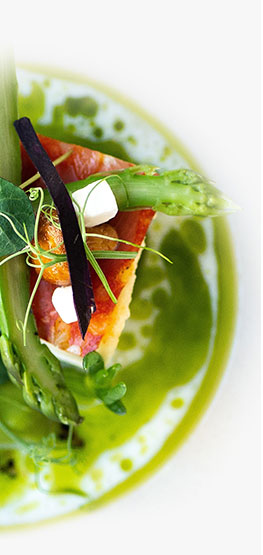
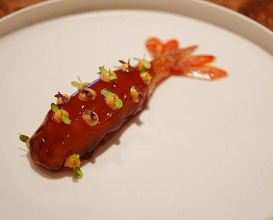
Nestled in the rural landscape of Sanjo City, Niigata, lies "RESTAURANT UOZEN." It all began in 2013 when Chef Kazuhiro Inoue, who had been working in Tokyo, moved to Sanjo, his wife's hometown. He inherited the building and name of his wife's family-run Japanese restaurant "Uozen" and embarked on a new journey as a French restaurant. The name "Uozen," written in Katakana, reflects their intention to honor family history while evolving their cuisine. At the core of their philosophy is the essence of the mountains, rivers, and sea, and the life that exists within them. The culinary journey starts not in the kitchen, but in the natural surroundings of Niigata. They venture into the mountains, rivers, and seas, cultivating the land. And beyond simply "receiving life," they ensure nothing goes to waste. This encapsulates what "UOZEN" is all about.As you progress through the course, it becomes clear that this philosophy is not just an ideal. Wild boar and Asian black bear are transformed into salami and sausages, even becoming part of the broth. The seafood from Sado, such as sweet shrimp and rock oysters, is complemented by mountain and field treasures like egg mushrooms, fragrant mushrooms, butterbur shoots, and eggplants. Moreover, they don’t just present local ingredients; through French techniques like bouillabaisse, pâté en croûte, and sabayon, they create a distinctly Niigata flavor profile. The game meat is refined not by overpowering strength but by enhancing the sweetness of the fat and the clarity of the broth. Looking back after the meal, you realize that the mountains, rivers, and sea are all interconnected within a single course.The experience begins with "Four Amuse-Bouches." The first dish features fish caught by the chef himself in Sado, prepared as tartare and wrapped in wild leaves. The earthy, green aroma intertwines with the fish's umami, seamlessly connecting the "sea" and "field" in one bite. The cotton candy corn ice cream from Sanjo highlights the natural sweetness of the ingredient, balanced with the bitterness of coffee. Next is homemade salami made from wild boar and Asian black bear, where the richness of aged meat pairs beautifully with the fresh sweetness of morning-harvested edamame. The "Game Meat Corn Dog" served with black garlic sauce adds a playful twist, stuffing familiar shapes with wild game. The essence of the sea, field, and mountain is captured in these four small plates, clearly presenting the theme of the course from the start.Next is the signature dish, "Bouillabaisse with Sado Sweet Shrimp." Fresh sweet shrimp is wrapped in a sheet of consomme that concentrates the shrimp's umami, layered with nuances of rouille and saffron. This dish preserves the allure of the sweet shrimp while reconstructing the flavors into a bouillabaisse. It maintains the textures and rich sweetness born from respect for the ingredients, making it a perfect representation of the restaurant."Kijihata with Wild Boar and Fruit Tomato" connects the flavors of the sea and mountain on the same plate. The delicate and refined kijihata is layered with wild boar belly ham, enhanced by a fruit tomato gazpacho that adds sweetness and acidity. The wild boar ham does not dominate as a meat dish but functions more like a seasoning, imparting saltiness and richness to the fish. The "Iwana Galette with Egg Mushroom" features the nutty aroma of buckwheat combined with iwana, wasabi leaves, water celery, egg mushrooms, and iwana roe, all brought together with sabayon and sansho. The richness of the river fish fat, the freshness of the mountain vegetables, and the aroma of mushrooms rise in succession, creating a sensation of eating both river and mountain.The "Pâté en Croûte" is a classic dish that encases multiple game meats. Centered around the robust umami of the meat, summer vegetables like purple sweet potato, okra, and eggplant are scattered, while the sweet and sour notes of plums and American cherries lighten the dish. In contrast, the "Rock Oyster" is briefly cooked in a high-temperature stone oven, leaving the center semi-raw. Originally known as "sea milk," the rock oyster is further enhanced with a creamy sauce, essentially multiplying the essence of the sea milk. Pickles made from butterbur shoots, fermented tomatoes, and fennel flowers and seeds introduce bitterness, acidity, and aroma, creating a well-rounded richness. Additionally, the "Candy Apple Eggplant" is a dish that embodies Sanjo's identity as an eggplant kingdom. The round eggplant is charred in the stone oven, leaving a smoky exterior and a sweet, creamy interior. Despite the different ingredients of meat, seafood, and vegetables, each showcases the strength of Niigata's land."Asian Black Bear and Soft-Shelled Turtle" features soft-shelled turtle broth layered with Asian black bear. Rather than the wildness one might expect from the name, the standout impression is the clarity of the broth and the sweetness of the fat. By layering the umami of different lives, the dish lands on a beautifully clear flavor. The main dish, "Wild Boar with Sweet Long Pepper," utilizes both the meat and heart, with the sauce made from wild boar broth. The rich aroma of fragrant mushrooms enhances the dish, while the freshness and spice of the sweet long pepper add depth to the intense umami. Rather than relying solely on the strength of the game, the dish draws out the allure of the entire animal, including its broth and aroma.Dessert begins with "Melon Water Yokan." The refreshing sweetness is accented with lime's acidity, smoothly transitioning from the meat dishes. The "Oishi Plum and Milk Gelato" combines the sweet and sour notes of the plum with the acidity of rhubarb, finishing with a caramelized surface reminiscent of crème brûlée. Next to it is milk gelato, which balances the fruit's acidity and the burnt notes with the creaminess of the milk, resulting in a well-defined dessert.The charm of "RESTAURANT UOZEN" lies not just in using local ingredients but in how they engage with the life of the land through their cooking. They harvest, fish, forage, cultivate, and utilize everything. By layering French culinary techniques, the mountains, rivers, and sea of Niigata come together as a cohesive course. There are plenty of reasons to visit Sanjo just to experience this cuisine. It was a great meal.
We use cookies on this site to enhance your user experience.