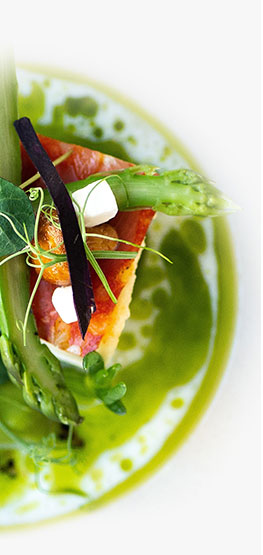
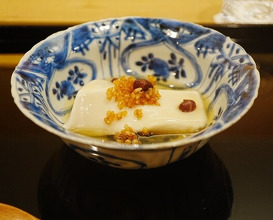
Nestled in a quiet alley in Fukushima, Osaka, "SAWADA" opened its doors in July 2023 and has quickly become a focal point in the Japanese culinary scene. Now, food enthusiasts from not only Osaka but across the nation are eager to secure reservations. The owner, Toshiyuki Sawada, honed his skills at the renowned Japanese restaurant "Ginza Shinohara." While he inherits the ability to showcase the seasons and entertain guests from his mentor, Takeshi Shinohara, his dishes are far from mere imitations. Sawada's cuisine embodies a quieter, deeper concentration.If I were to sum up the charm of "SAWADA" in one word, it would be a reverence for ingredients and dashi (broth). Instead of relying on seasonings to define flavor, the focus is on how to elevate the inherent umami of the ingredients from various angles. Each decision on how to layer the dashi, how to resonate its flavors, and where to draw the line reflects the chef's intent. This is not a dish that appears luxurious through mere addition; nor is it simply a subtraction of elements. It is a cuisine that places what is necessary in the right places, guiding the dish to a state where the voice of the ingredients can be heard most clearly.The theme of this menu is "sourness." In June, when humidity rises and heat creeps in, sourness feels refreshing. The long-standing use of ume (plum) for summer health management likely stems from this natural craving for flavor during this season. It cuts through fat, enhances the dashi, and leaves a refreshing aftertaste. This sourness is not emphasized for its own sake, but rather to harmonize with the season."Minazuki Goma Tofu" is a dish inspired by the June wagashi (Japanese sweets) "Minazuki." In an era when common people could not enjoy ice, this dish elevates the symbol of that longing into a culinary form. Made solely from rice, sesame, water, and kombu, the goma tofu is astonishingly smooth and rich in flavor. The accompanying adzuki beans symbolize the warding off of evil spirits, while the aroma and texture of fried rice add depth to this subtle dish."Mizunasu" (water eggplant) is a dish featuring the famous Senshu water eggplant, fried and paired with myoga (Japanese ginger) and young ginger. By frying the water eggplant, which is often eaten raw, its sweetness and umami are accentuated. The fragrance of myoga and young ginger intertwines, creating a refreshing and juicy dish that heralds the arrival of summer.The "Owan" (soup) features hamo (pike eel) from Awaji Island, winter melon, and okawakame (seaweed). Given the concept, the dashi is the core of the restaurant. Thus, the persuasive power of this bowl is remarkable. While you can sense the umami and sweetness of the ingredients, what stands out is the deliciousness of the dashi itself. Instead of shaping the dish with seasonings, it is the depth of the dashi that gives the dish its identity. This bowl conveys the philosophy of "SAWADA" in a single bite.In the sashimi, the theme of sourness becomes even more pronounced. The "Sashimi of Tachiuo" (beltfish) is served with dashi soy sauce and a foam of roasted sake. The presentation evokes the rain clouds of the rainy season, leaving a strong impression. The sourness from the ume not only cuts through the fat of the tachiuo but also lingers with the essence of June's atmosphere. Furthermore, the "Aburi Tachiuo" (seared beltfish) adds a roasted aroma, highlighting the contrast with the sourness. The "Kohada" (young gizzard shad) allows one to enjoy the balance of sourness and fat at the end. Even though we refer to sourness in a single bite, its expression varies with each fish.The following "Hassun" (appetizer platter) is also memorable. Mozuku (seaweed) is not served as a vinegared dish but rather blanched in umeboshi (pickled plum) dashi. Sweetly simmered green ume, edamame, Akashi octopus, Kishu duck dumplings, and new potatoes are arranged in a style reminiscent of potato butter. Each item is presented without excessive seasoning, allowing the individuality of the ingredients to shine through. Here too, sourness and dashi quietly depict the essence of June.The highlight of the day is the "Unagi no Inro-yaki" (grilled eel). The exterior is astonishingly crispy. The moment you bite into it, a delightful crunch is followed by the rich spread of eel fat. The addition of wood leaf vinegar brings a refreshing touch, while red pepper and salt define the flavor profile. The strength of the eel and the use of sourness are beautifully balanced. This dish completely captivated me.The philosophy of dashi reaches its peak with the "Ayuu" (sweetfish). The approach of intentionally using sweetfish to make niboshi (dried fish) for dashi is intriguing. While the traditional method is to enjoy the aroma through salt-grilling, this dish transforms the umami of the sweetfish into dashi. The deliciousness of the dashi is overwhelming, with seasonings used only to fine-tune the flavor. The star is undoubtedly the dashi made from the sweetfish. By pairing it with yuzu vinegar, the unique aroma and refreshing quality of river fish rise to the forefront. This bowl expresses the charm of the sweetfish not through its flesh, but through its dashi.The meal begins with "Nihibana" (freshly cooked rice). It showcases the moment when freshly cooked rice shines the brightest. Next, it unfolds into side dishes like "Tuna Namero" (minced tuna) and "Tsukemono" (pickled vegetables), followed by "Jako and Hanashanpo" (dried young sardines with Japanese pepper). The flow of gradually layering aromas and umami while keeping rice as the main focus is beautiful. Finally, it concludes with "Ayuu Somen" (sweetfish somen). Here too, the presence of the sweetfish is intense. Utilizing oil made from sweetfish niboshi, it connects the umami expressed through dashi to the refreshing somen. The aftertaste of the sweetfish lingers until the very end.Finally, we return to June with "Kakigori" (shaved ice). The sweet bean paste made from lily bulbs is shaped like tofu, concluding with a design that mimics ice. This composition resonates with the initial "Minazuki Goma Tofu," beautifully completing the theme of June.The cuisine at "SAWADA" embodies a strong will. It challenges how vividly the umami of ingredients and dashi can be brought to life without relying on seasonings. By layering the inevitable sourness of the season, it successfully lands as a June kaiseki (traditional multi-course meal). Rather than tasting sourness, it allows one to feel the season through sourness. Though the dishes are quiet, they leave a strong impression in memory. It was a night that reminded me of the profound depth of Japanese cuisine. It was a great meal.
We use cookies on this site to enhance your user experience.