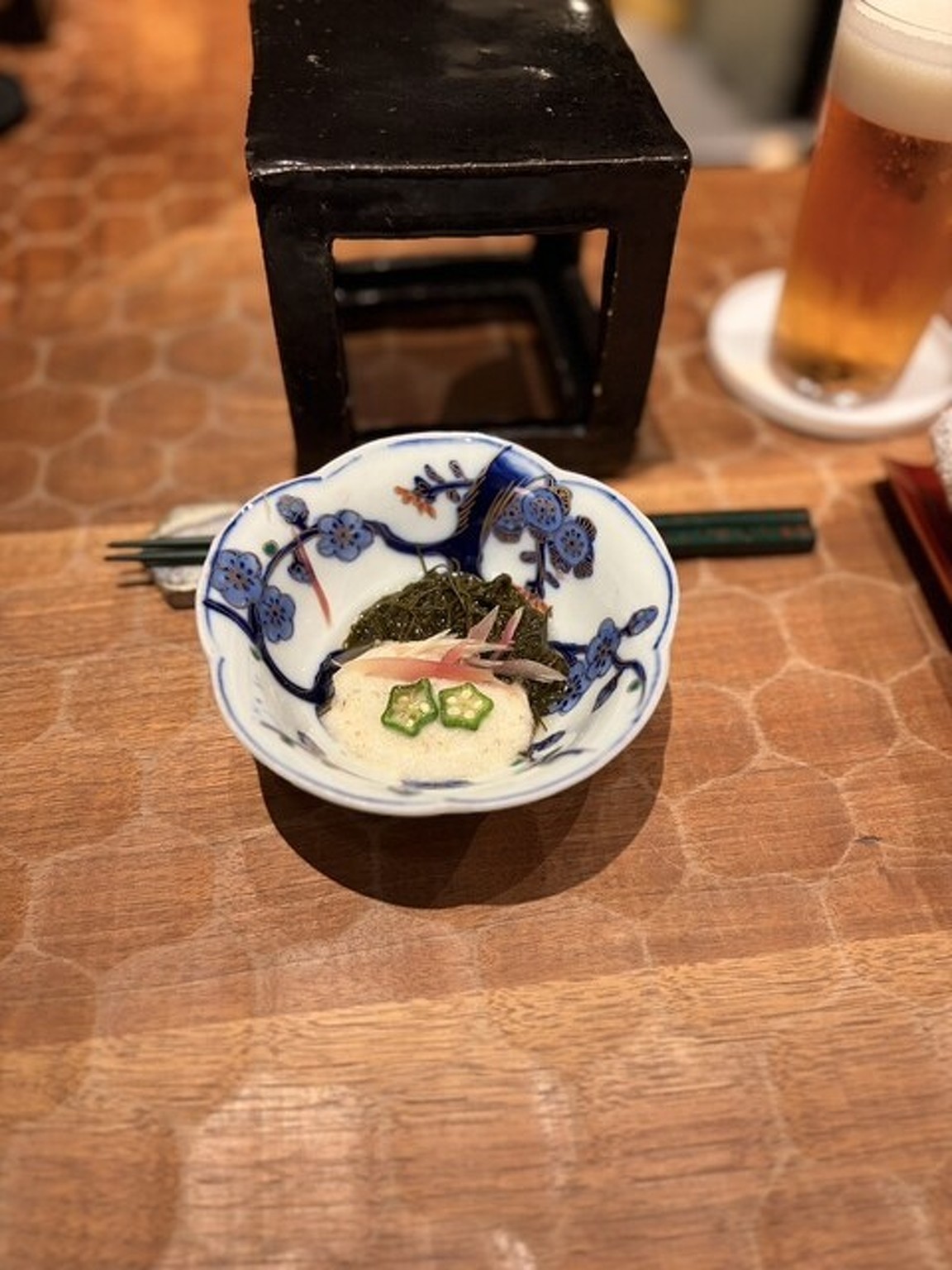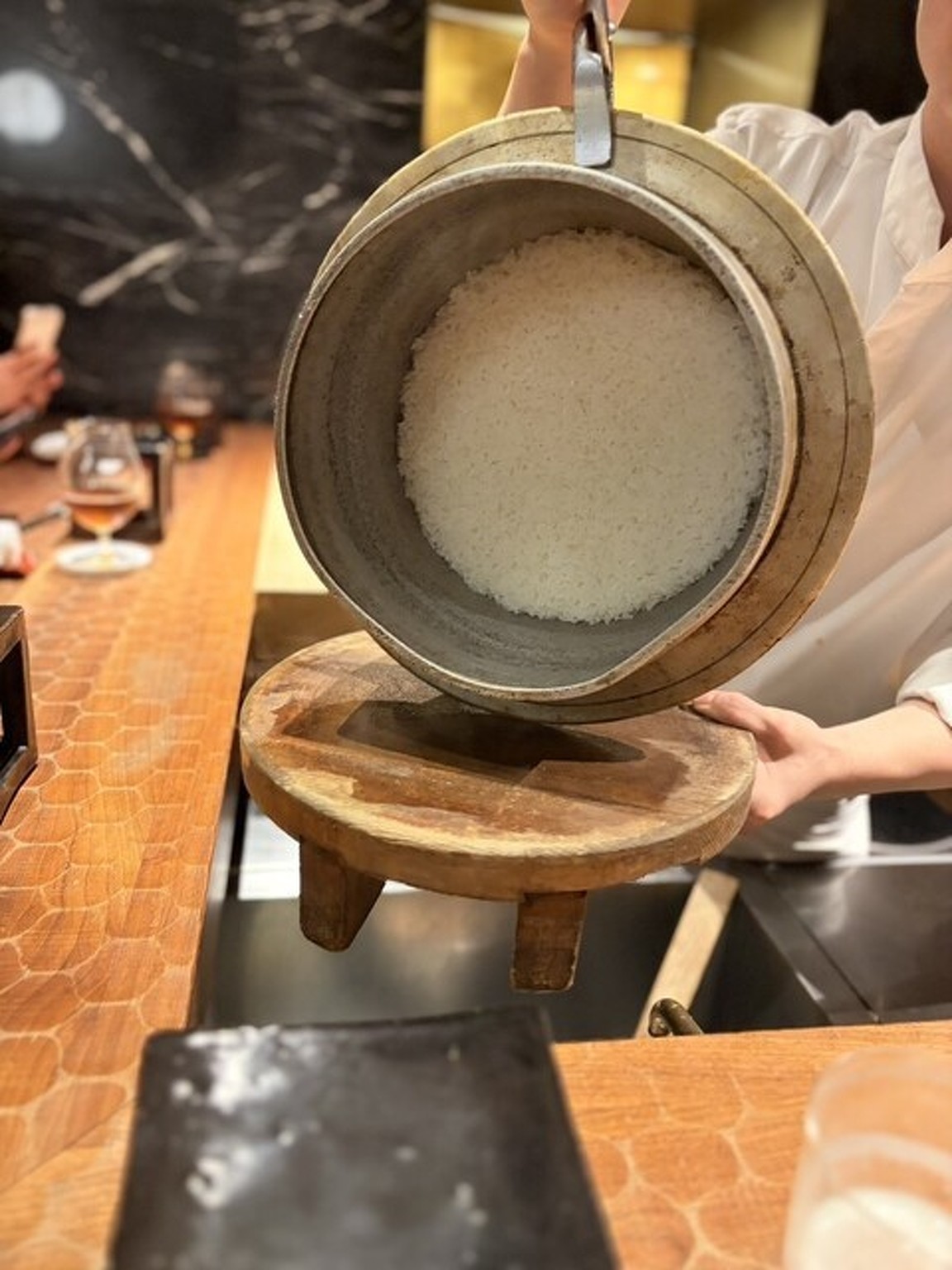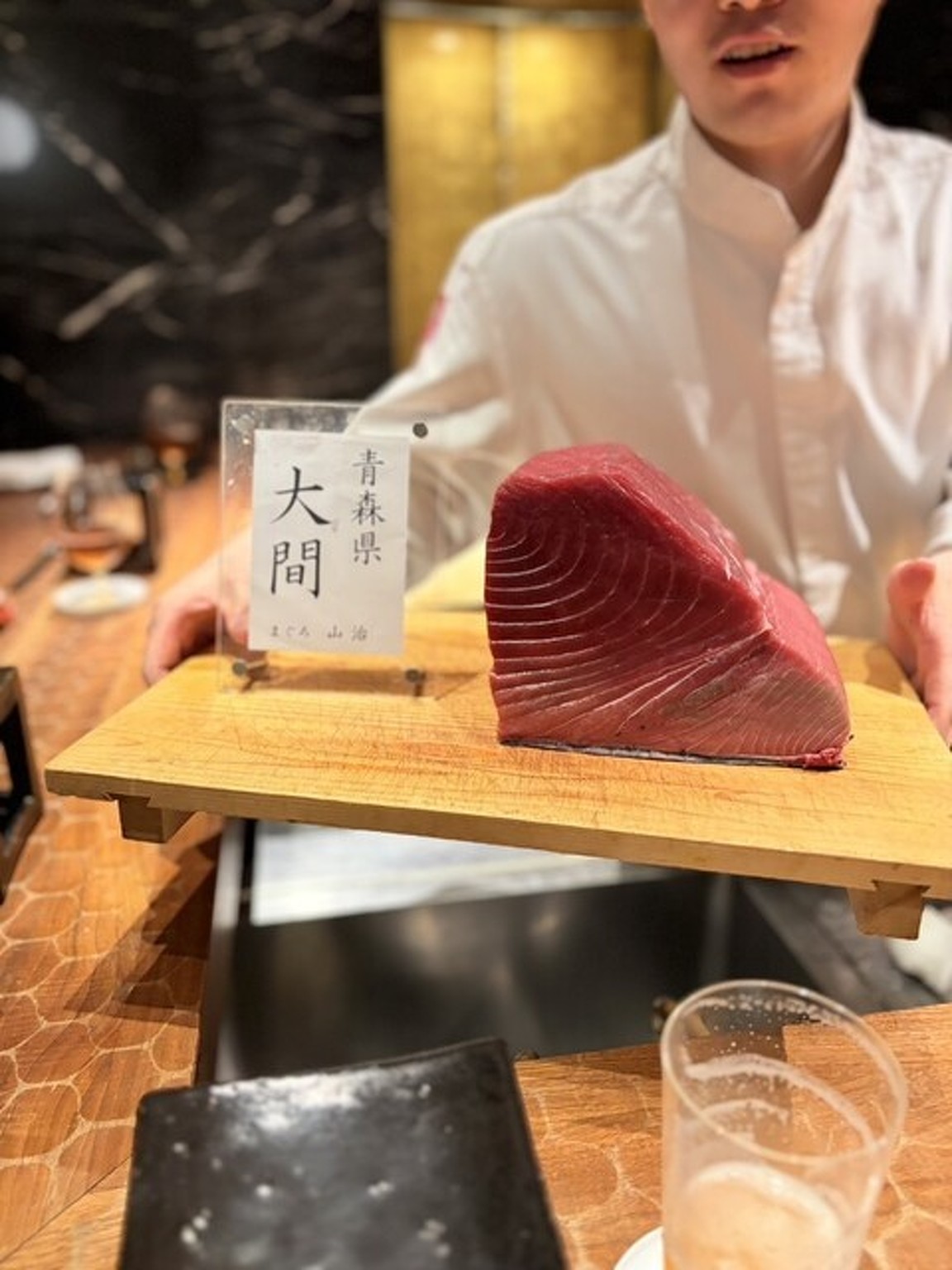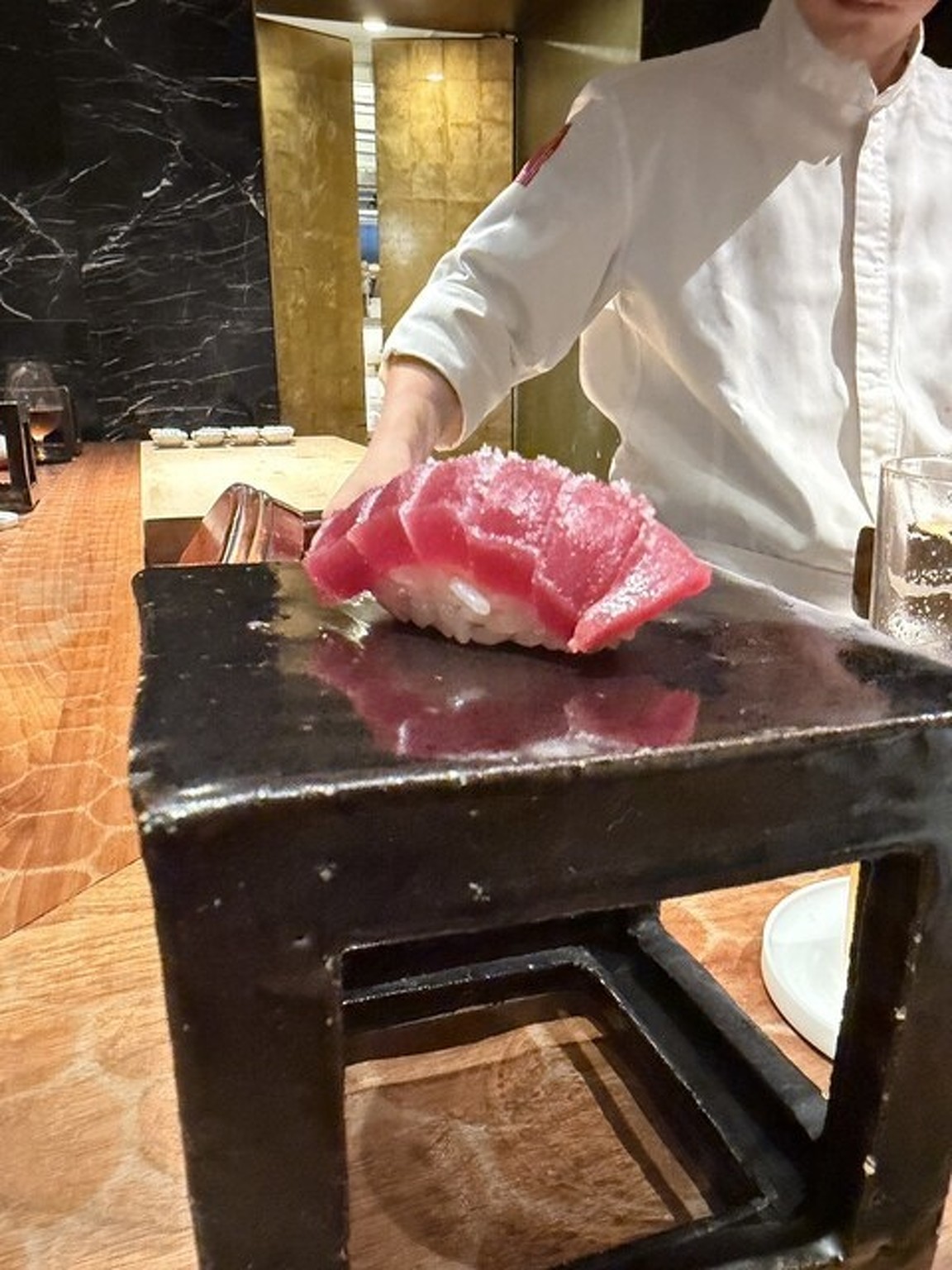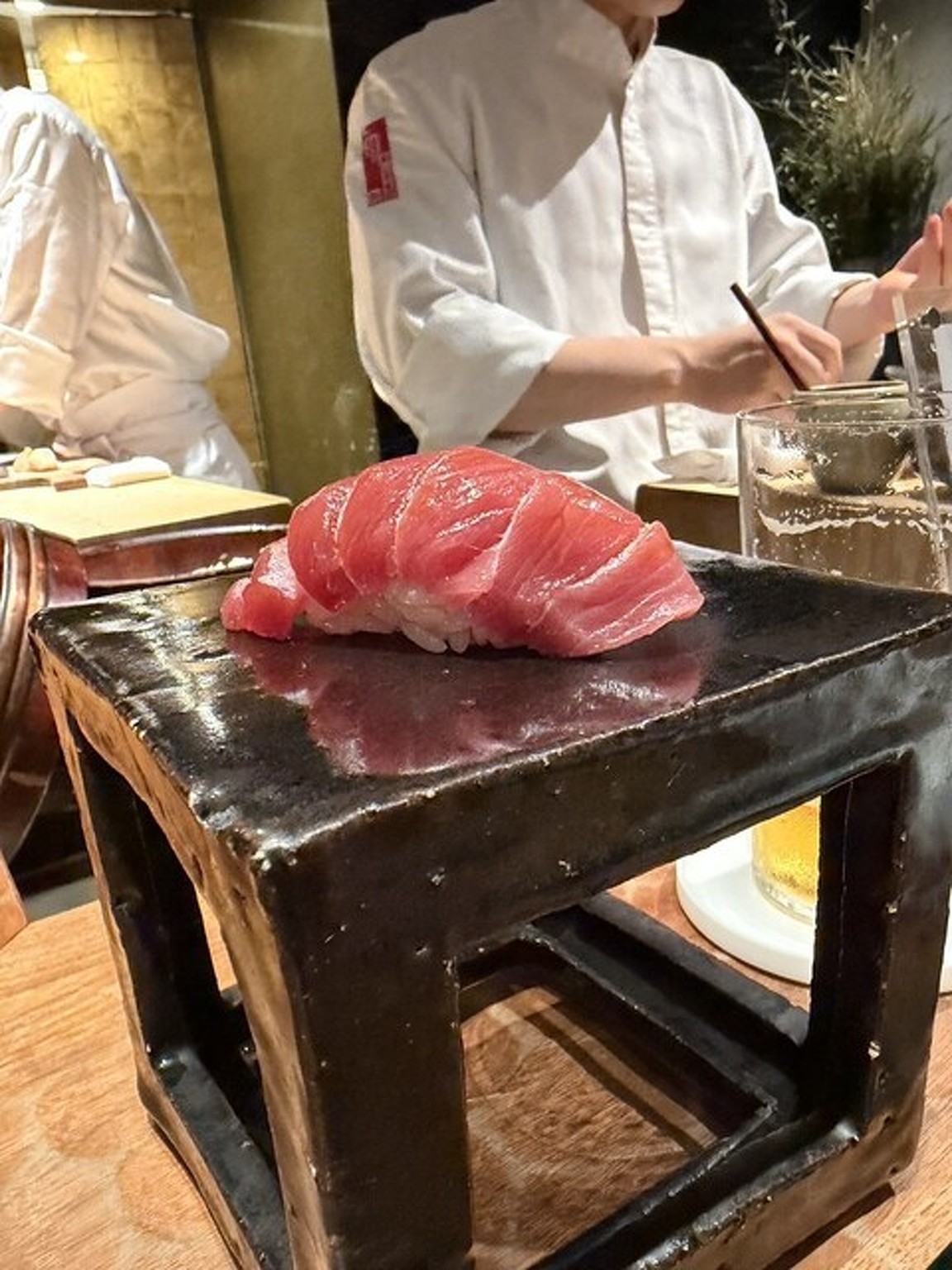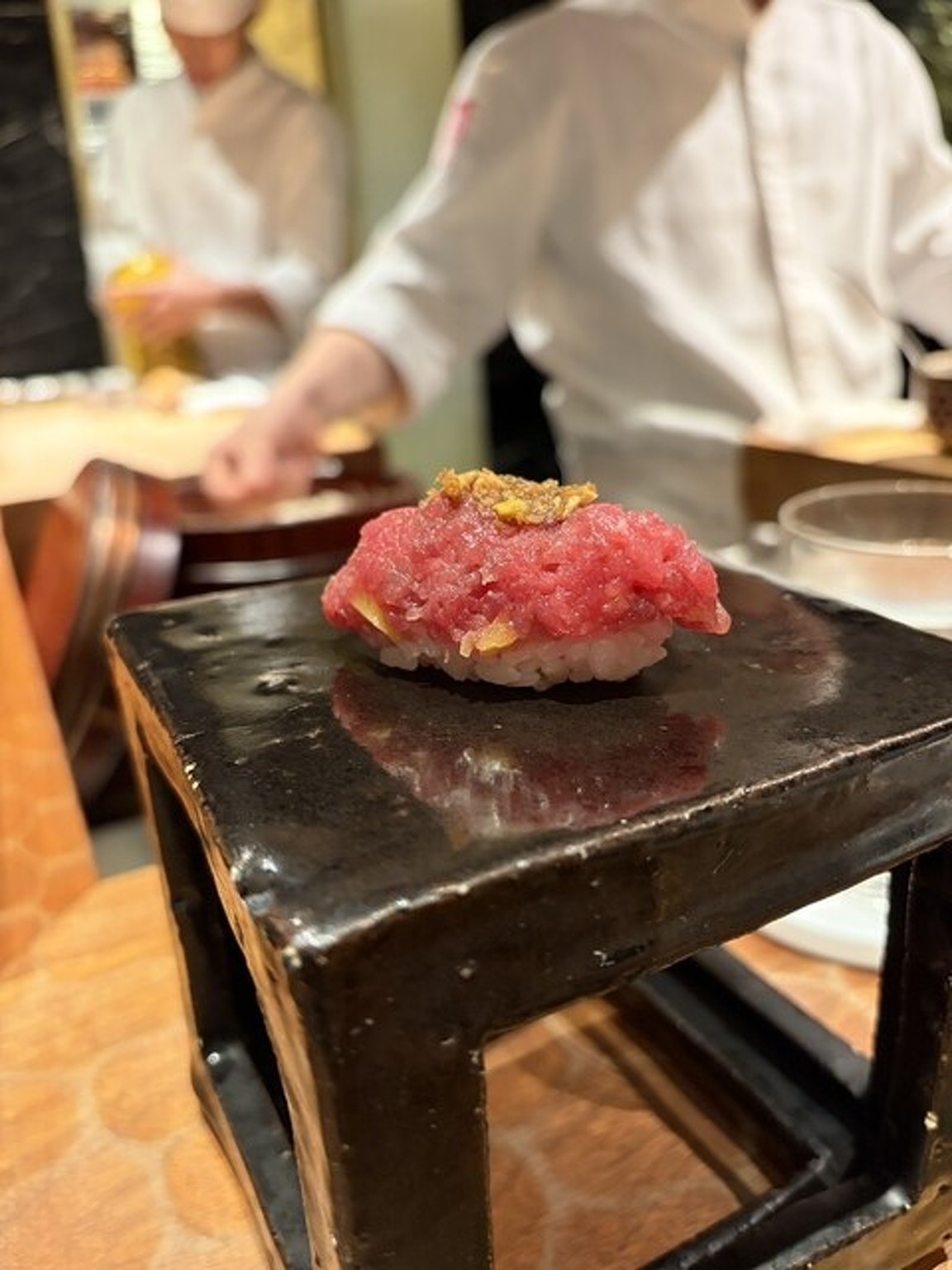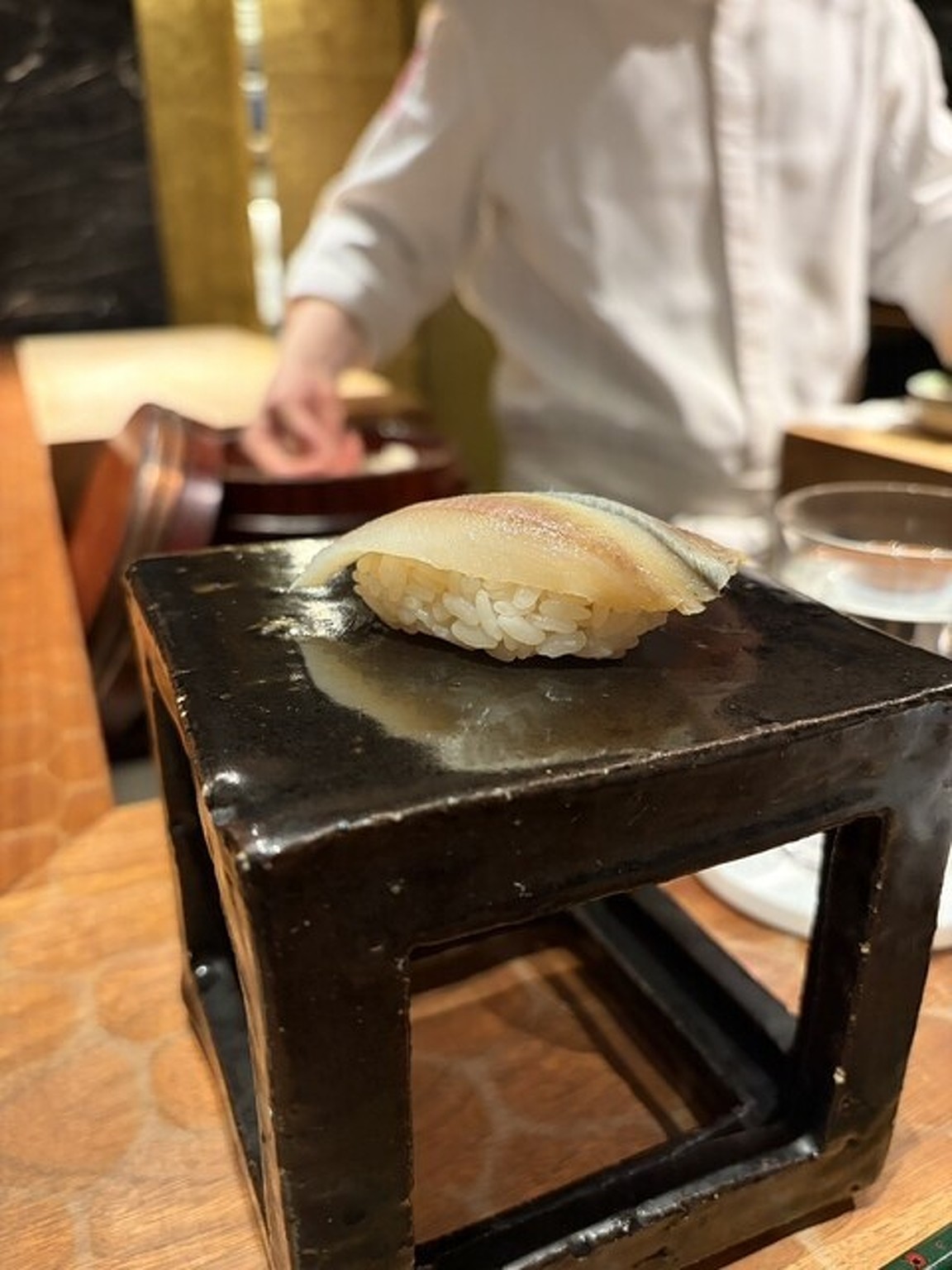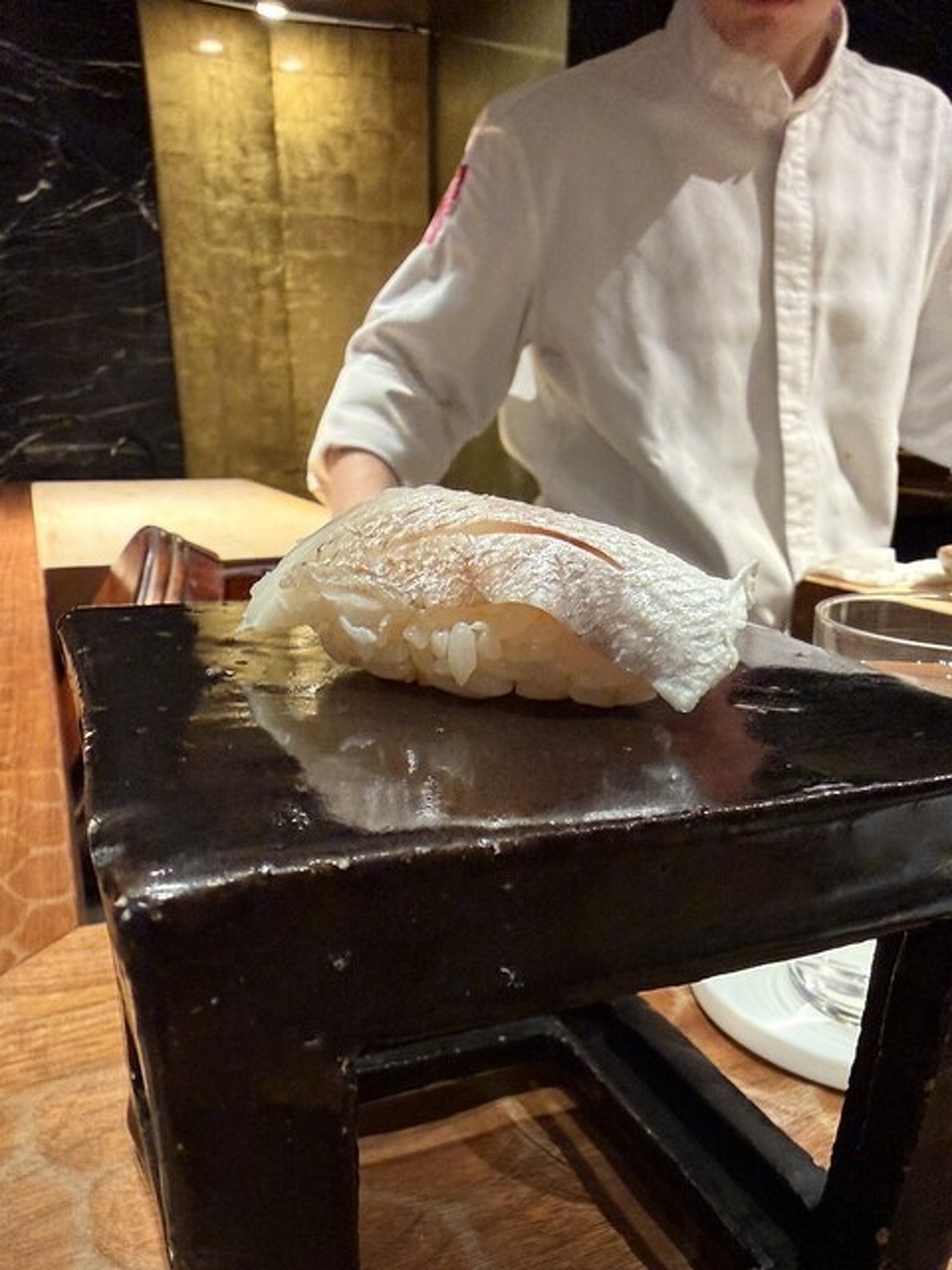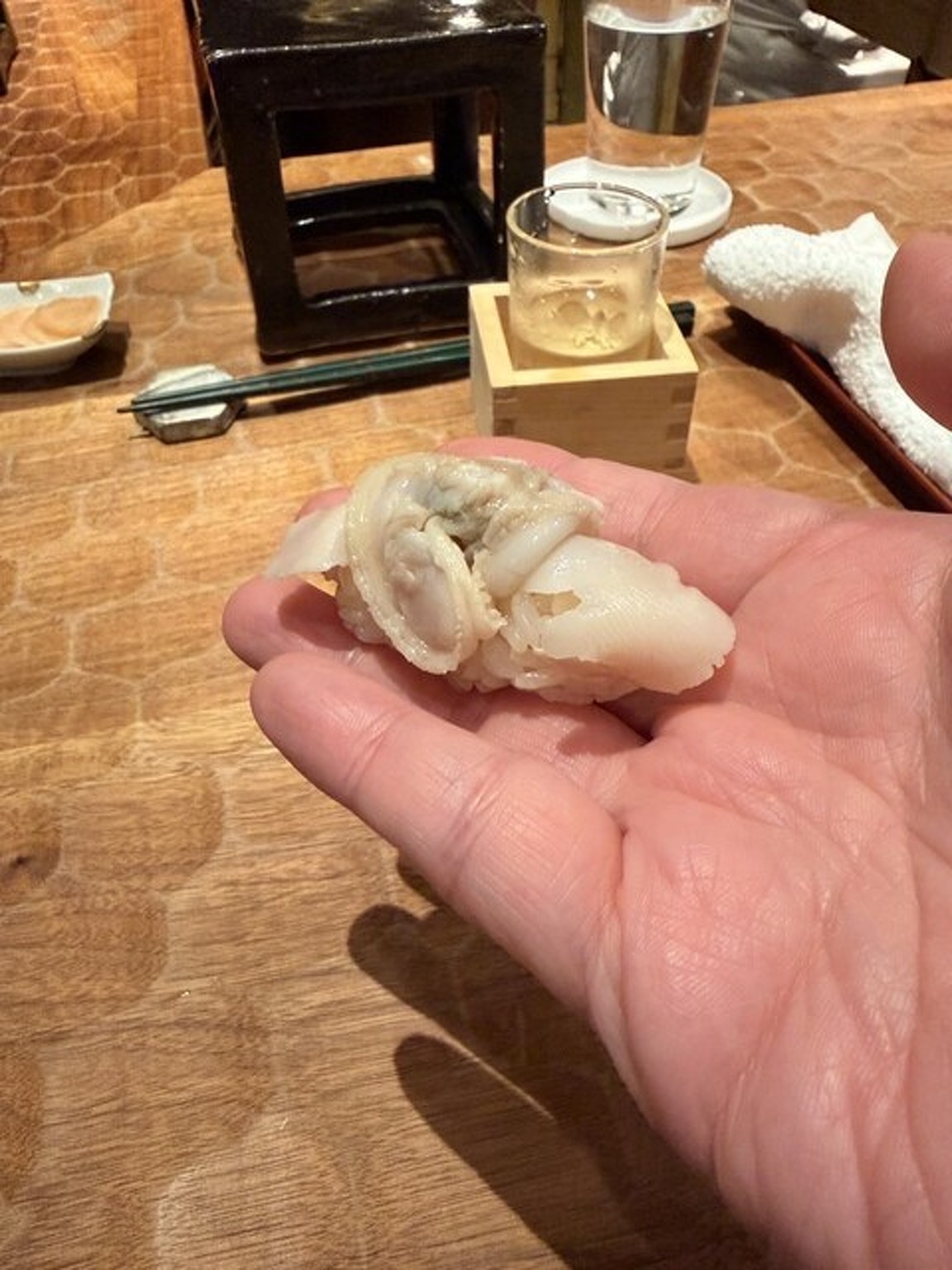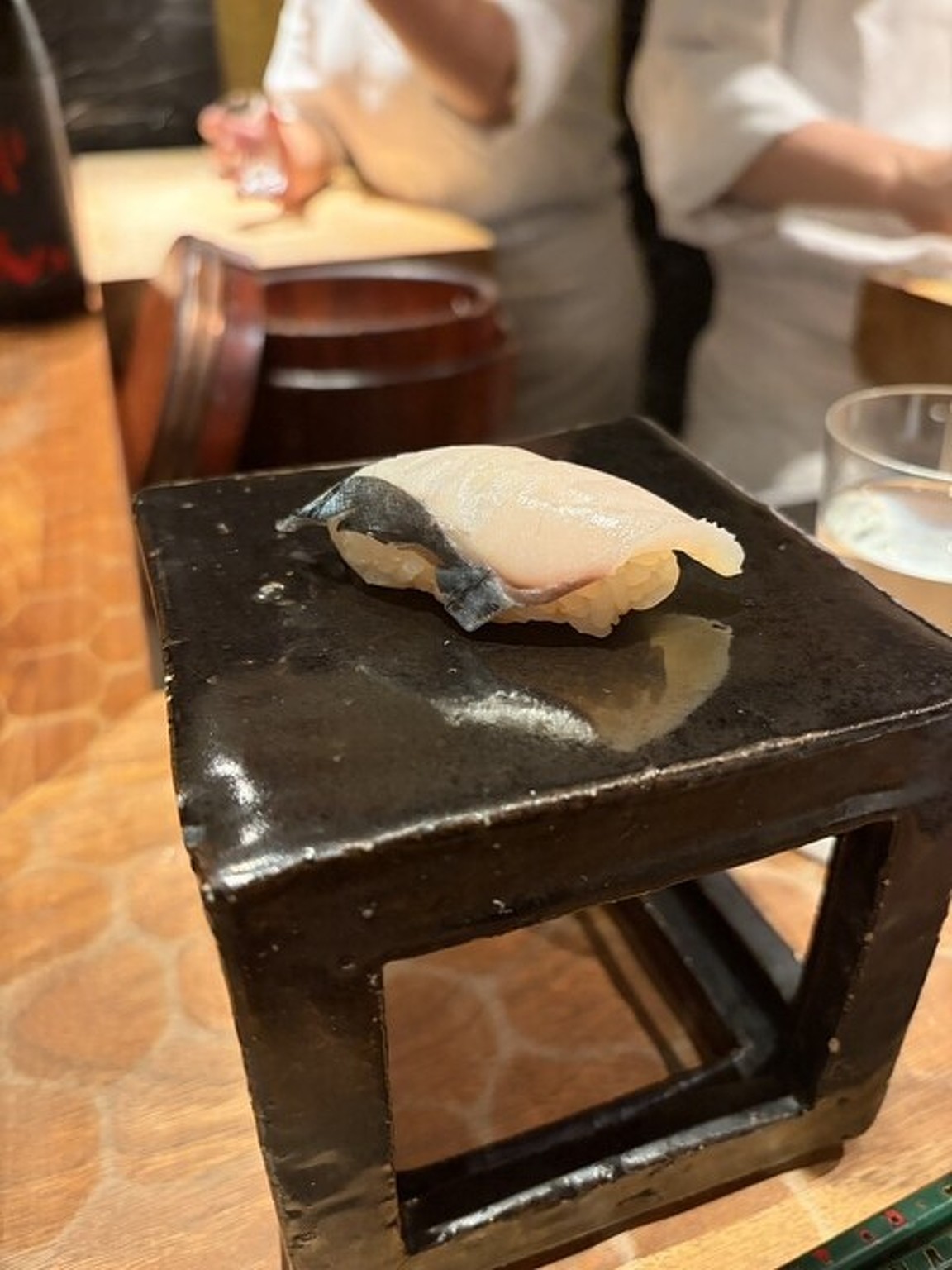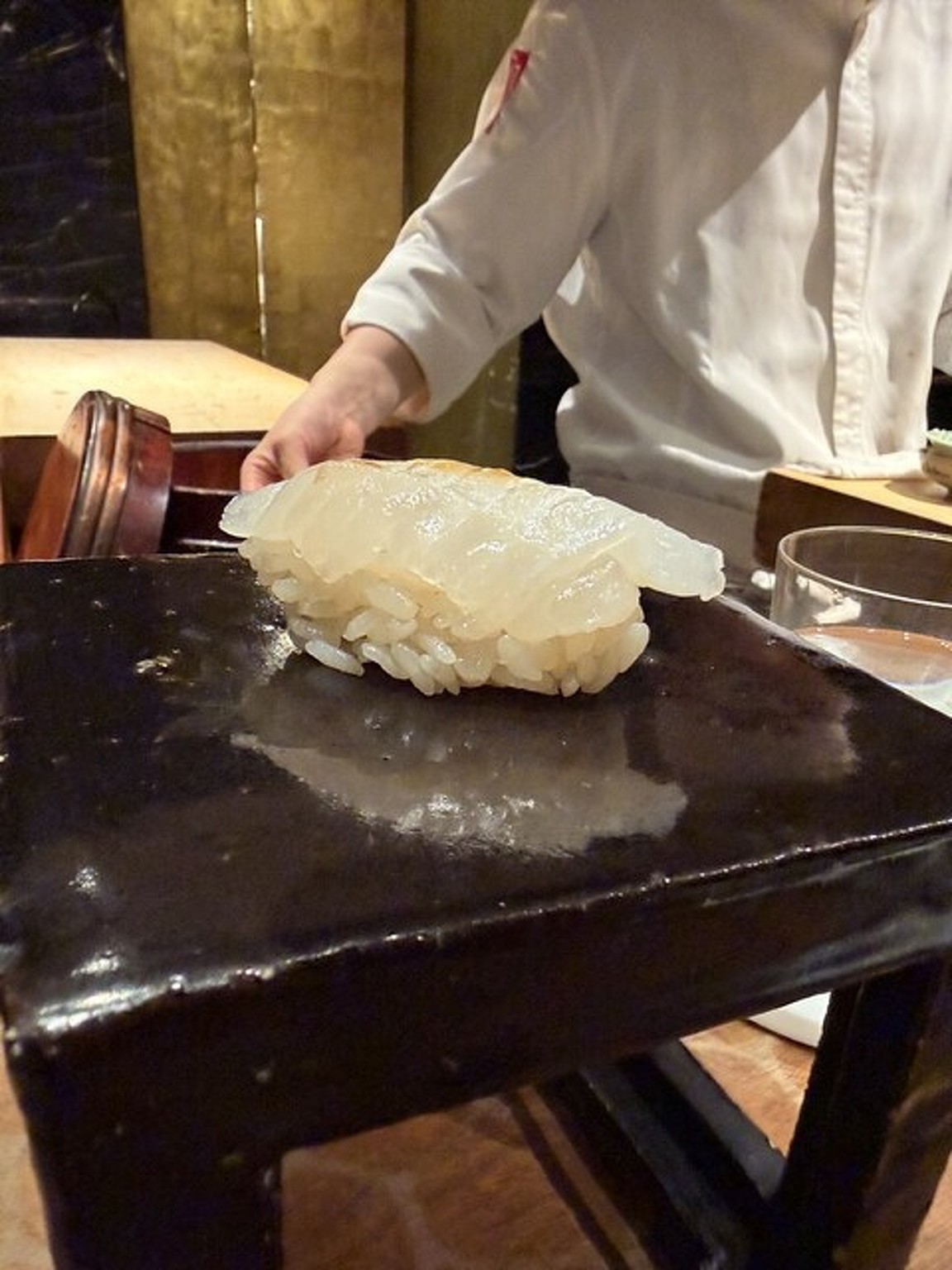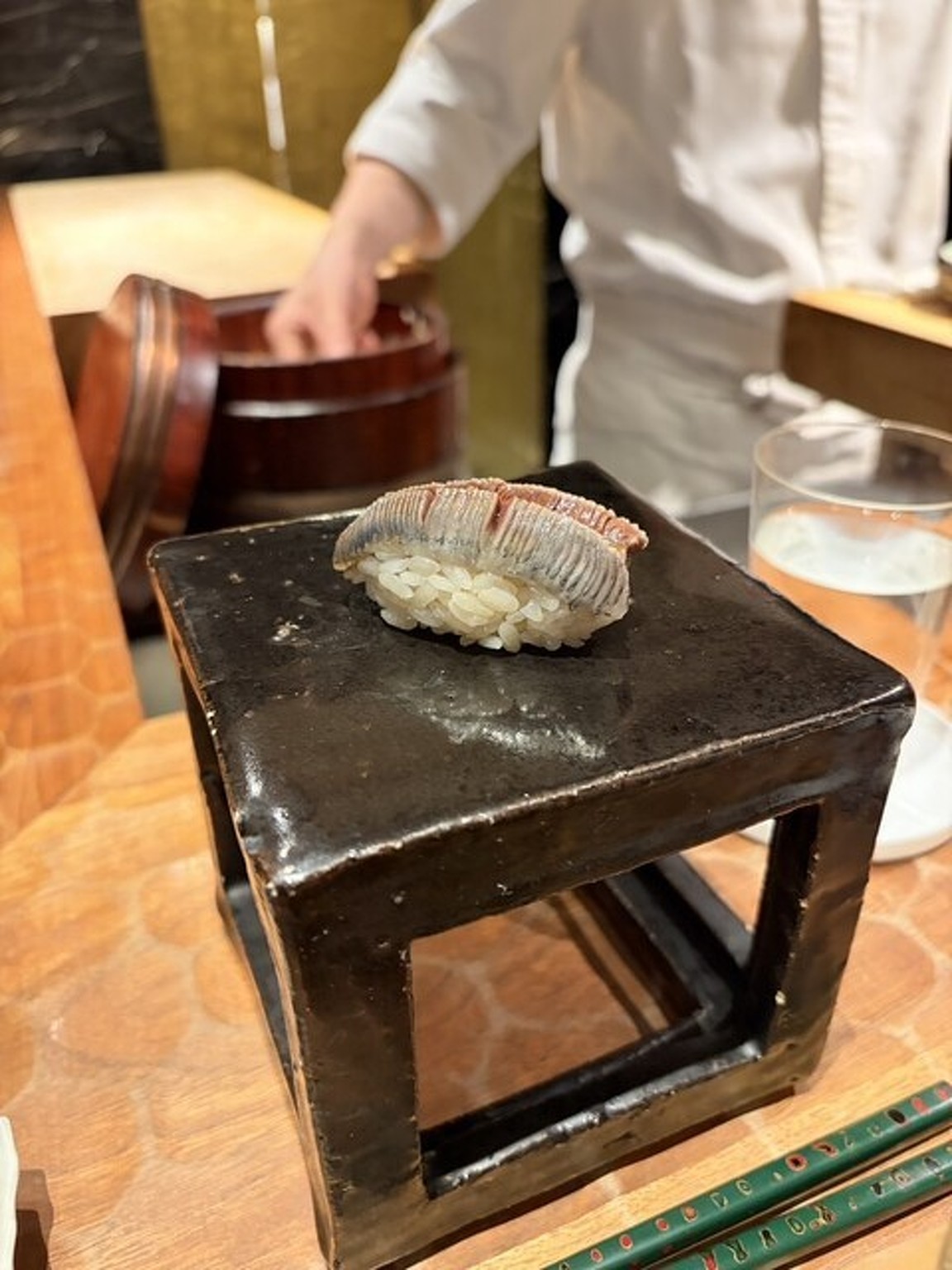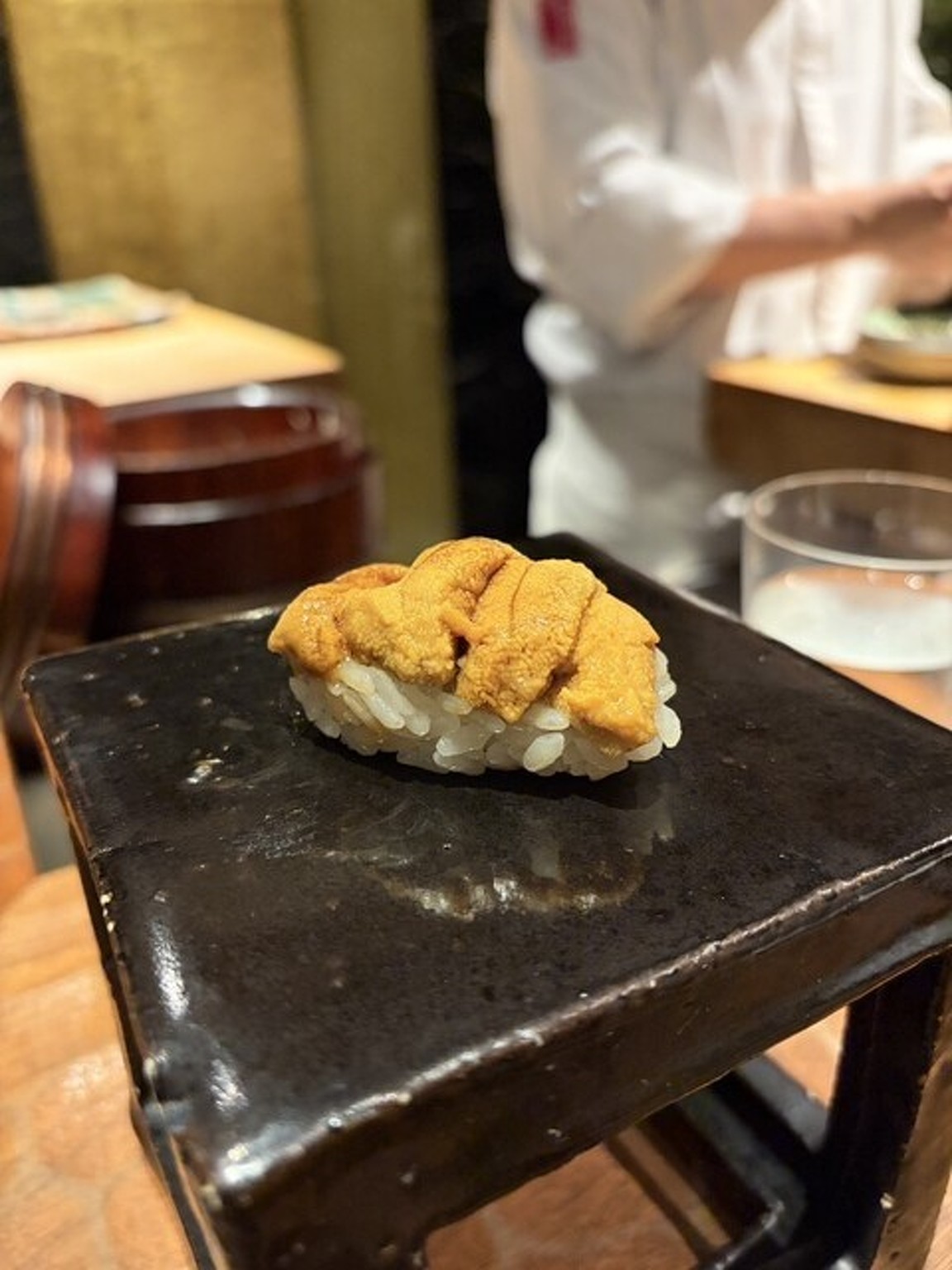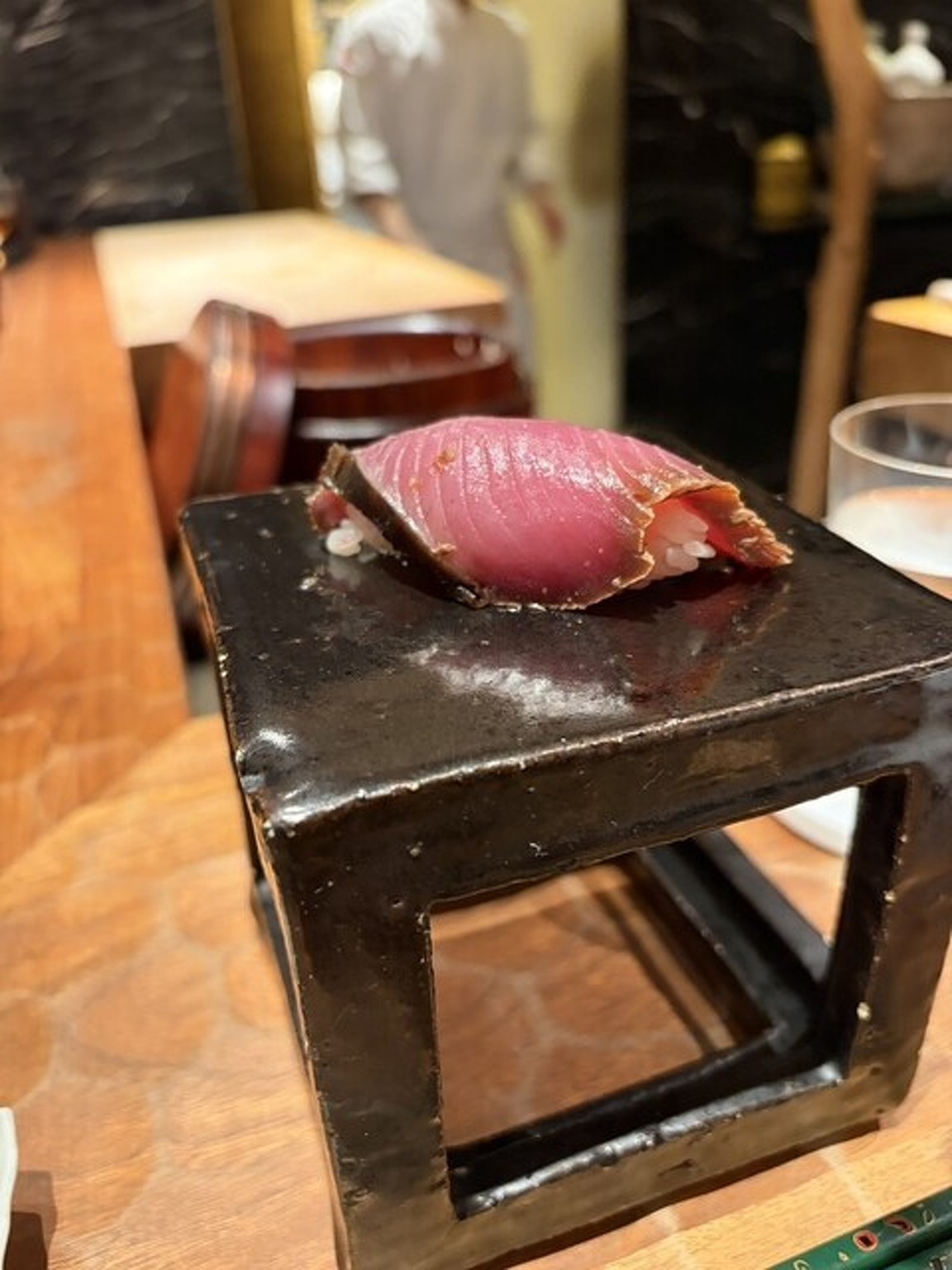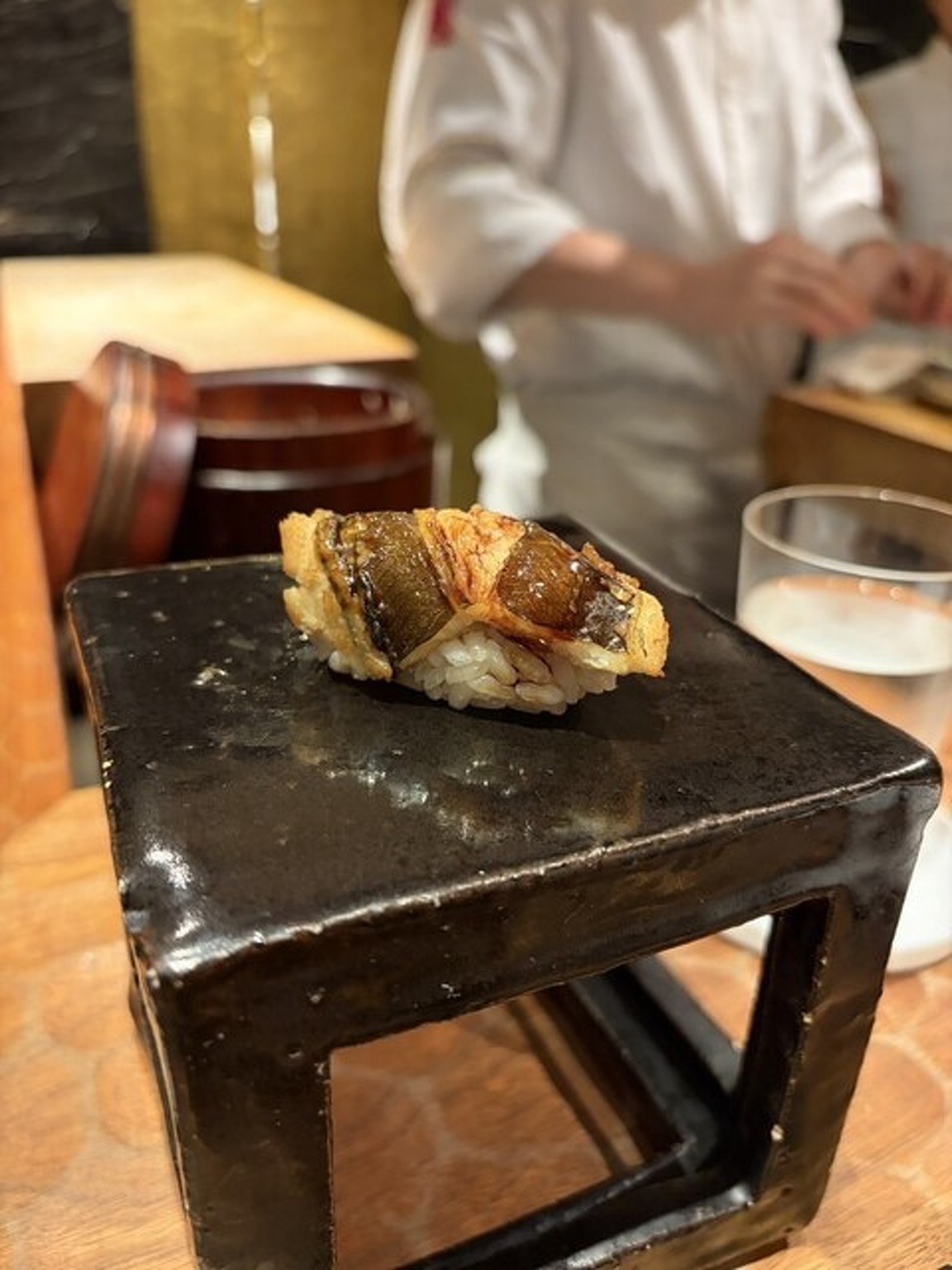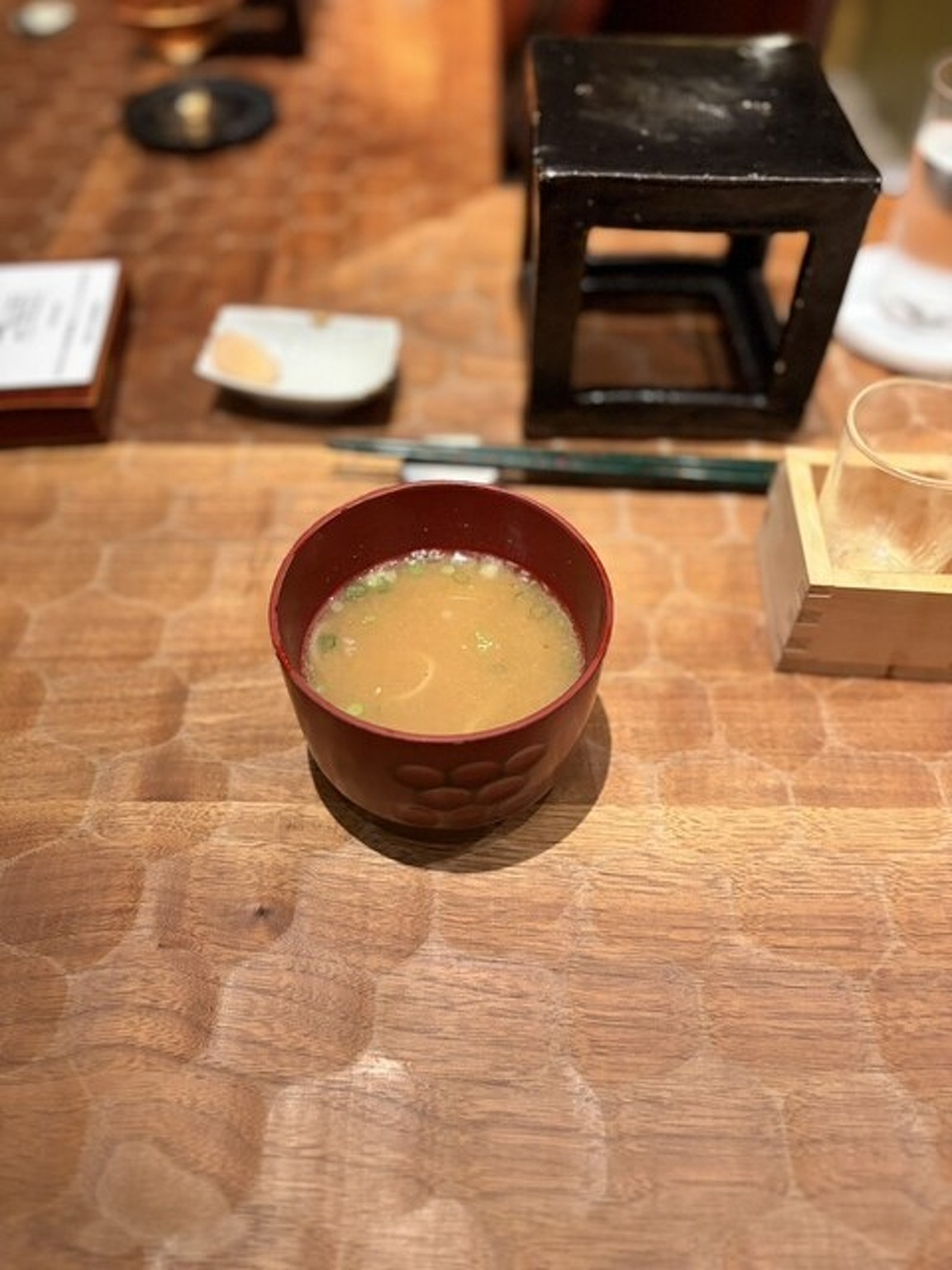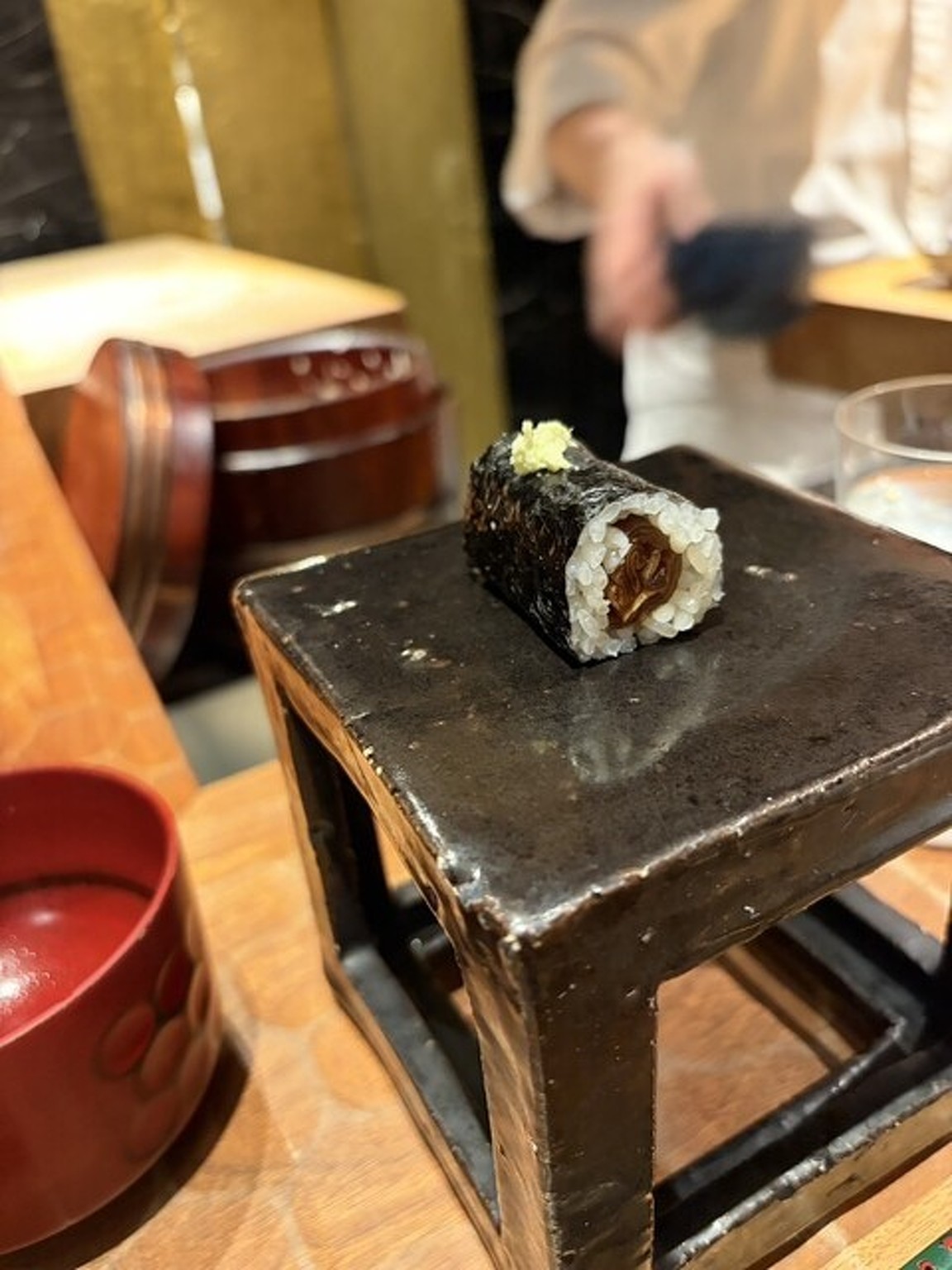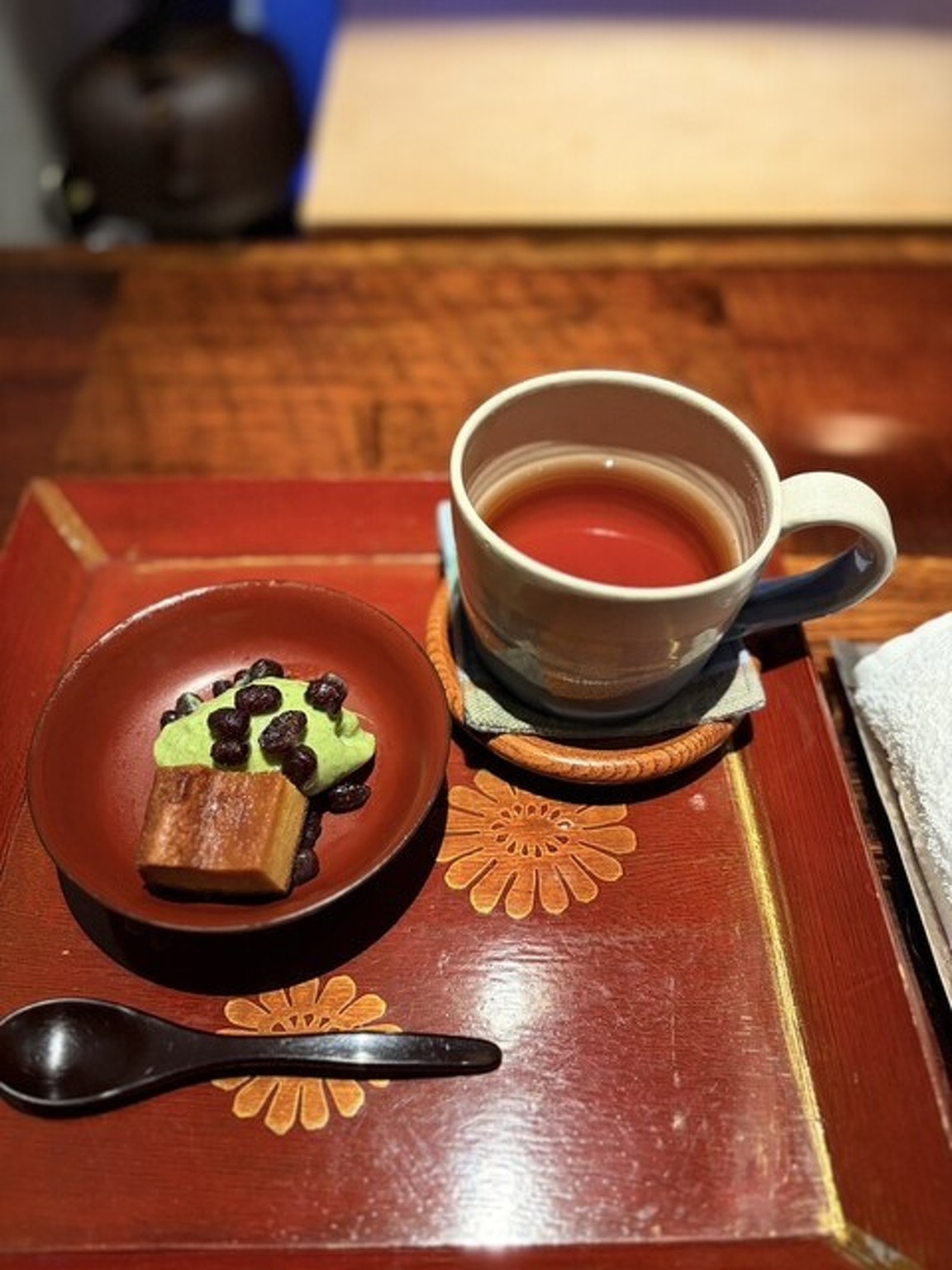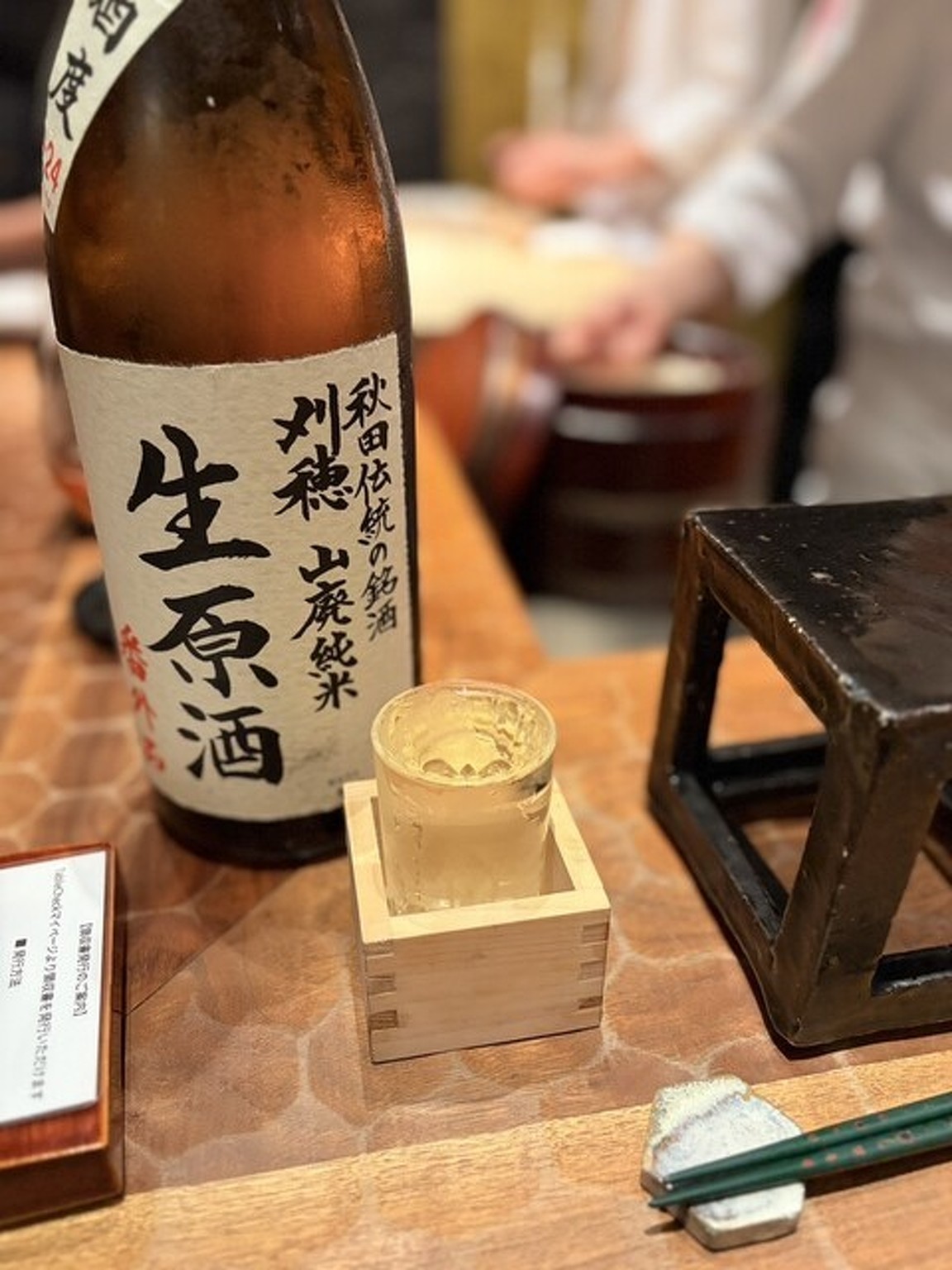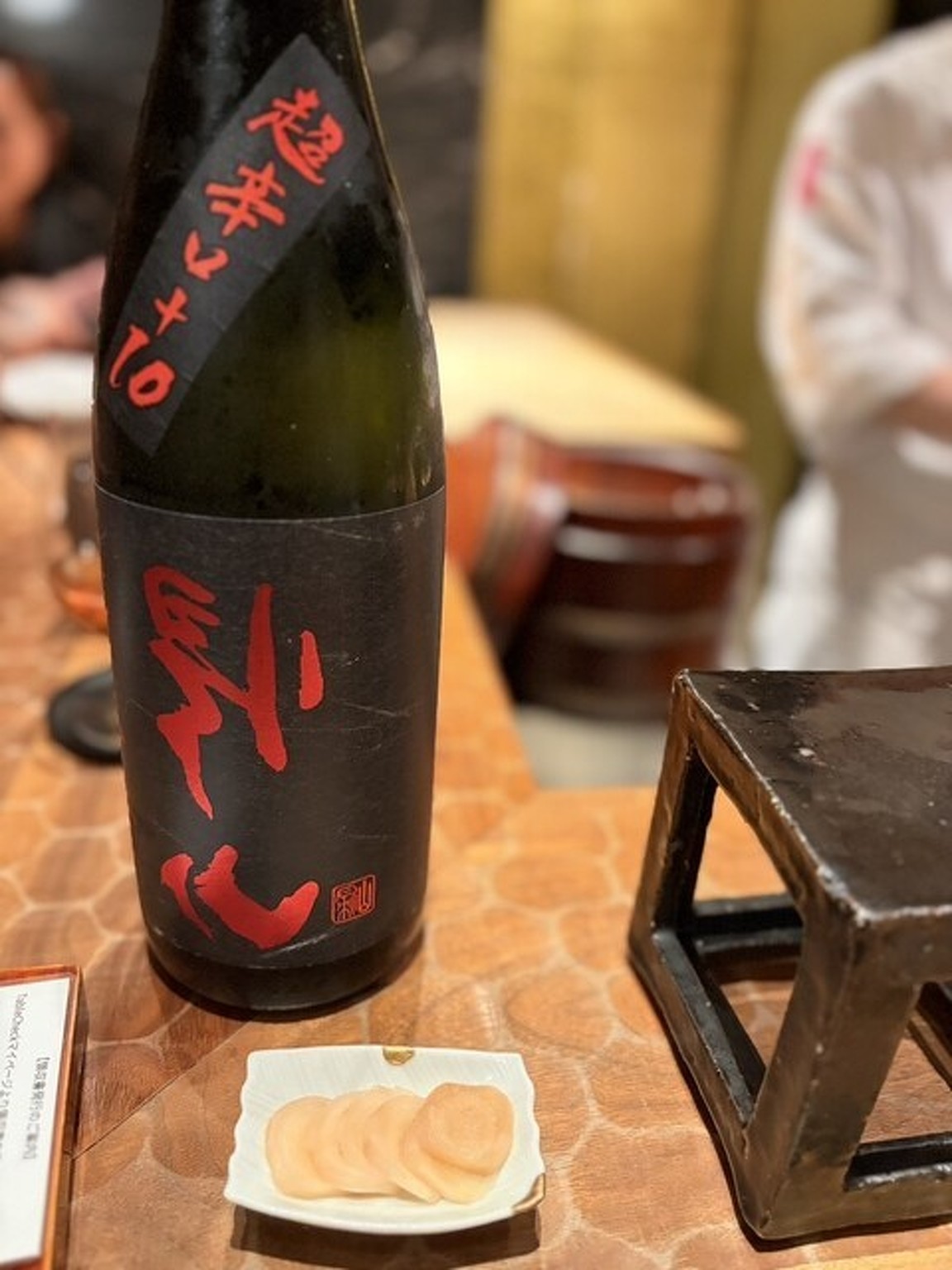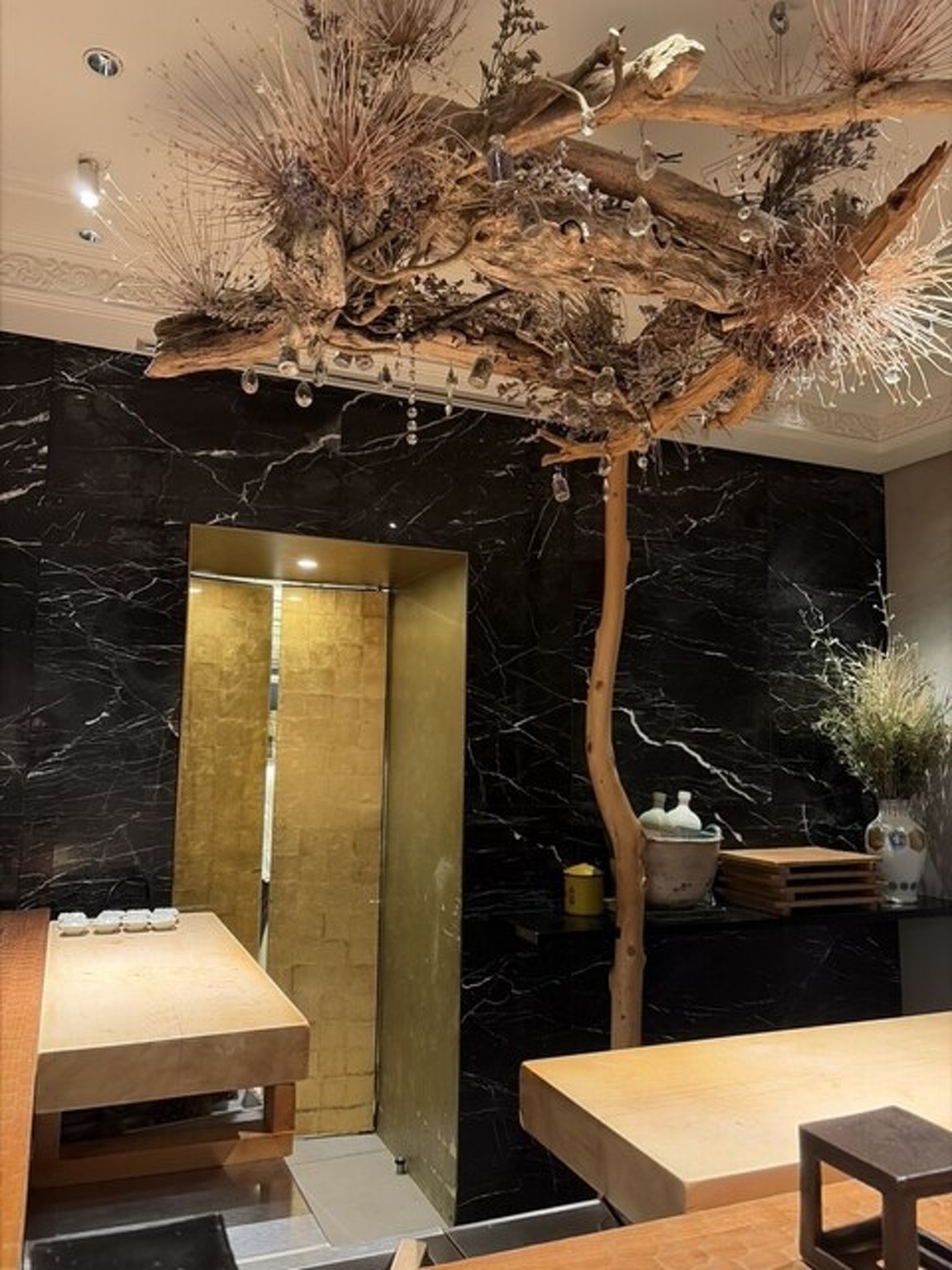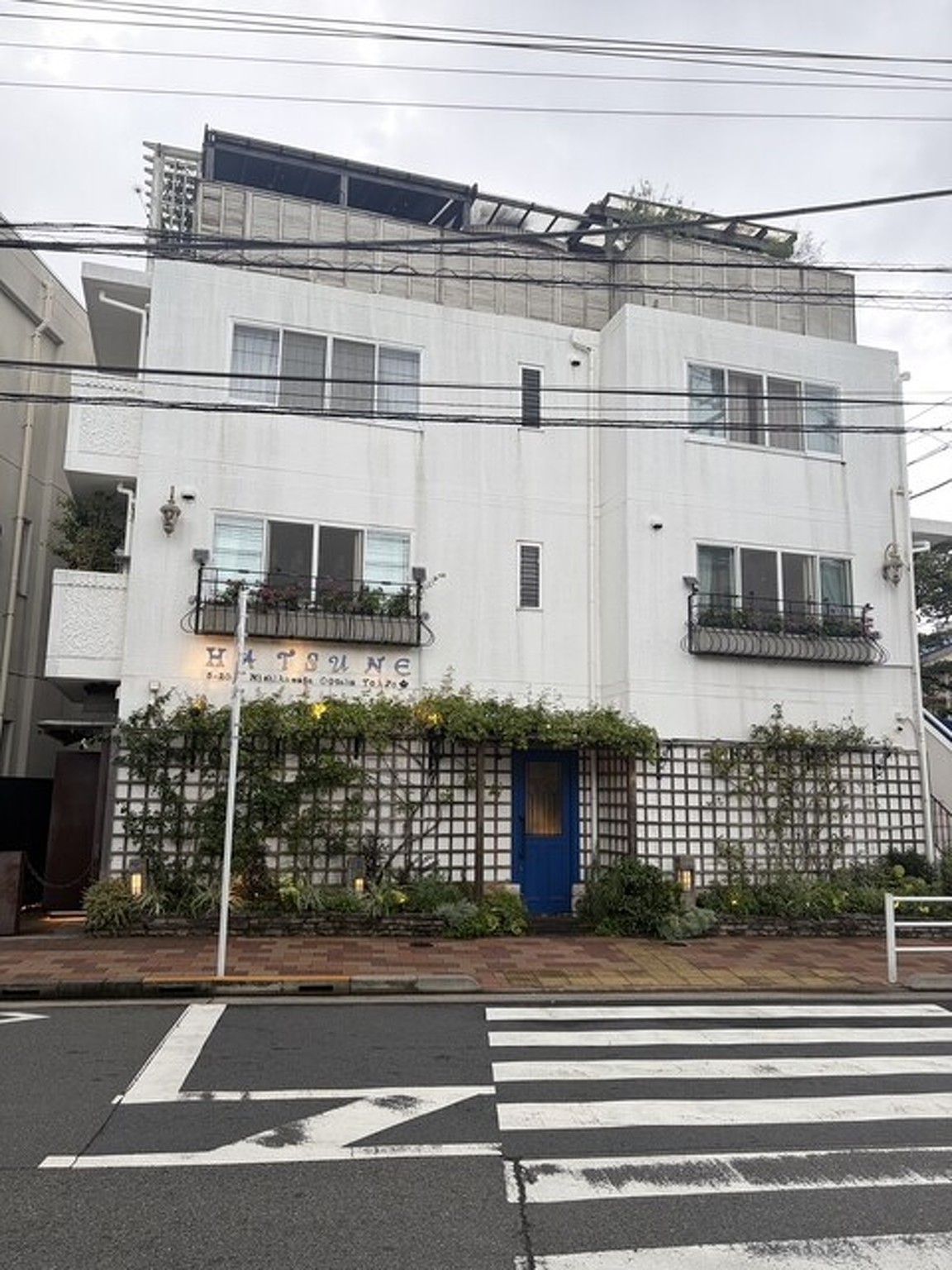
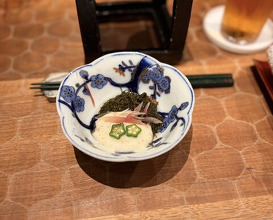
Our restaurant, which primarily focuses on nurturing young talent, offers a popular course for JPY 8,800.The head chef is usually in Italy most of the time.I made a reservation through Table Check.It’s about a 6-7 minute walk from Kamata Station. The exterior has a Western-style appearance that doesn’t immediately suggest a sushi restaurant. Arriving a bit early, I was guided to the counter.The interior features black walls with golden doors, a beautifully crafted counter, and a wooden monument on the ceiling, creating a luxurious atmosphere that blends Japanese and Italian styles, reminiscent of Toyotomi Hideyoshi’s tastes. I imagined it would be a theatrical dining experience.Many of the guests were quite young. It’s indeed a rare opportunity to enjoy authentic sushi at this price point.We started the course while enjoying some beer.**Mozuku** Seasoned with yam and myoga in plum vinegar. The acidity of the plum vinegar is refreshing, softening the humidity of late summer. However, the mozuku and yam seemed a bit clumped together, possibly because they were prepared and refrigerated too early.This was the only appetizer before moving on to the sushi.The rice, steamed in a traditional pot, was seasoned with red vinegar and salt right in front of us. They don’t use sugar. A small amount of freshly cut rice was placed in our hands to taste. The texture was excellent, and the natural sweetness of the rice was delightful, though it was slightly salty.This presentation allows both international guests and younger diners to easily engage with sushi culture, providing a great opportunity for growth on both sides.**Akami Salt** **Chutoro Salt** **Maguro Tataki** We were served a three-piece set of Ooma’s bluefin tuna. The plate was warmed to body temperature to serve it at its best. The akami was meant to be enjoyed with salt to appreciate the tuna's natural acidity, showcasing the refreshing taste of summer tuna. While temperature is indeed important, it was slightly too warm, raising the tuna's temperature.The chutoro was placed on the plate after the akami, possibly due to its fat content, making it feel more succulent than the akami.The tataki was mixed with iburi-gakko for enhanced flavor and texture, topped with pickled wasabi stems and shredded green onions. The condiments and textures were thoughtfully curated, allowing us to enjoy the rich umami of the tuna without getting bored.Now, we moved on to Japanese sake.**Kohada** Aged for a week, the acidity dissolves the small bones, transforming calcium into umami. To let guests experience this umami directly, it was served with the skin side up. The beauty of the knife work on the kohada skin was enjoyable to watch, and the concept was intriguing. The umami of the kohada was enhanced, with the acidity providing a nice finish, though it was slightly salty.**Haruko** The kohada was lightly cured, offering a light and refreshing sweetness. It was elegant.**Asari Sake Steamed Clam** The best piece of the day. The clam was sake-steamed to perfection. It had been soaking in its own broth until just before serving, resulting in incredible moisture. It was so juicy that it felt like the umami of the sea was about to overwhelm us.**Sagoshi (Spanish Mackerel)** The flesh was a bit firm, and again, slightly salty.**Meiji Tai** Nice to meet you, Meiji Tai. I was very impressed. Unusually for a white fish, it’s in season from late summer. It had a firm texture with a rich fat content, offering a transparent yet intense umami. This was a delightful encounter.**Iwashi (Sardine)** The fish was cut into two pieces, one from the head and one from the tail. I thought the tail piece would be better, but it turned out to be the tail. I wondered if they could use the whole fish instead of trimming it. The fine knife work made for a pleasant texture. The fat was refreshing and lightly sweet.**Uni (Sea Urchin)** Served without seaweed. The pure aroma of the uni wafted through the air. The clean umami of the sea and the sweetness from the uni melted in my mouth, making me understand why uni is so popular.**Marinated Katsuo (Bonito)** While I could taste the silky iron of the red meat, it didn’t leave a strong impression.**Anago (Conger Eel)** The sauce was excellent. The sweetness and umami of the bones complemented the grilled aroma of the anago.**Fish Head Soup with Somen** The fish heads from today’s catch were used for the soup. It was delicious and flavorful, but I didn’t think the somen was necessary.We then moved to another room to enjoy rooibos tea and fava bean ice cream. The fava bean ice cream didn’t have the aroma I had hoped for.However, I wondered if this room change had any significance. Perhaps I’m just insensitive, but I didn’t understand the intention behind it, and there was no explanation.In terms of the restaurant's atmosphere, there were explanations about the ingredients and intentions at the beginning, but it became extremely relaxed in the latter half. It felt surreal to see all the guests fiddling with their smartphones. Is this typical in Minato Ward?Feeling uncomfortable, I tried to engage the sushi chef in conversation, but it didn’t go very well, making me feel inadequate as a diner and conversationalist.It seems that sushi chefs can control the atmosphere even without being talkative, and guests pick up on that, creating the restaurant's ambiance. This experience made me reflect on the roles of both the restaurant and the guests.With beer and two cups of sake costing less than JPY 3,000, and the total course price not reaching JPY 12,000, this pricing is truly appreciated. It’s a great opportunity to enjoy authentic sushi at a reasonable price, with some surprising ingredients that make it interesting.While I want to support the cultural significance of nurturing young talent and lowering the barriers to sushi, I can’t help but feel that some people might end up thinking they’ve had enough of counter sushi.
We use cookies on this site to enhance your user experience.