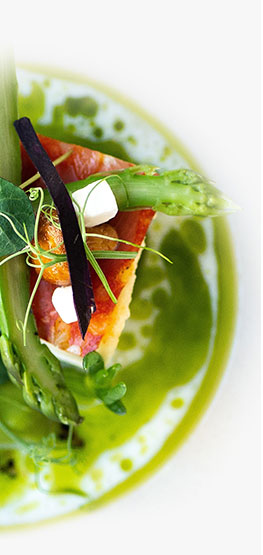
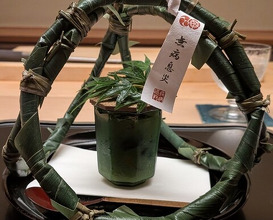
I visited Tokuha Motonari, which quickly earned Tabelog Gold and two Michelin stars.I was touched that the chef remembered me from a previous ceremony where we met.He is a friendly and approachable person, welcoming guests with a warm atmosphere throughout the meal.Today, I had the privilege of sitting in the chef's special front-row seat.This time, I enjoyed a course featuring abundant summer ingredients.**Chinowa (Wicker Ring)** First, we started with a seasonal appetizer adorned with a chinowa, symbolizing the purification of evil spirits and wishing for good health. This dish beautifully incorporated Japanese seasonal events and culture.Inside the bowl was: ● **Corn Soup** Using white corn grown by a farmer in Kyoto, seasoned only with salt. The natural sweetness of the corn was surprisingly rich, with a gentle flavor free of any off-tastes. The addition of junsei from Akita Prefecture and clam jelly provided a refreshing touch, making it a perfect summer dish.● **Abalone** Grilled over charcoal, the abalone from Yamaguchi Prefecture was cooked to perfection—not overdone, yet not completely raw—resulting in a unique texture that was both tender and firm. The richness of the steamed rice with abalone liver added depth, while the aroma of edamame and sansho leaves provided a delightful accent.● **Shrimp Shinjo** A playful dish resembling a chinowa made from white asparagus. The refreshing scent of yuzu filled the air, and by using water from Goryo Shrine without seasoning, the natural umami of the ingredients was highlighted.● **Sashimi** - **Akashi Squid with Nuta** The sweet, sticky squid paired perfectly with the rich umami and saltiness of the nuta. The texture of the snap peas was also pleasant, creating a high-quality combination. - **Ehime Sweetfish** With its beautiful flesh and refined sweetness, the flavor expanded with each bite. - **Akashi Meita Sole** Delicate fat and a transparent taste made for a high-quality white fish typical of Akashi.● **Grilled Pike Conger** The chef showcased his skill by expertly cutting the bones right in front of us. Lightly charred, the skin was fragrant while the flesh remained fluffy, allowing us to fully enjoy the deliciousness of this summer delicacy. ● **Grilled Pike Conger (Second Serving)** This time, it was cooked a bit longer, enhancing the aroma. It was delightful to compare the different cooking methods of the same fish.● **Kamo Eggplant** Melt-in-your-mouth kamo eggplant topped with slightly sweet dengaku miso, and an astonishing amount of additive-free sea urchin. "This is just a sauce; the star is the sea urchin," the chef said. It was such a luxurious dish that I couldn't help but laugh, wondering if he was calculating the costs.● **Fried Clam** From Kuwana, Mie Prefecture, this clam had one of the largest livers I've ever tasted, with thick flesh. It was full of minerals, bursting with flavor with every bite. Just salt and lemon were enough to enhance its deliciousness, and the young corn served alongside was sweet and delightful.● **Natural Sweetfish from Lake Biwa** We started with a small natural sweetfish. Despite its size, it had a concentrated umami and slight bitterness typical of wild fish. ● **Natural Sweetfish from Lake Biwa (Second Serving)** "The previous one was small," the chef said, and he grilled a larger natural sweetfish for us. This generous spirit is characteristic of Tokuha, reflecting the chef's personality.● **Simmered Dish** A smooth winter melon soup with simmered winter melon, fried tofu, rockfish, and myoga. The gentle broth seeped into my body, and the refined umami of the rockfish was impressive.● **Clay Pot Rice (Pesticide-Free Rice from Nara Prefecture)** Beautifully glossy, each grain of clay pot rice stood out. Its simplicity allowed the sweetness of the rice to shine.The accompaniments for the rice were plentiful. ● **Grilled Sardines from Ishikawa Prefecture** Surprisingly, this was the third grilled fish dish. The restaurant's free-spirited course composition is one of its charms, enhancing the richness of the fish.● **Water Eggplant** Juicy and perfect as a palate cleanser. ● **Pickled Cucumber** With just the right amount of salt, it complemented the rice well. ● **Bamboo Shoots like Menma** Sweet and sour bamboo shoots stir-fried in sesame oil. With a texture reminiscent of menma, it would pair well with drinks.● **Cold Noodles** A thick, cold broth made from fish and clams. Rich in flavor yet light, with tomatoes, cucumbers, and shredded scallions adding freshness. The ample chashu made it feel more like a main dish than a closing course.● **Marinated Tuna and Kyoto Natto** Large Kyoto natto. Although I'm not particularly fond of natto, it surprisingly paired well with the marinated tuna, making it enjoyable.● **Chashu Rice Bowl** The chashu, which had been slowly grilled from the middle of the meal, made its appearance here. It looked impressively voluminous, yet it was incredibly tender and paired excellently with the sweet and savory sauce. I couldn't resist asking for seconds.● **Mangosteen** My first experience with mangosteen. Its unique texture and refined sweetness offered a taste of the tropics.● **Water Manju** Freshly made and slightly warm water manju. Its juicy texture and subtle sweetness were pleasant, allowing me to feel the season until the very end.● **Matcha** We concluded with matcha, which beautifully tied the entire course together.After the meal, I spent about 30 minutes outside talking with the chef and the owner. The quality of the dishes was exceptional, but the personalities of both of them are also a significant charm of this restaurant. This wonderful experience allowed me to truly understand why Tokuha earned Tabelog Gold and two Michelin stars in such a short time, through both the cuisine and the hospitality.
We use cookies on this site to enhance your user experience.