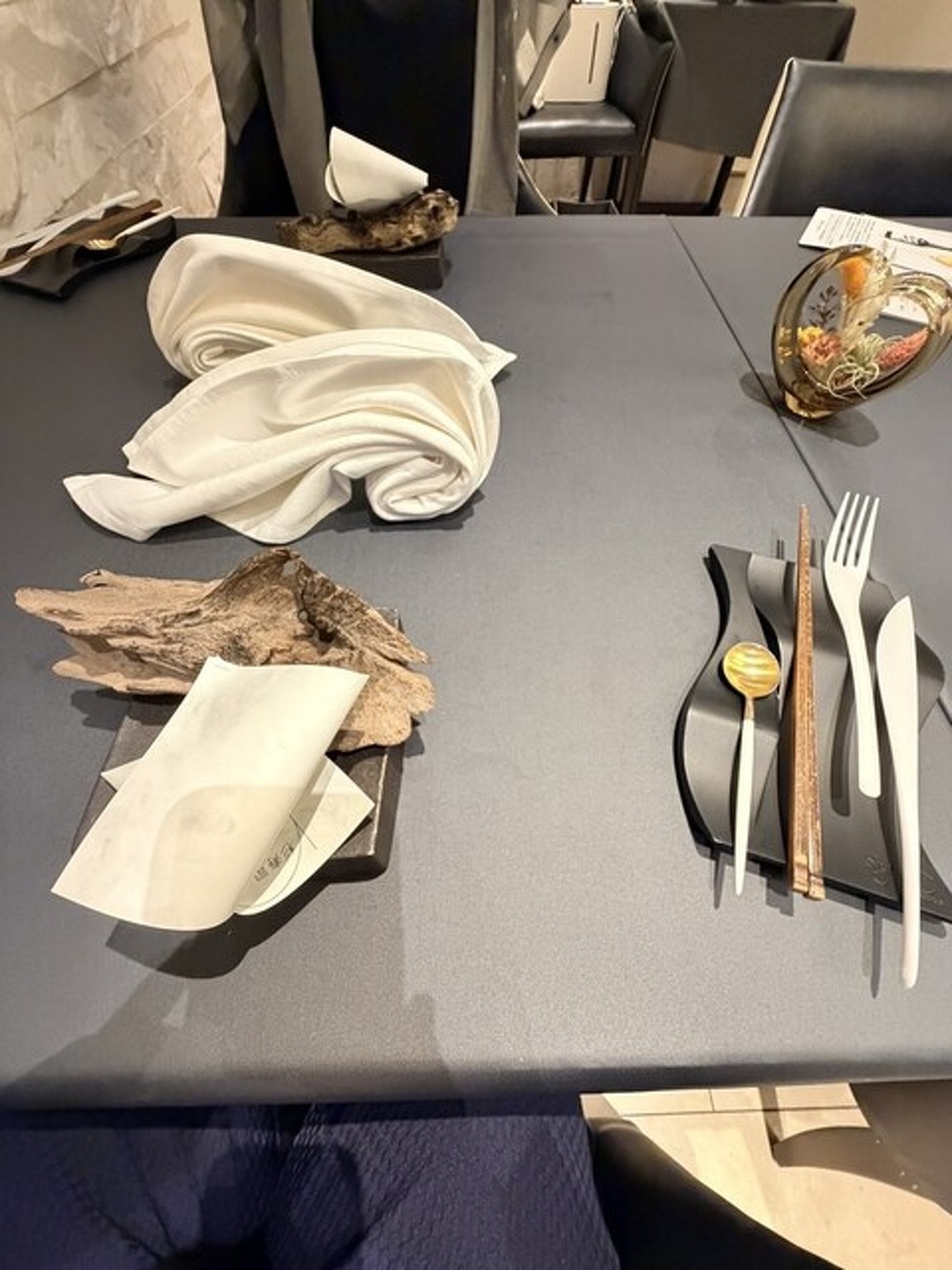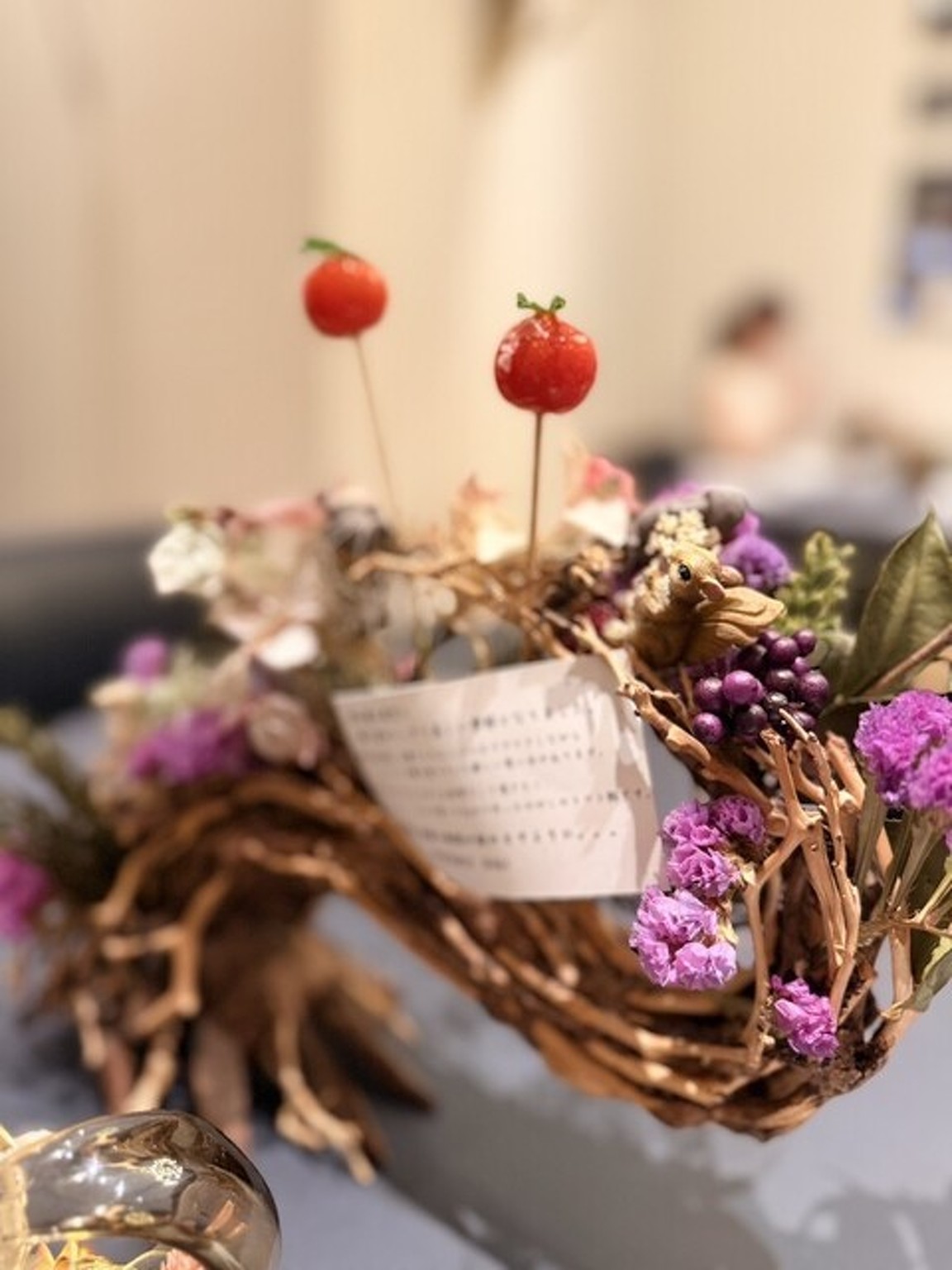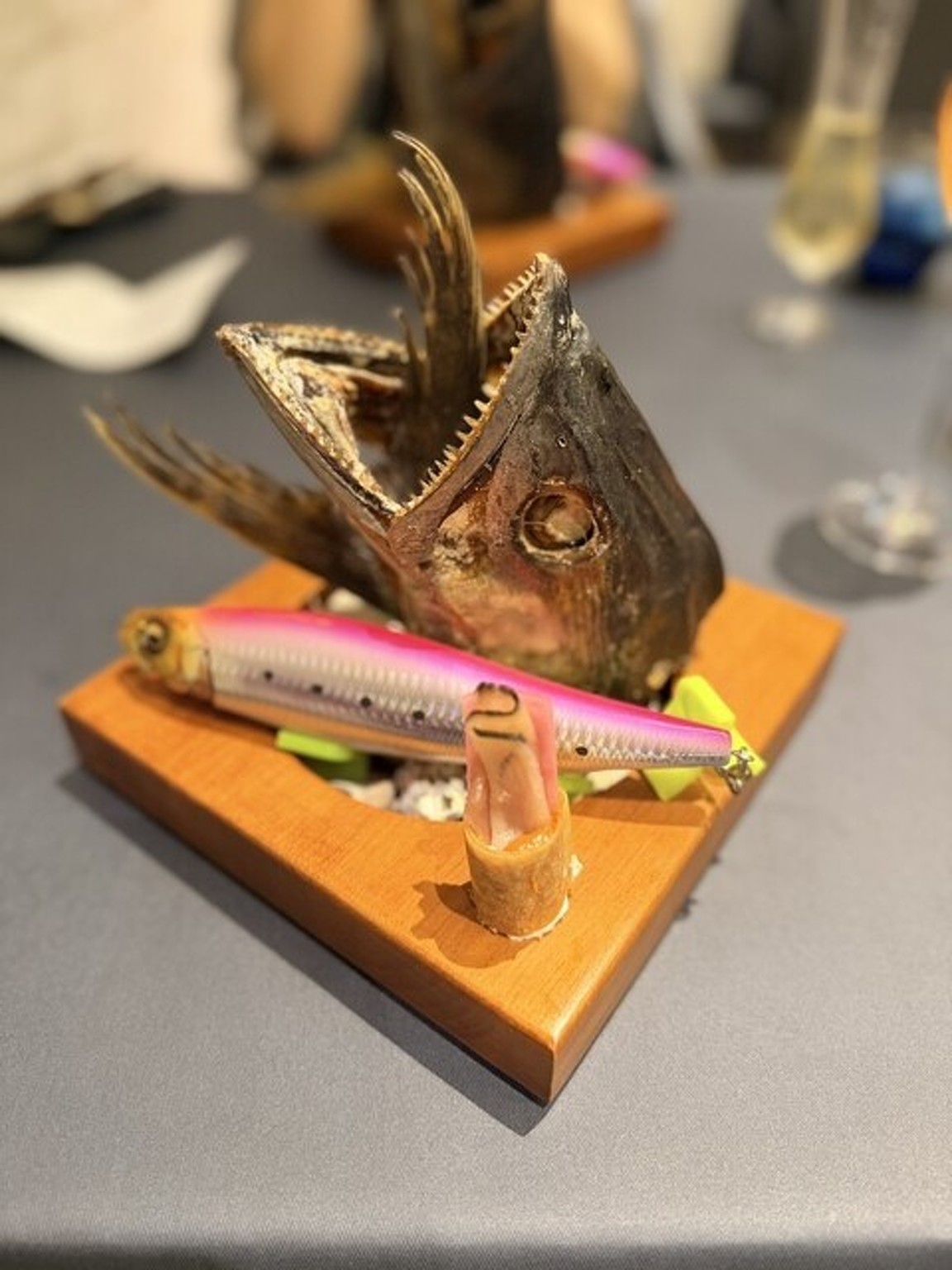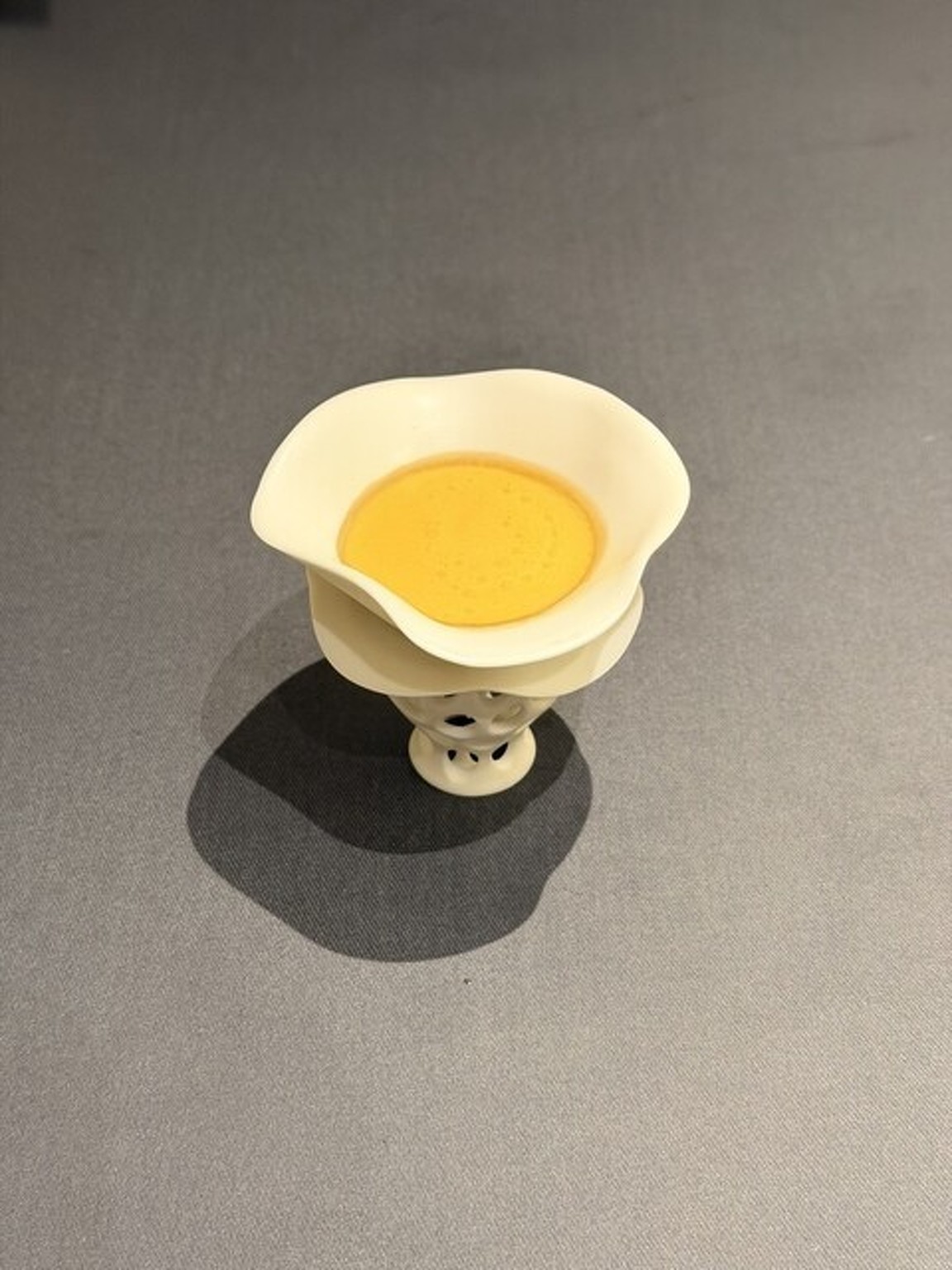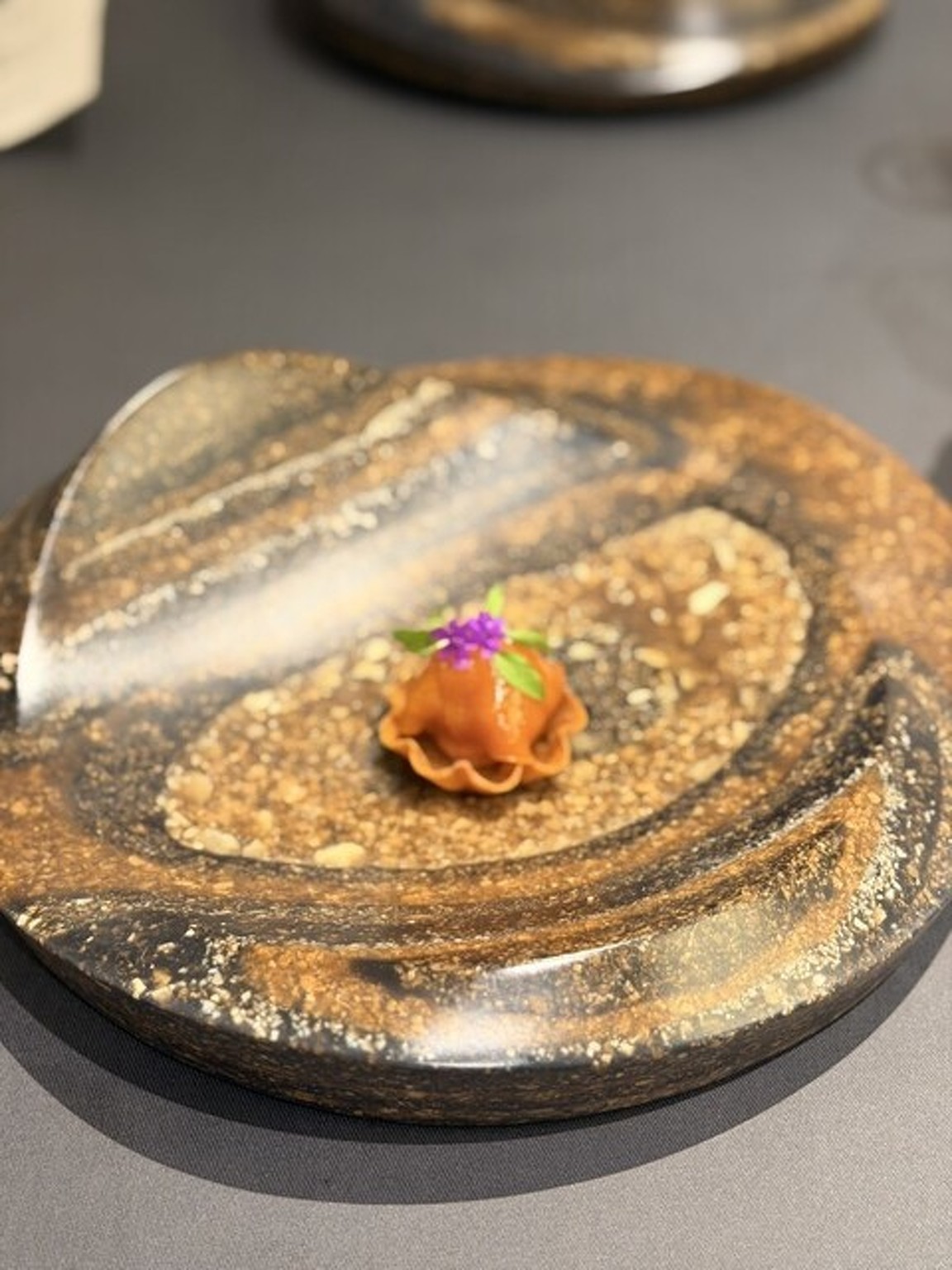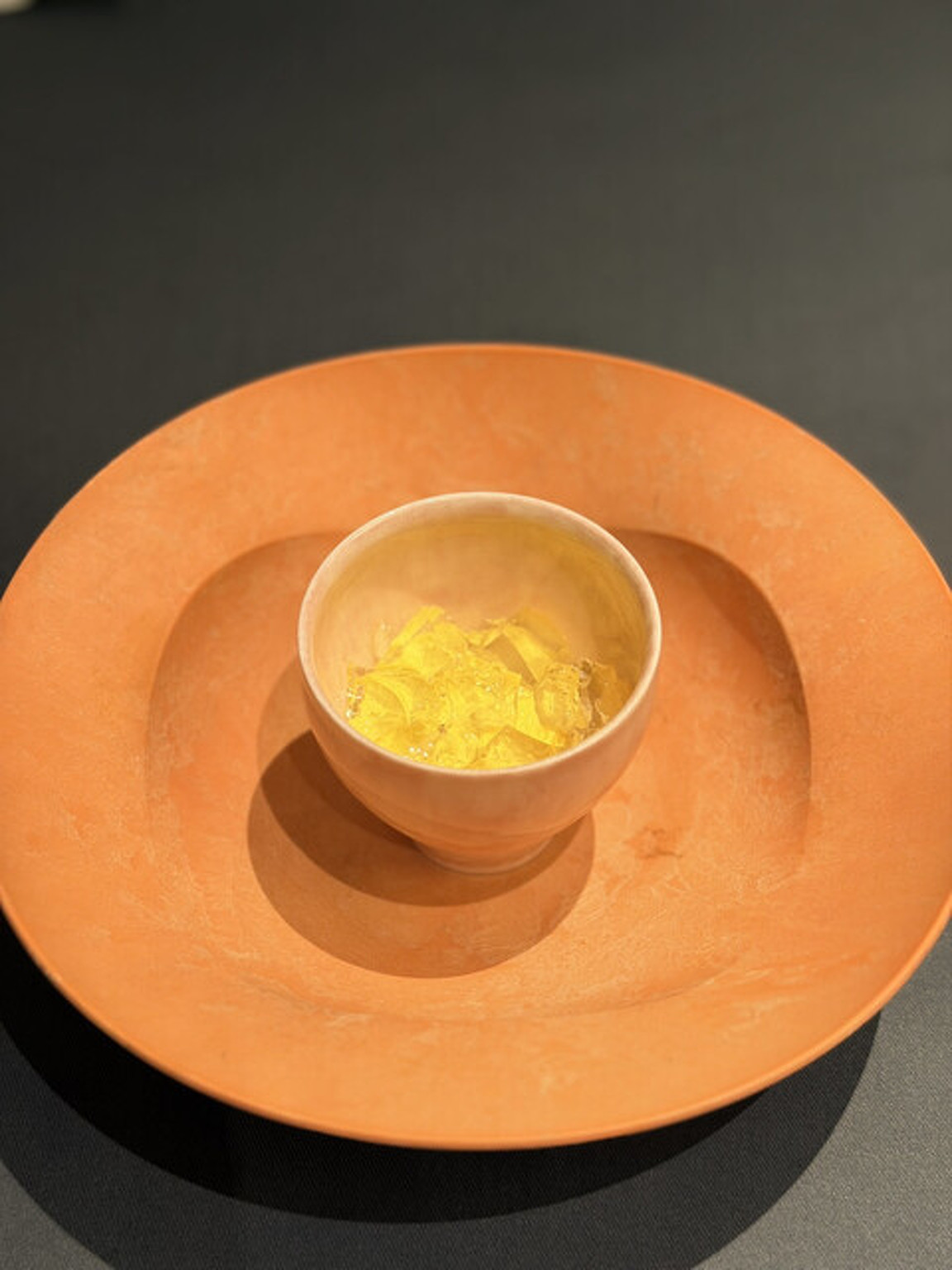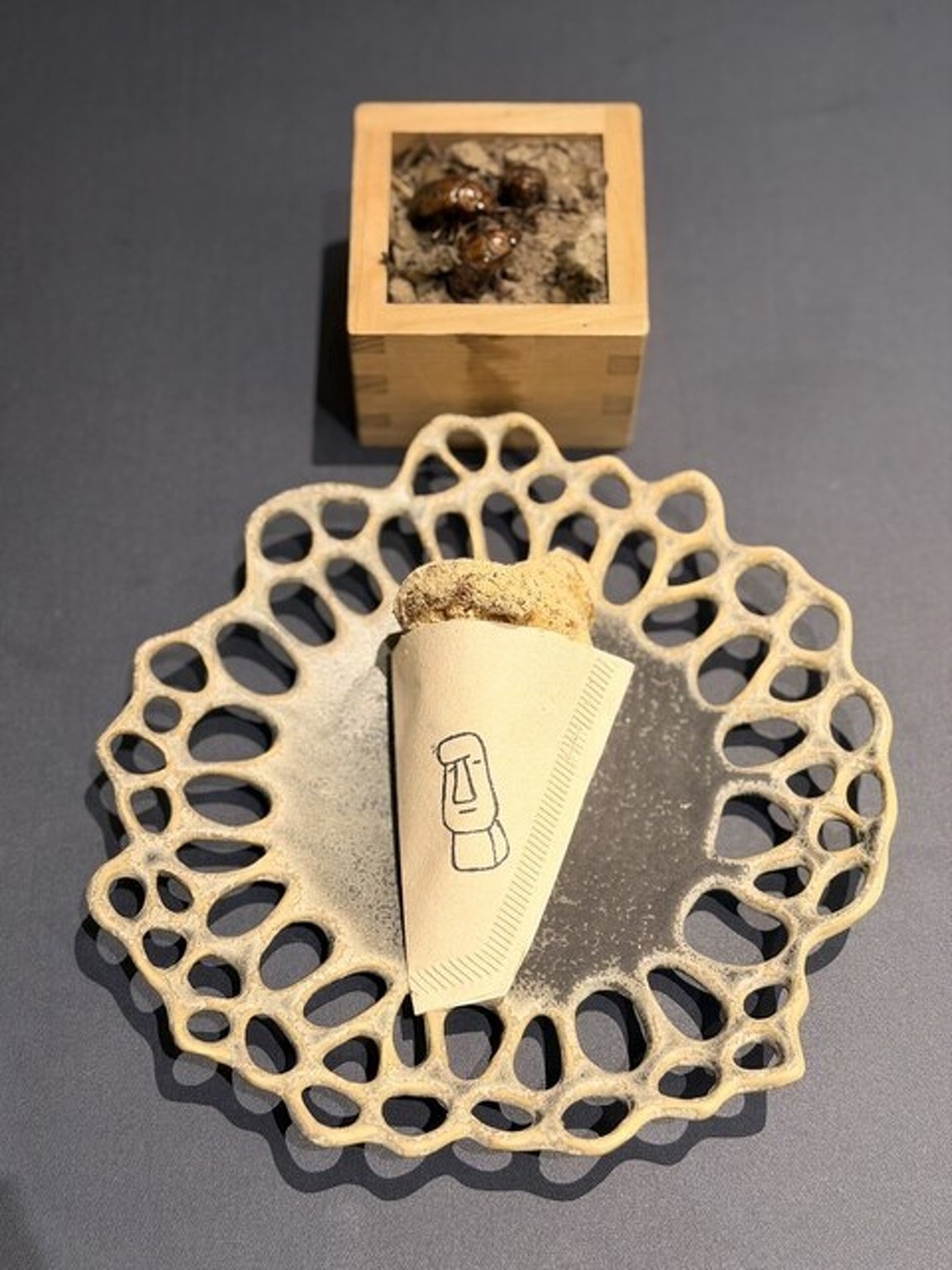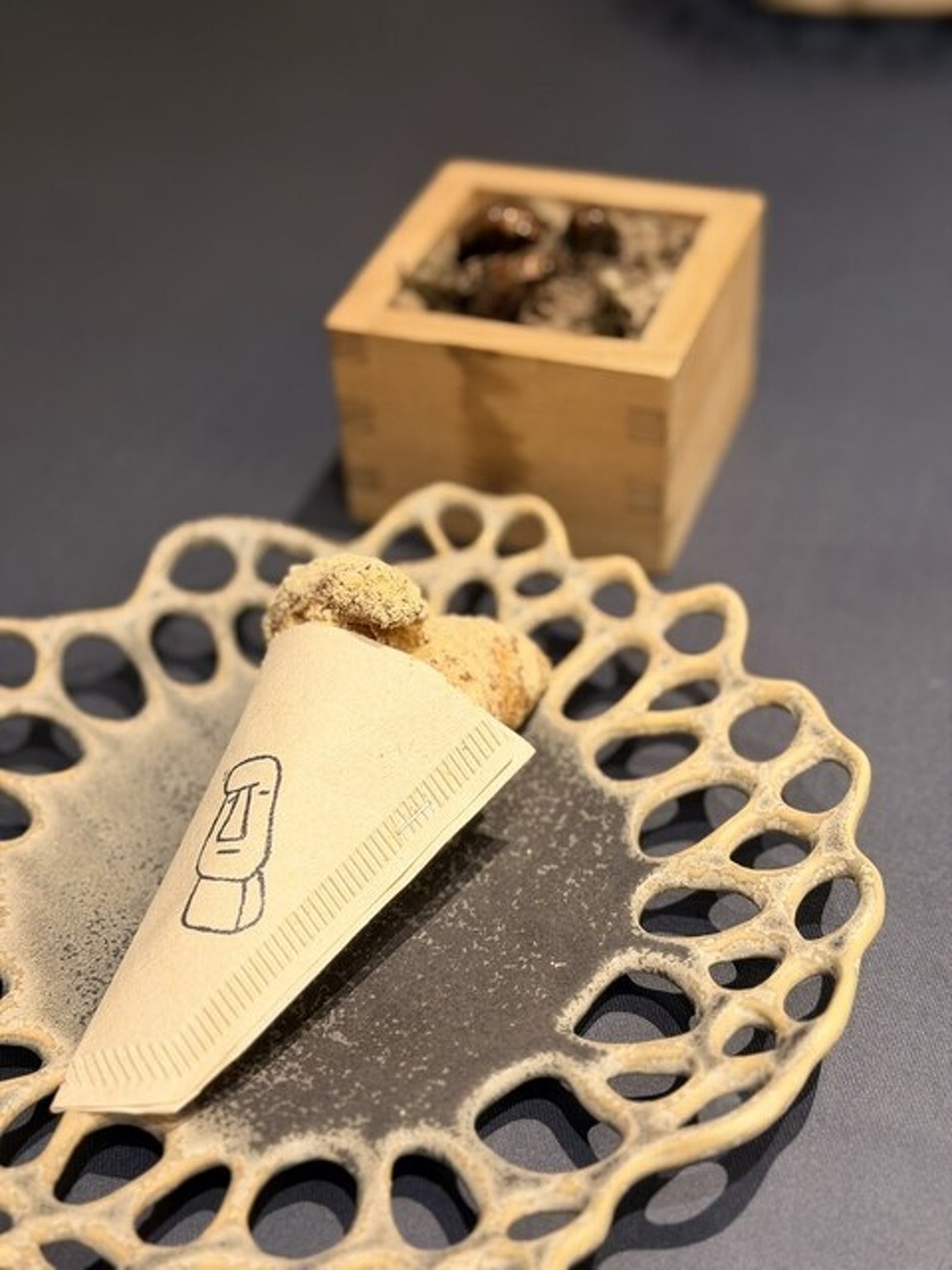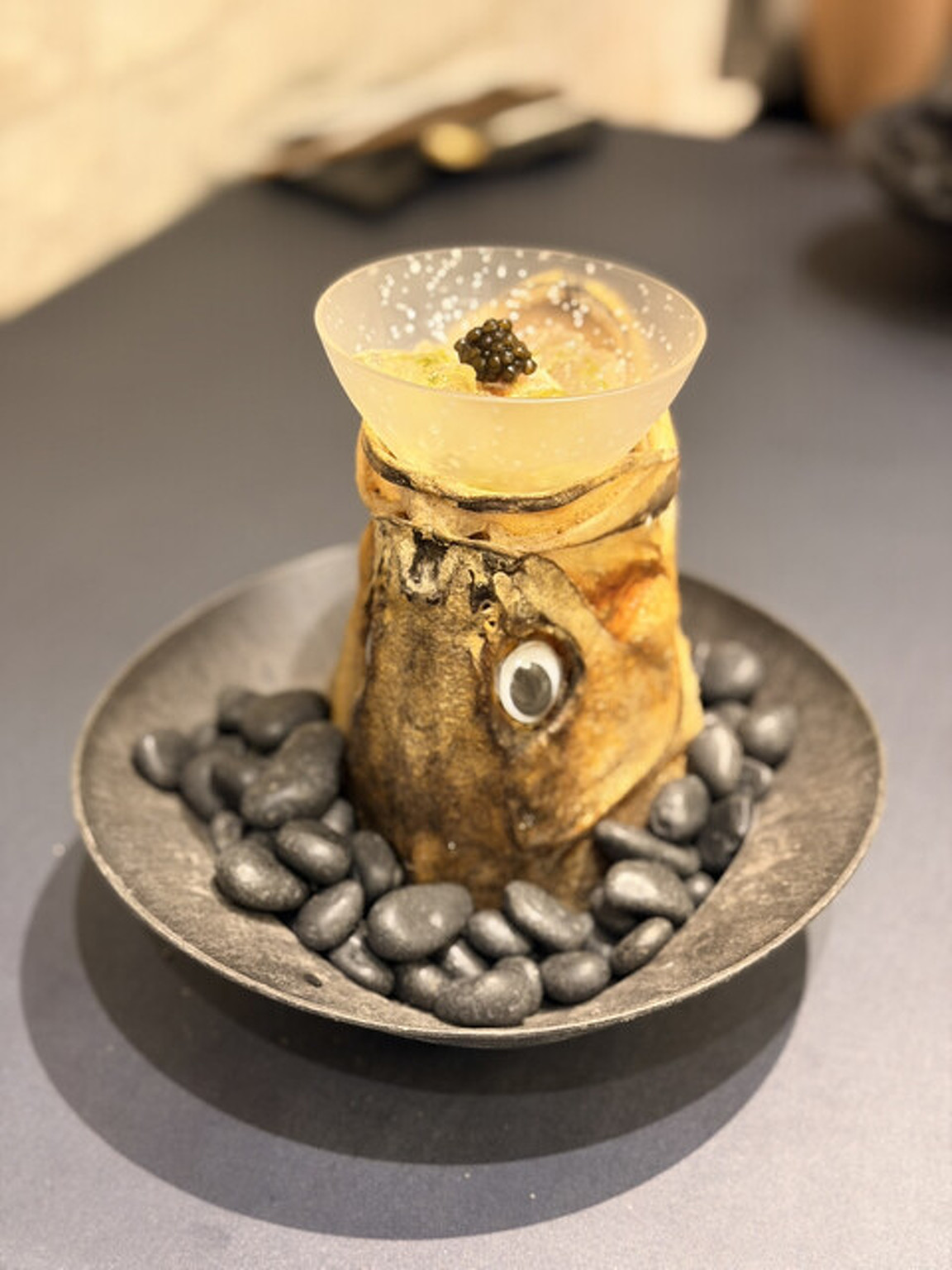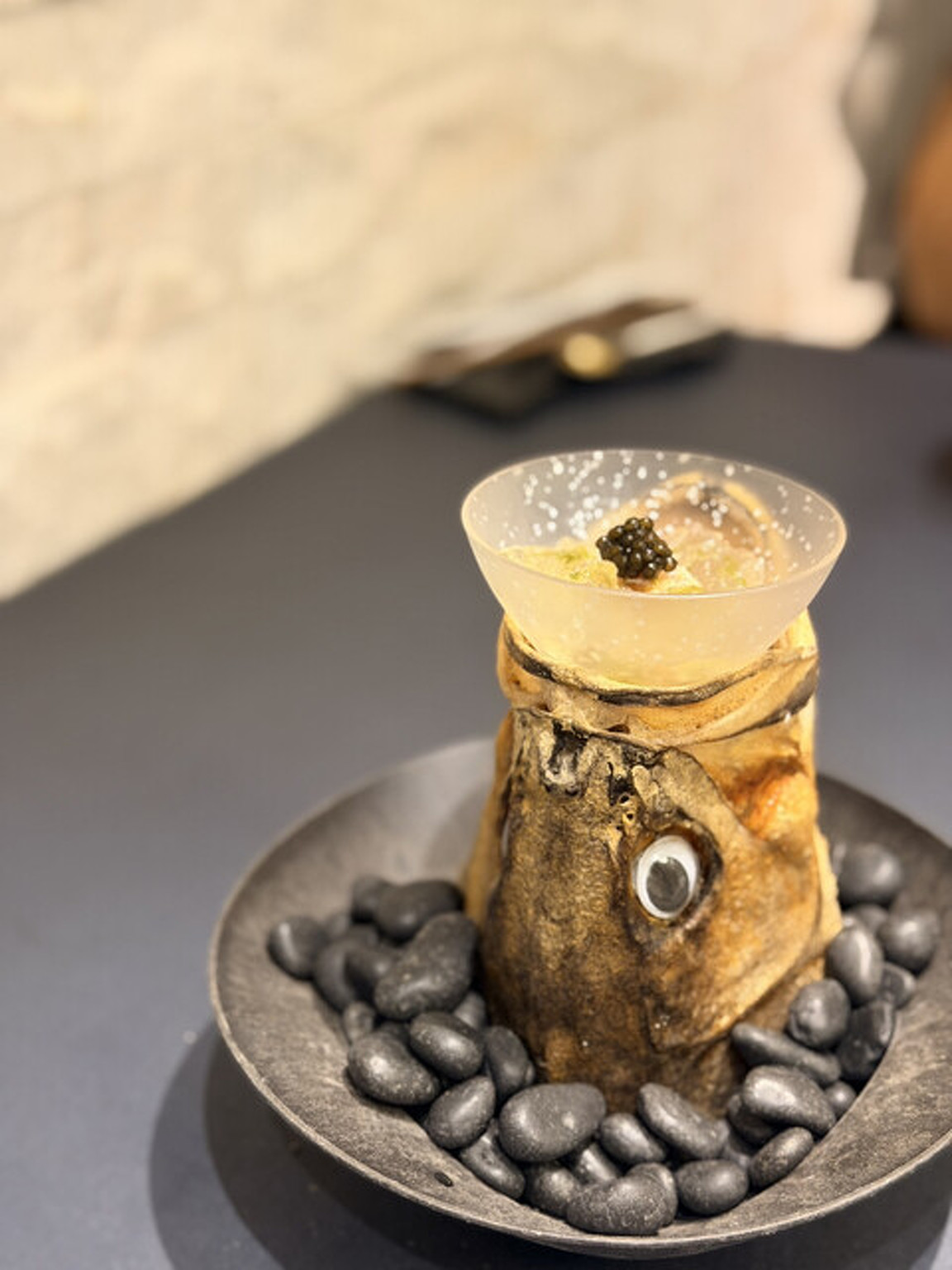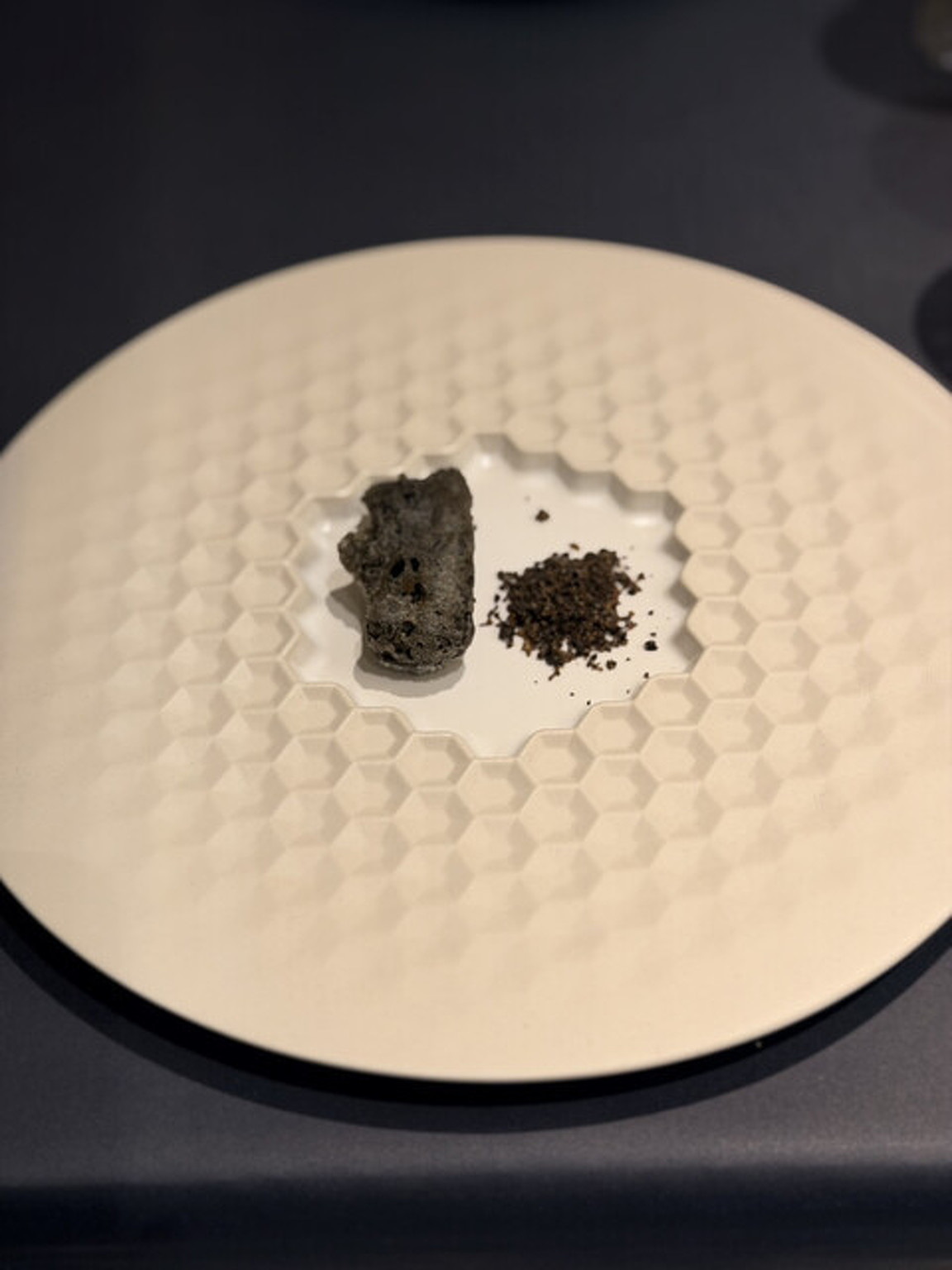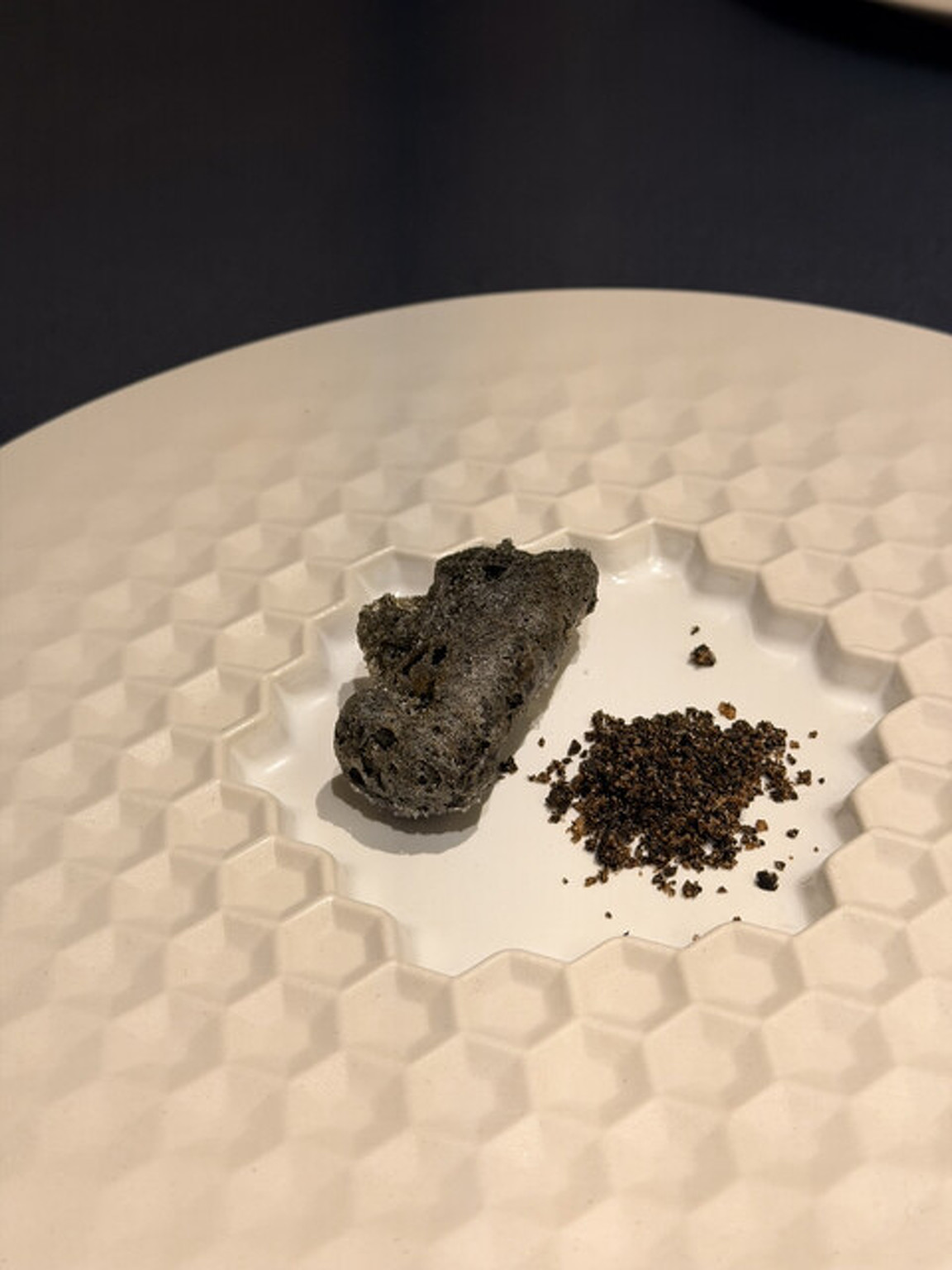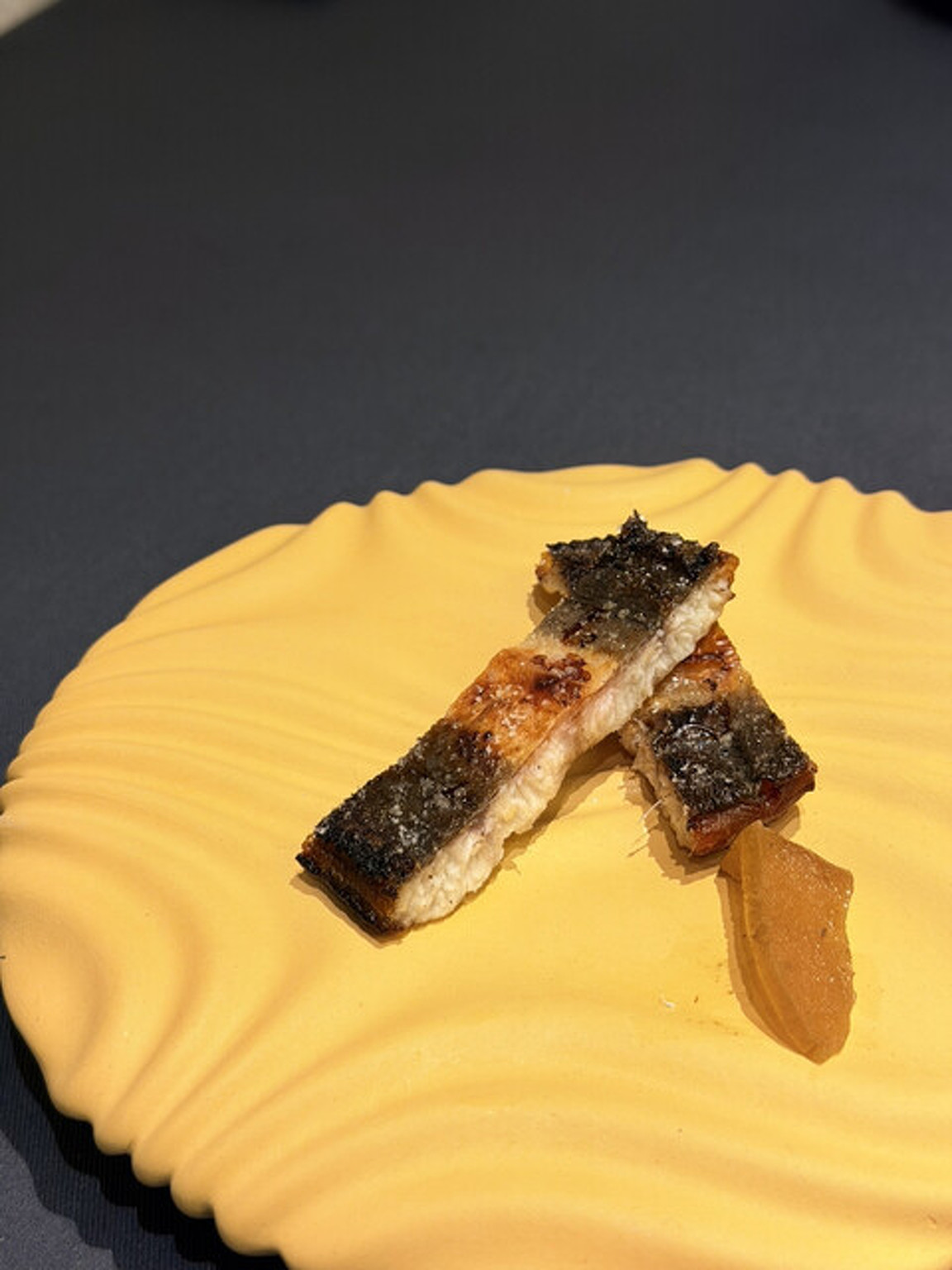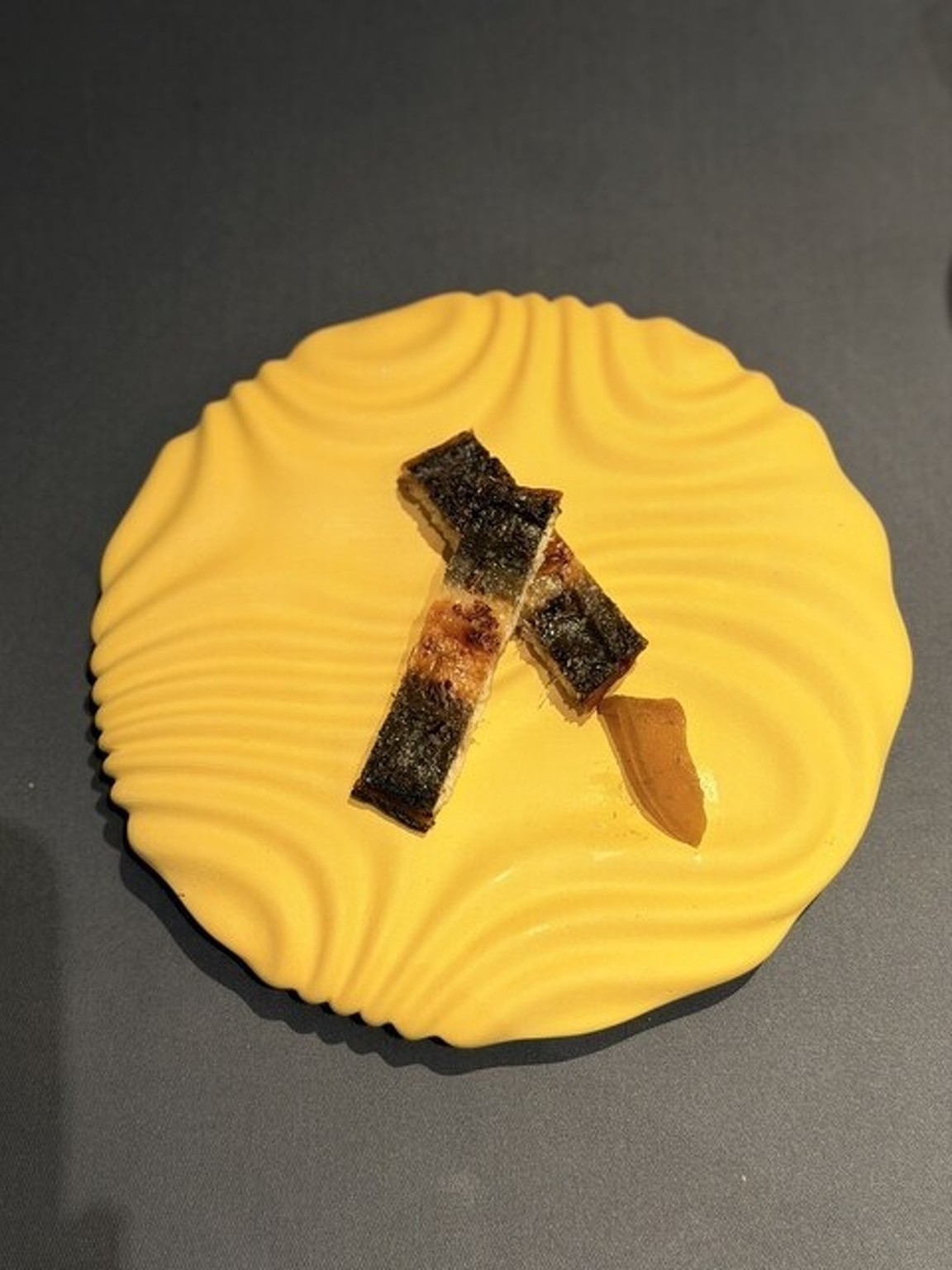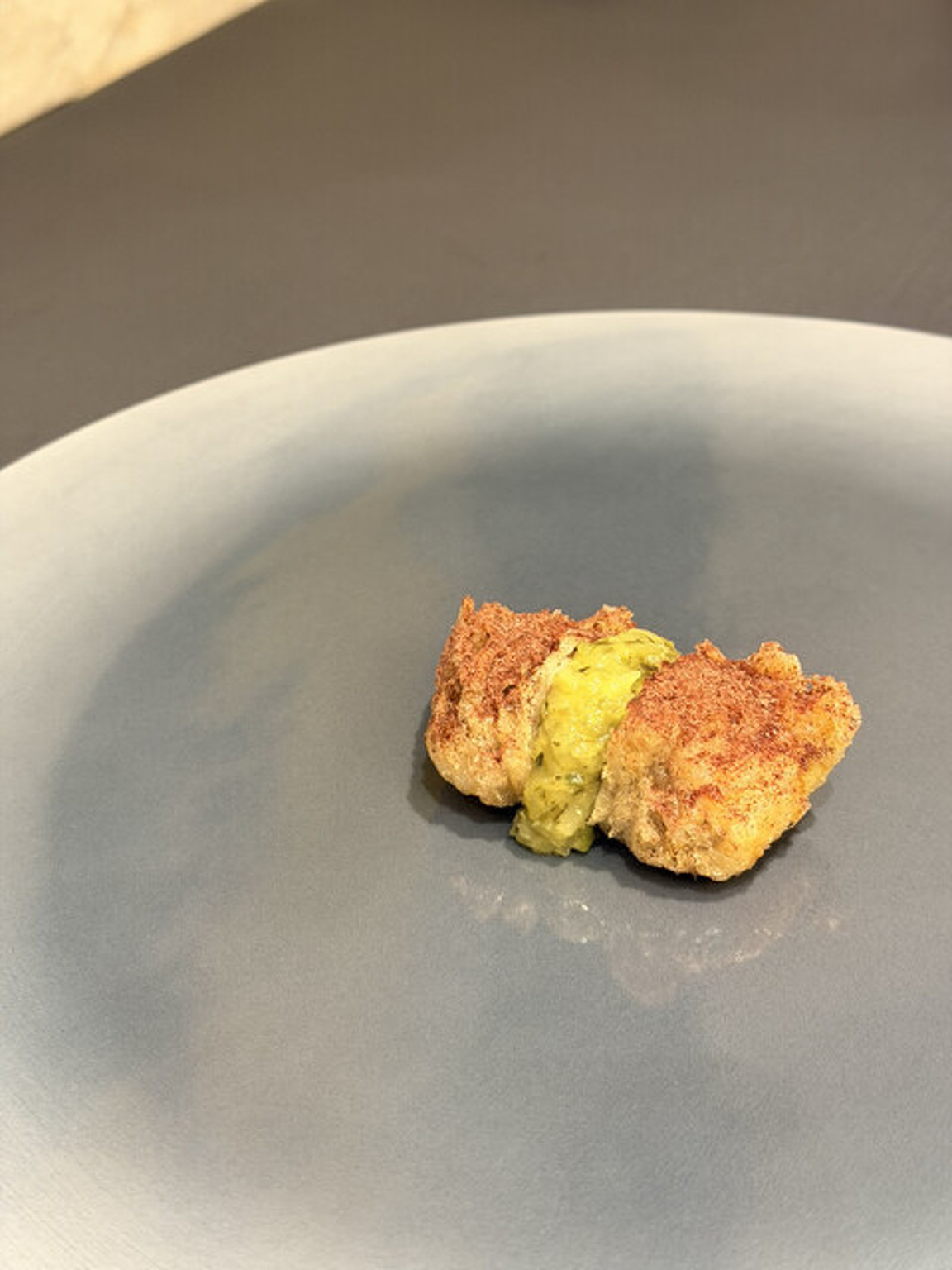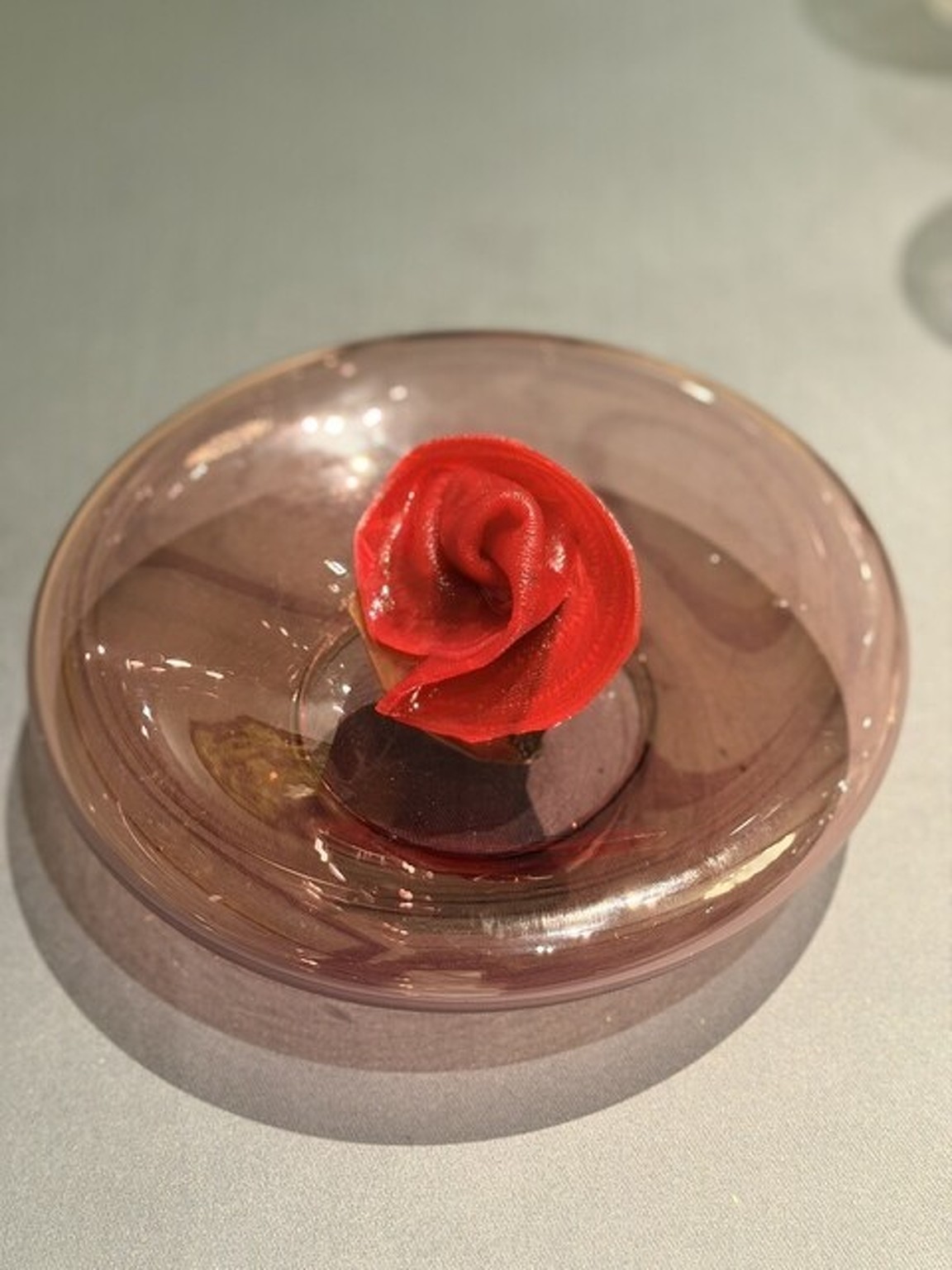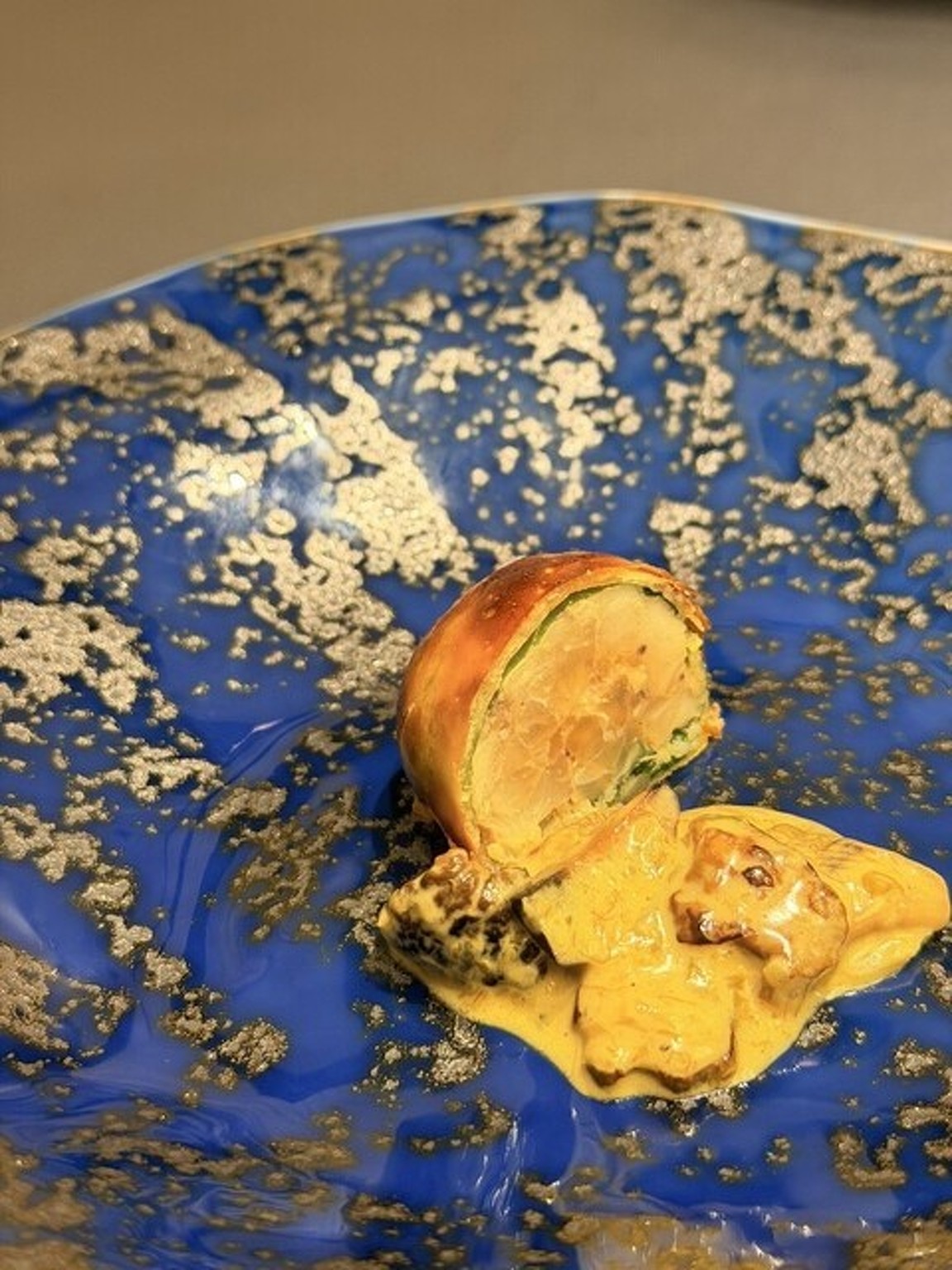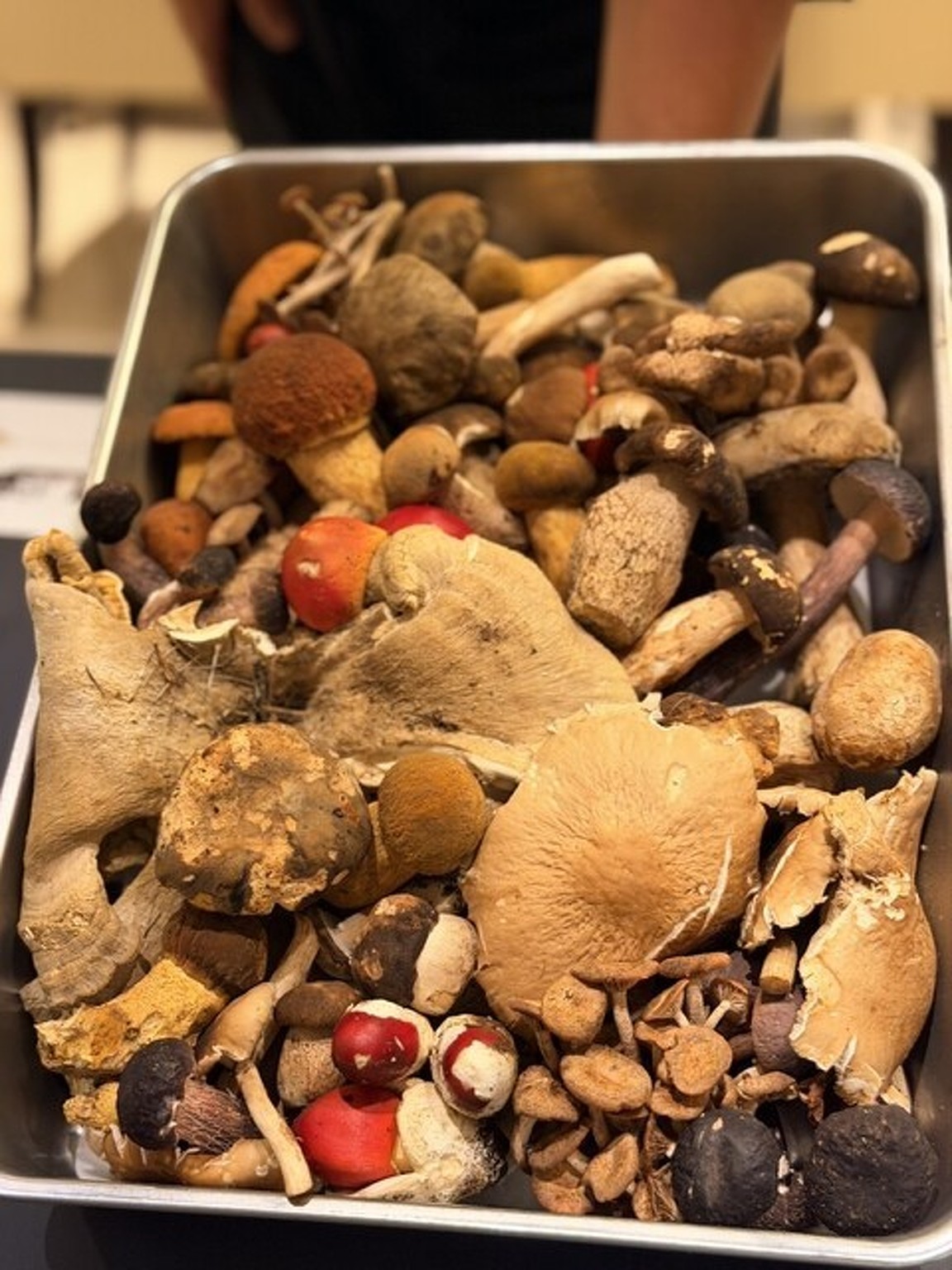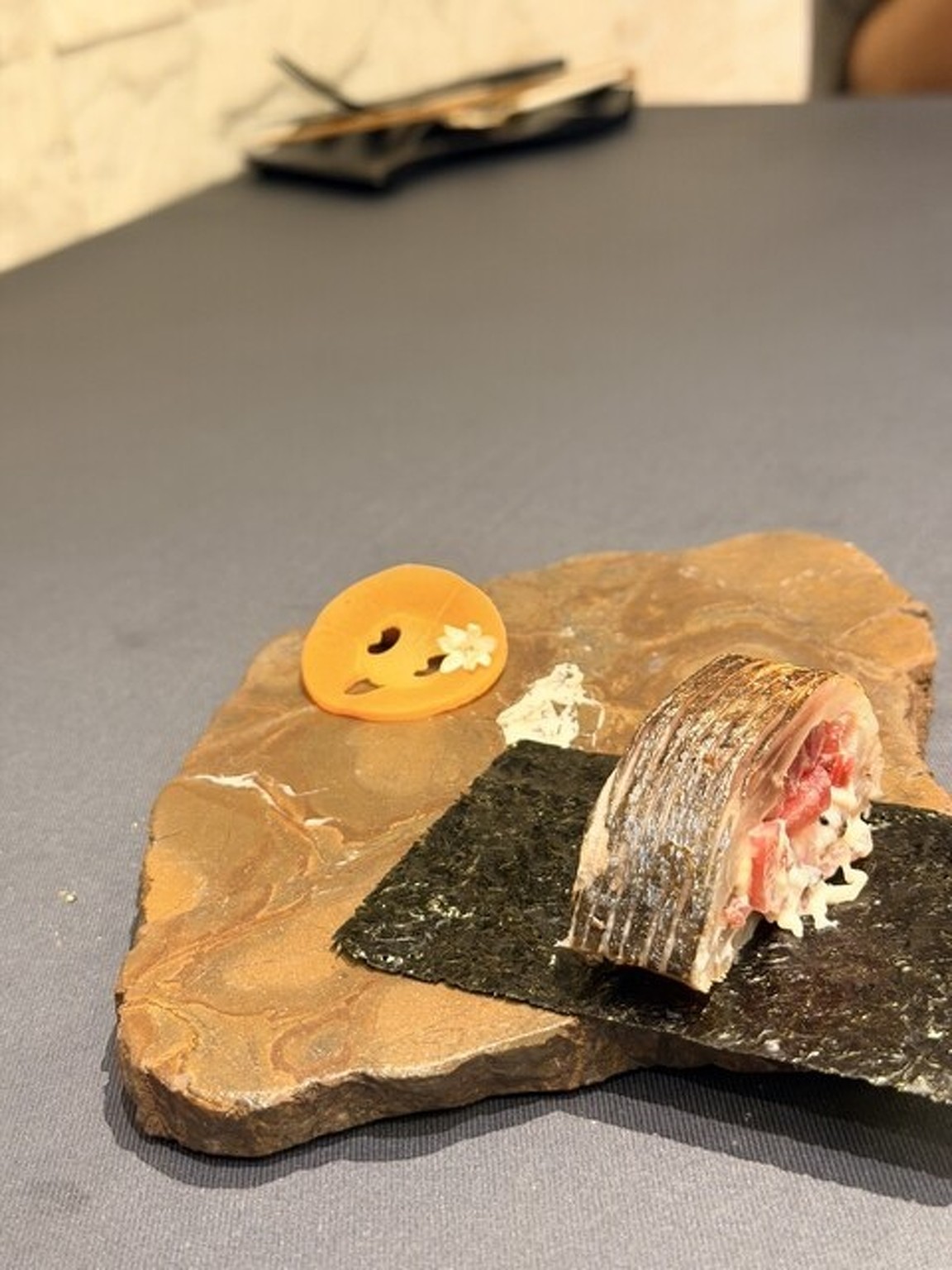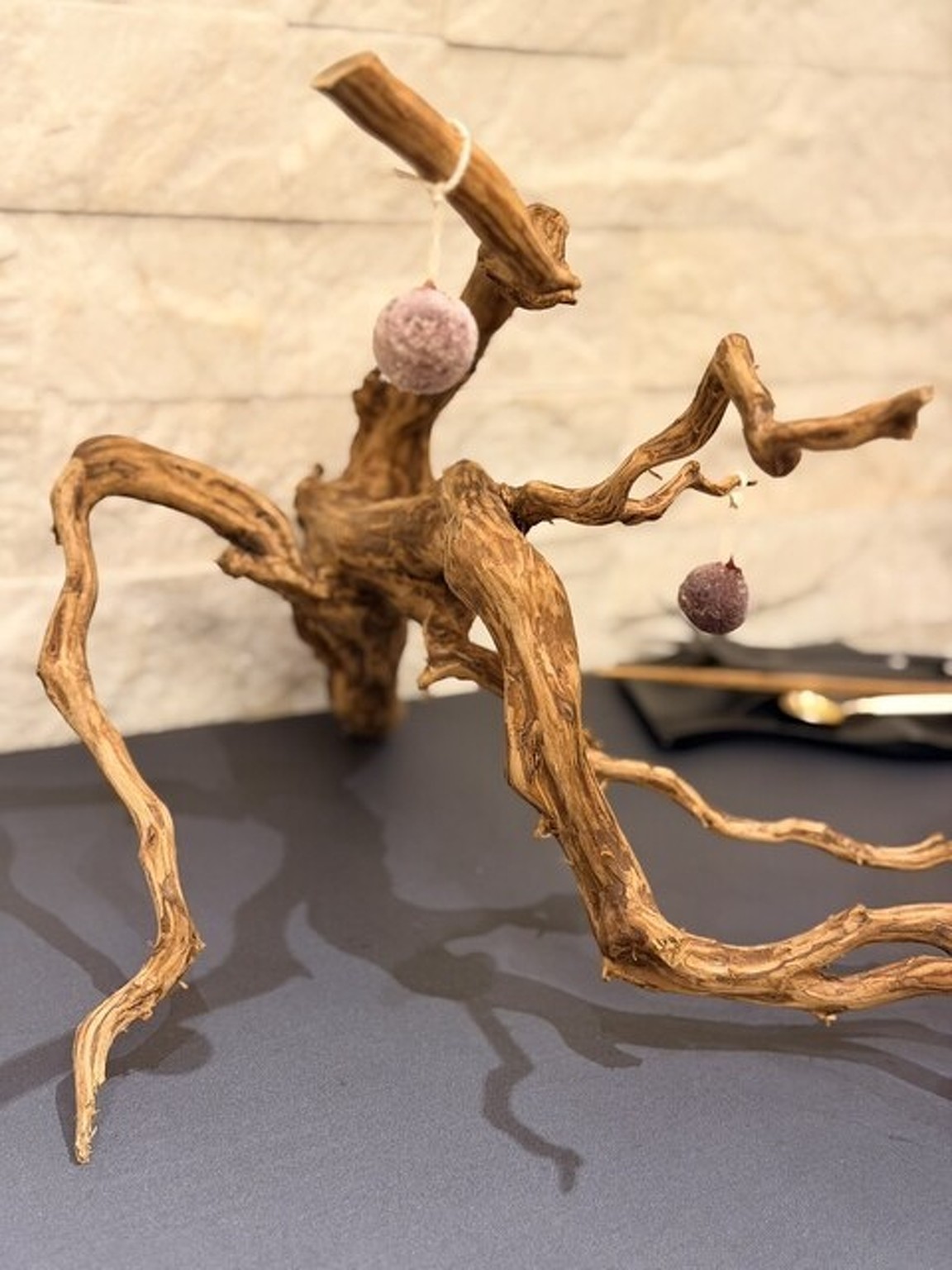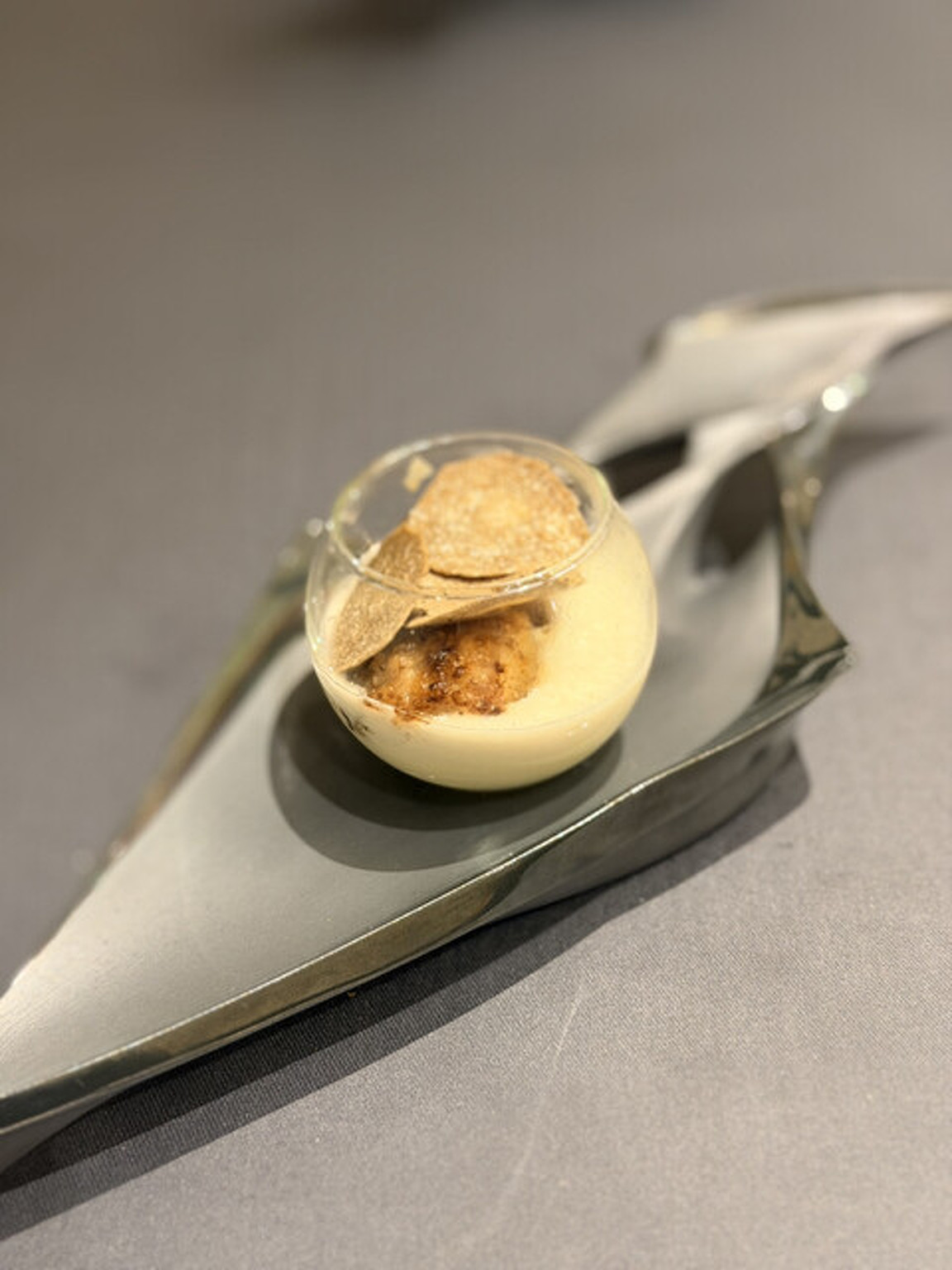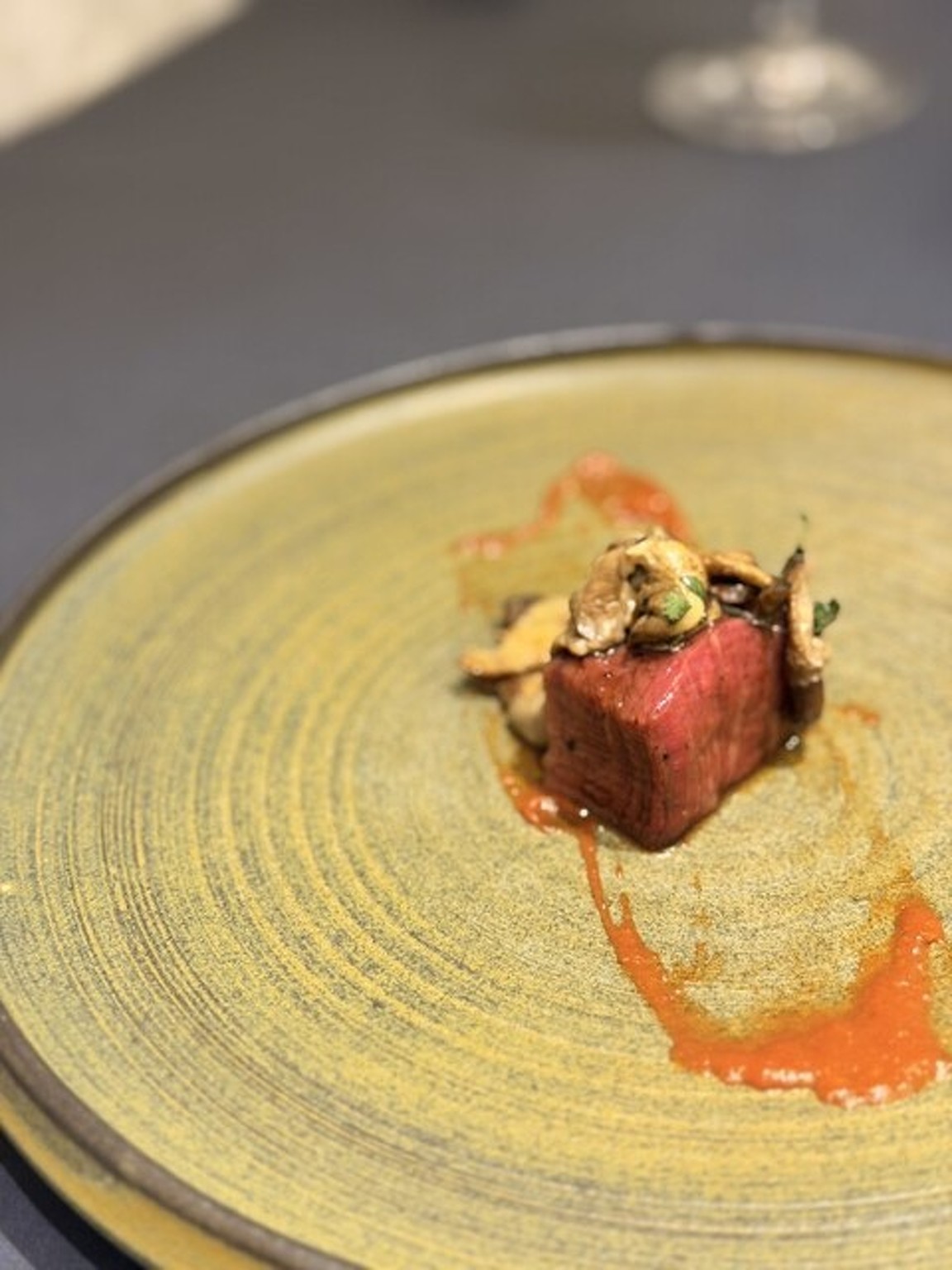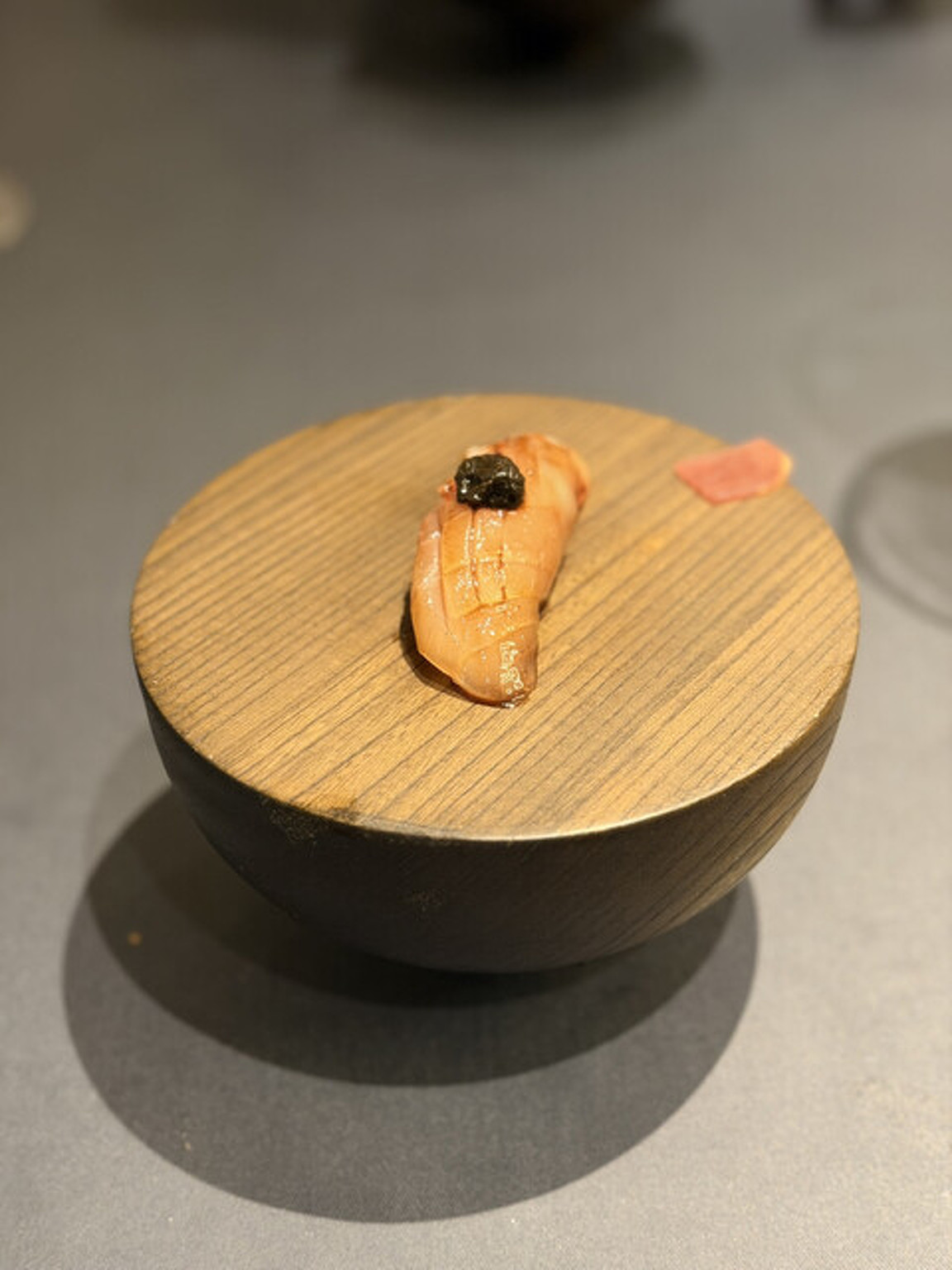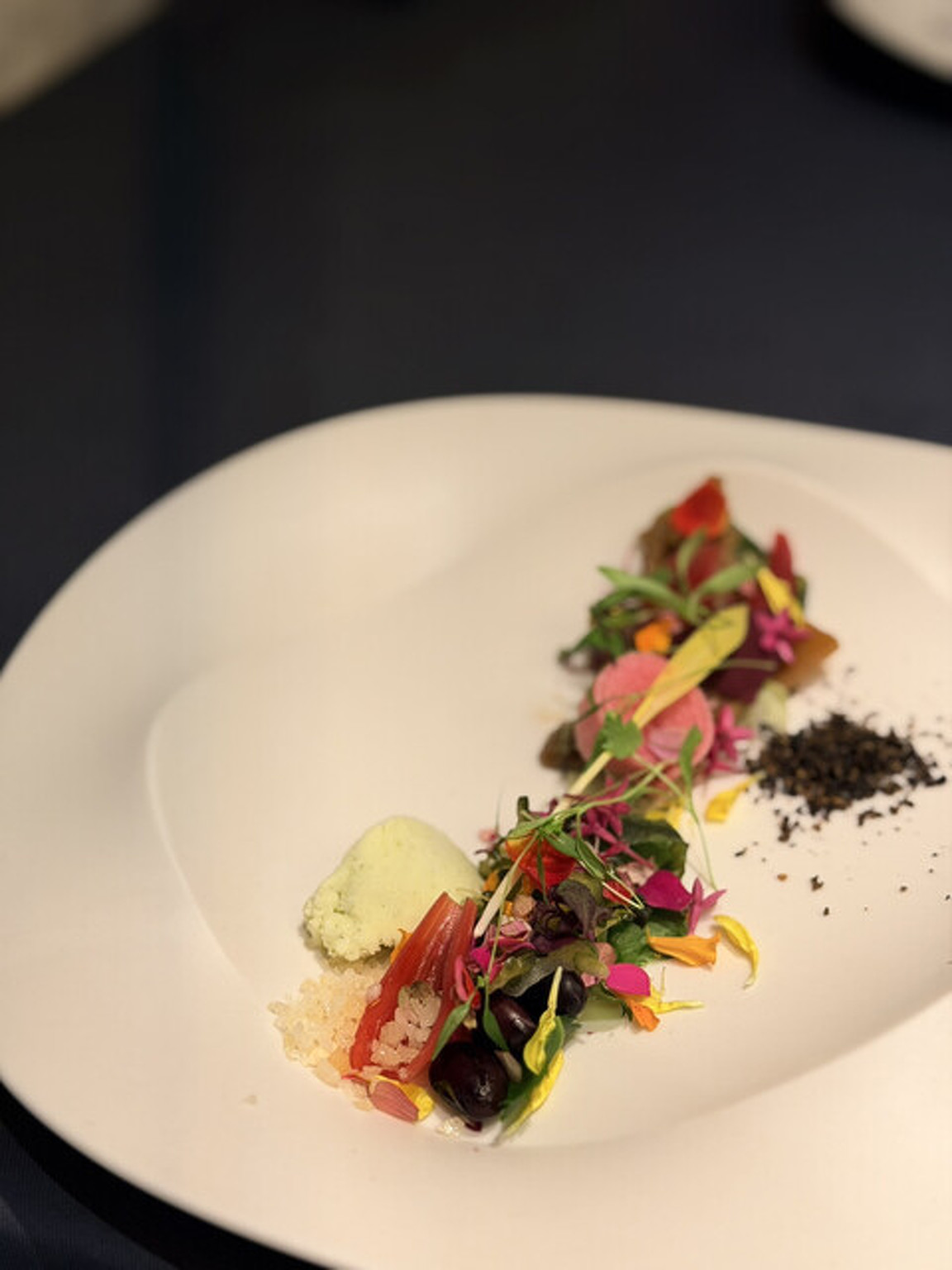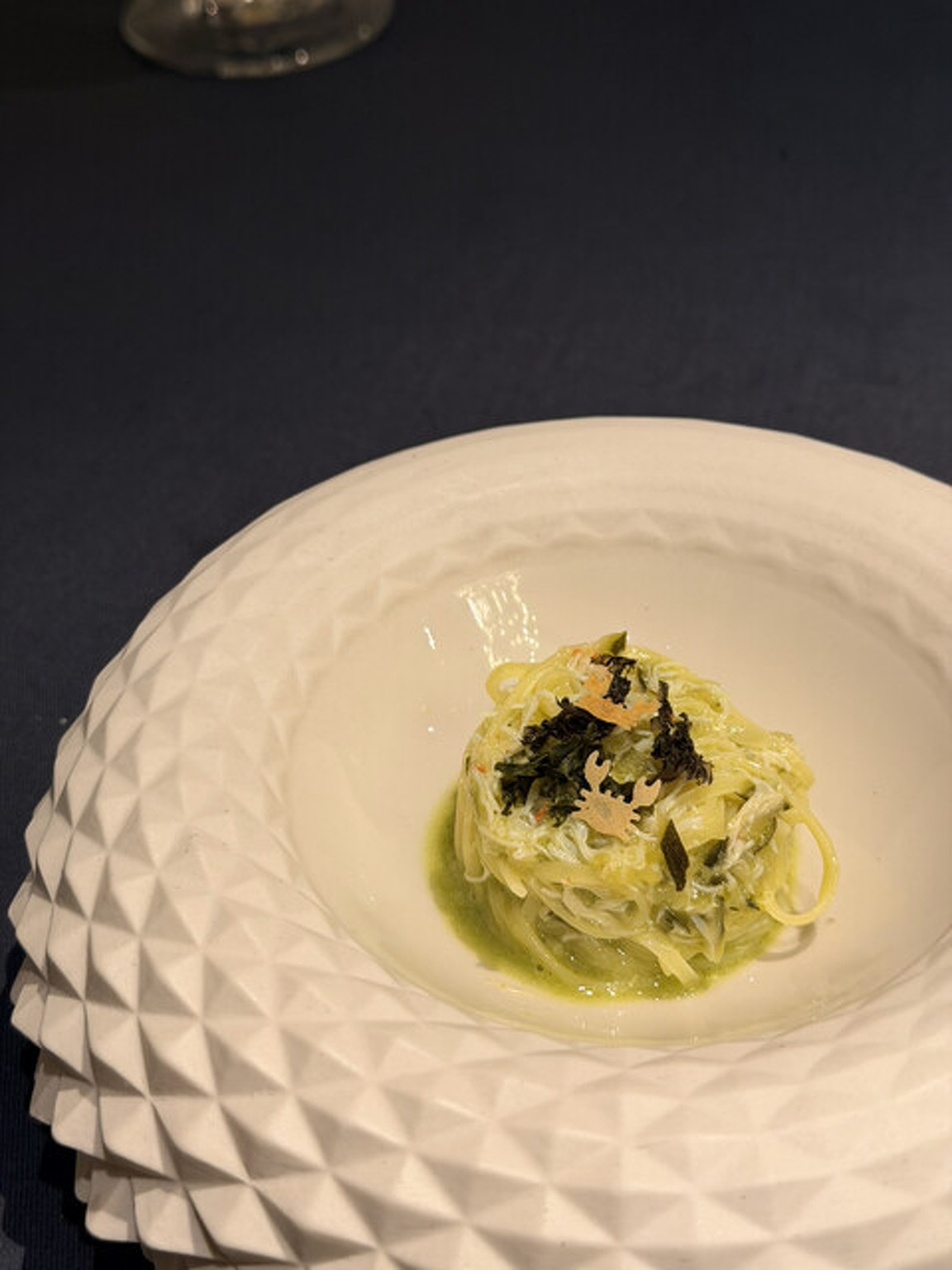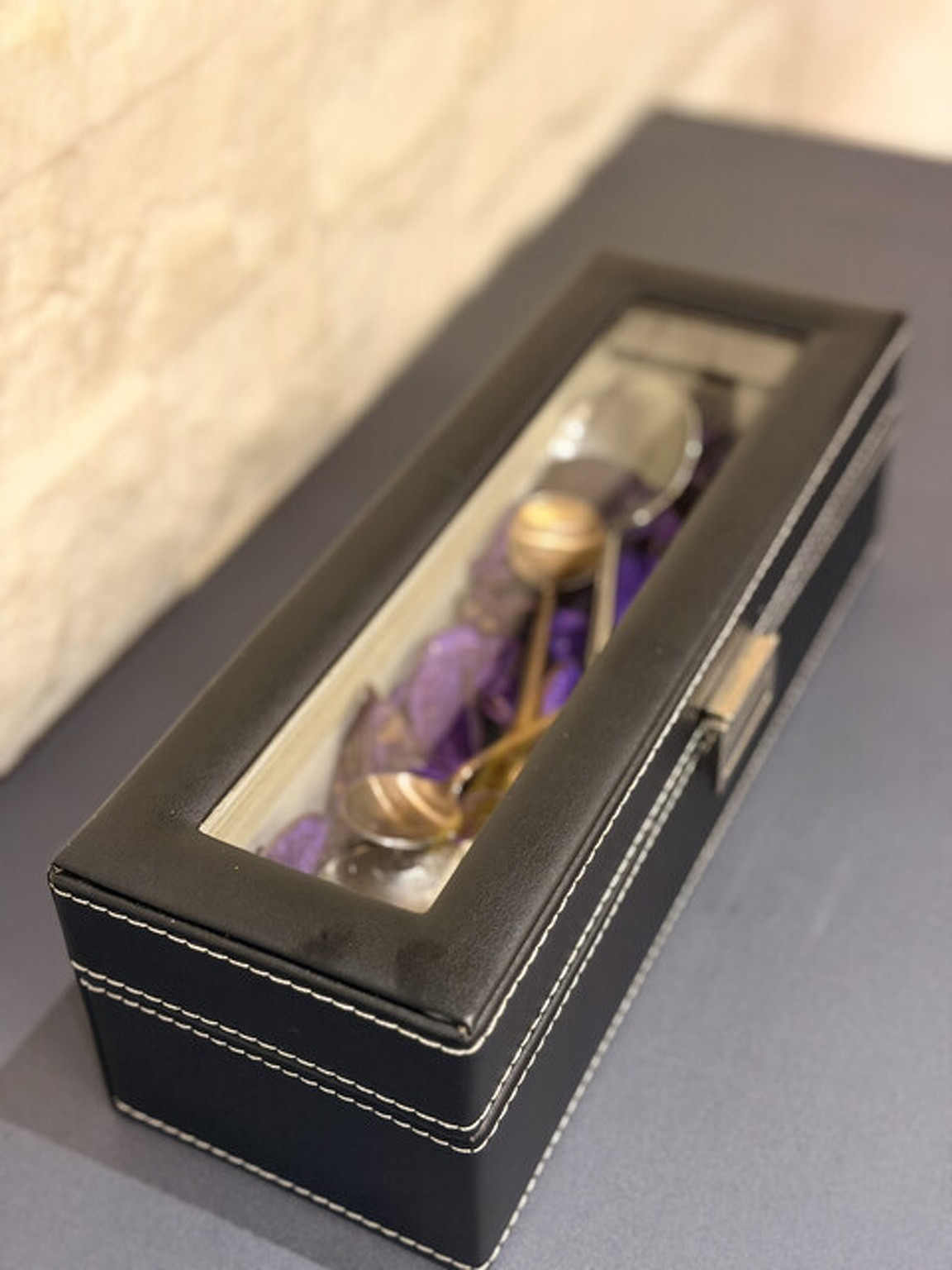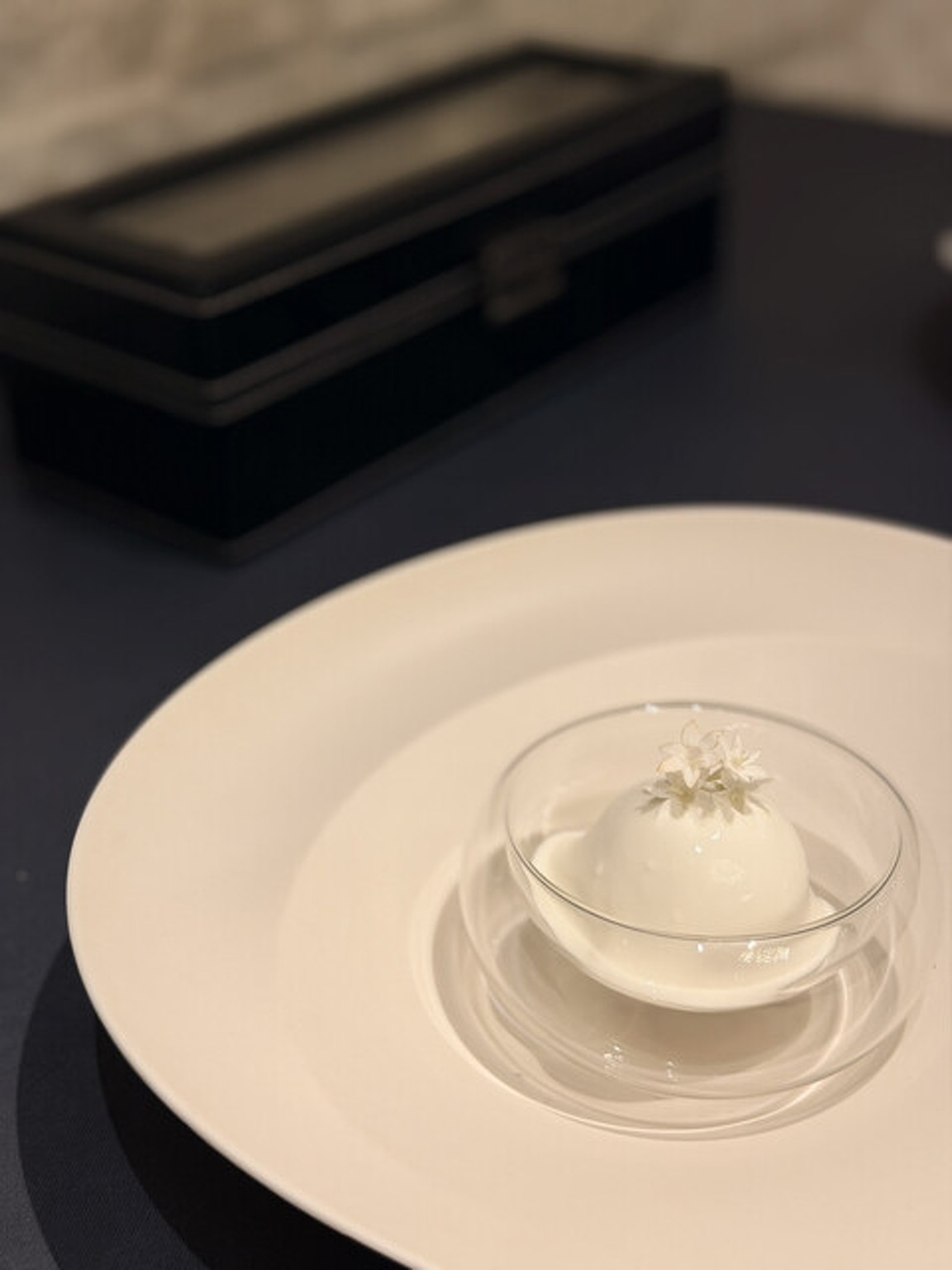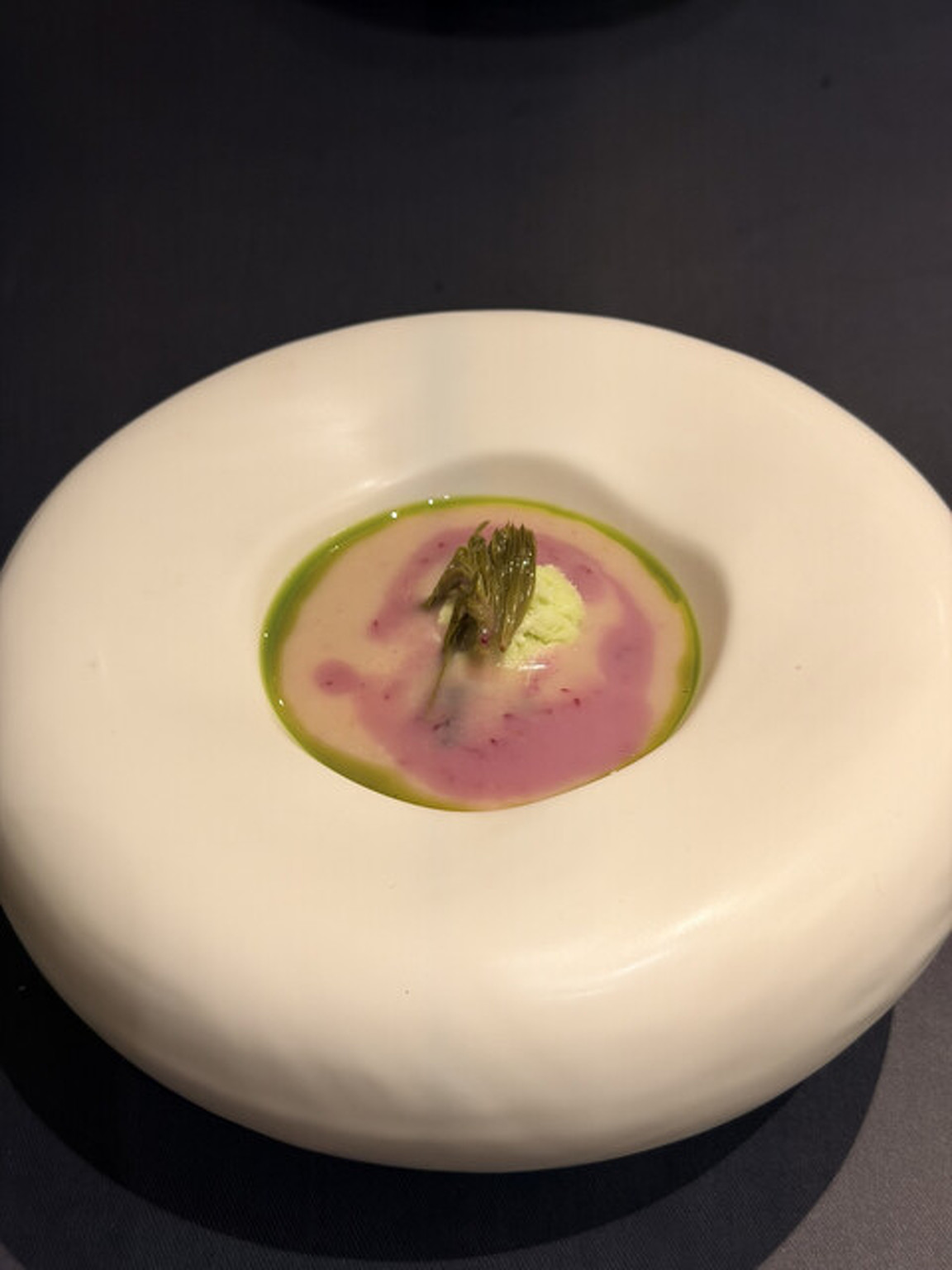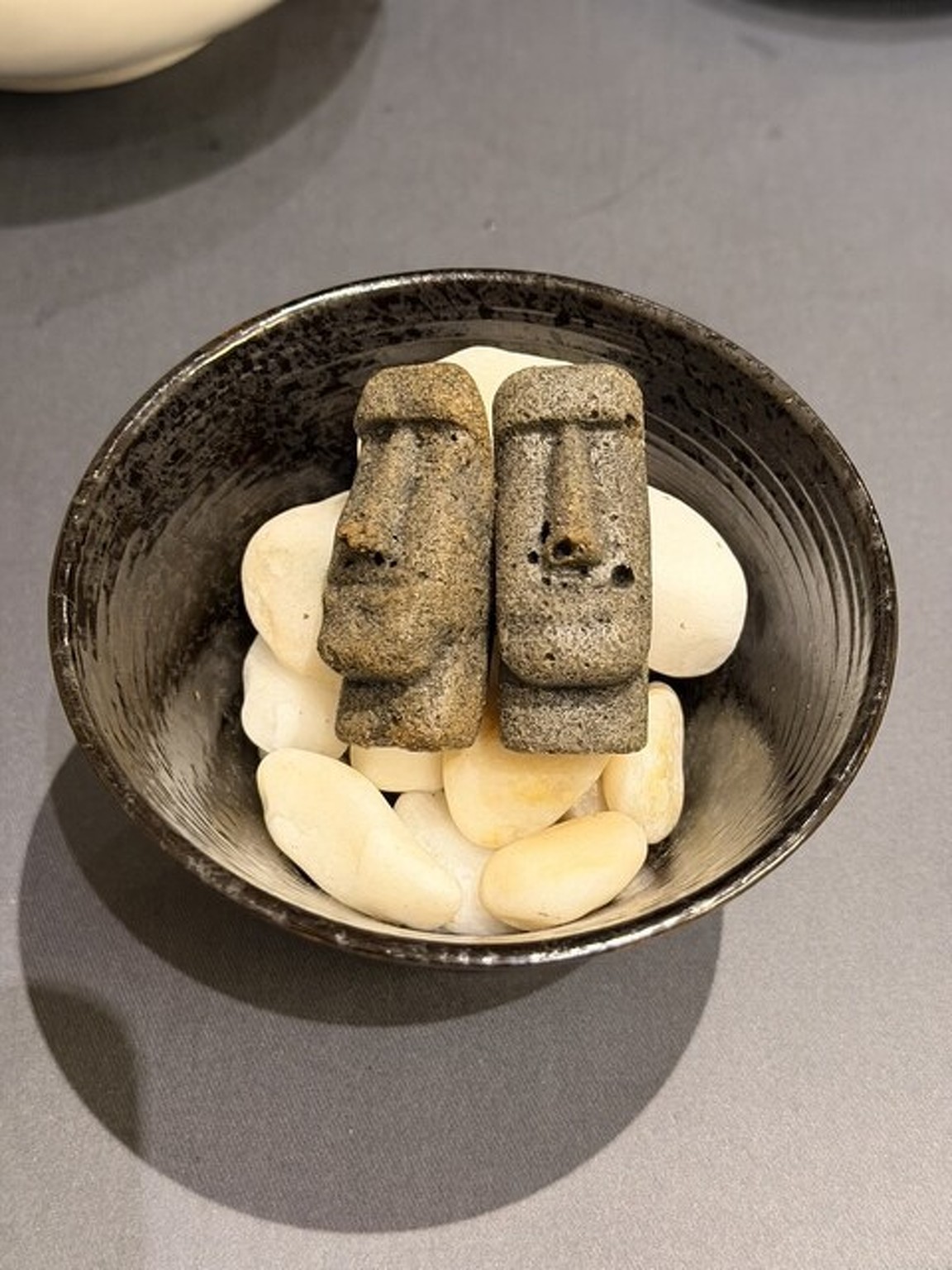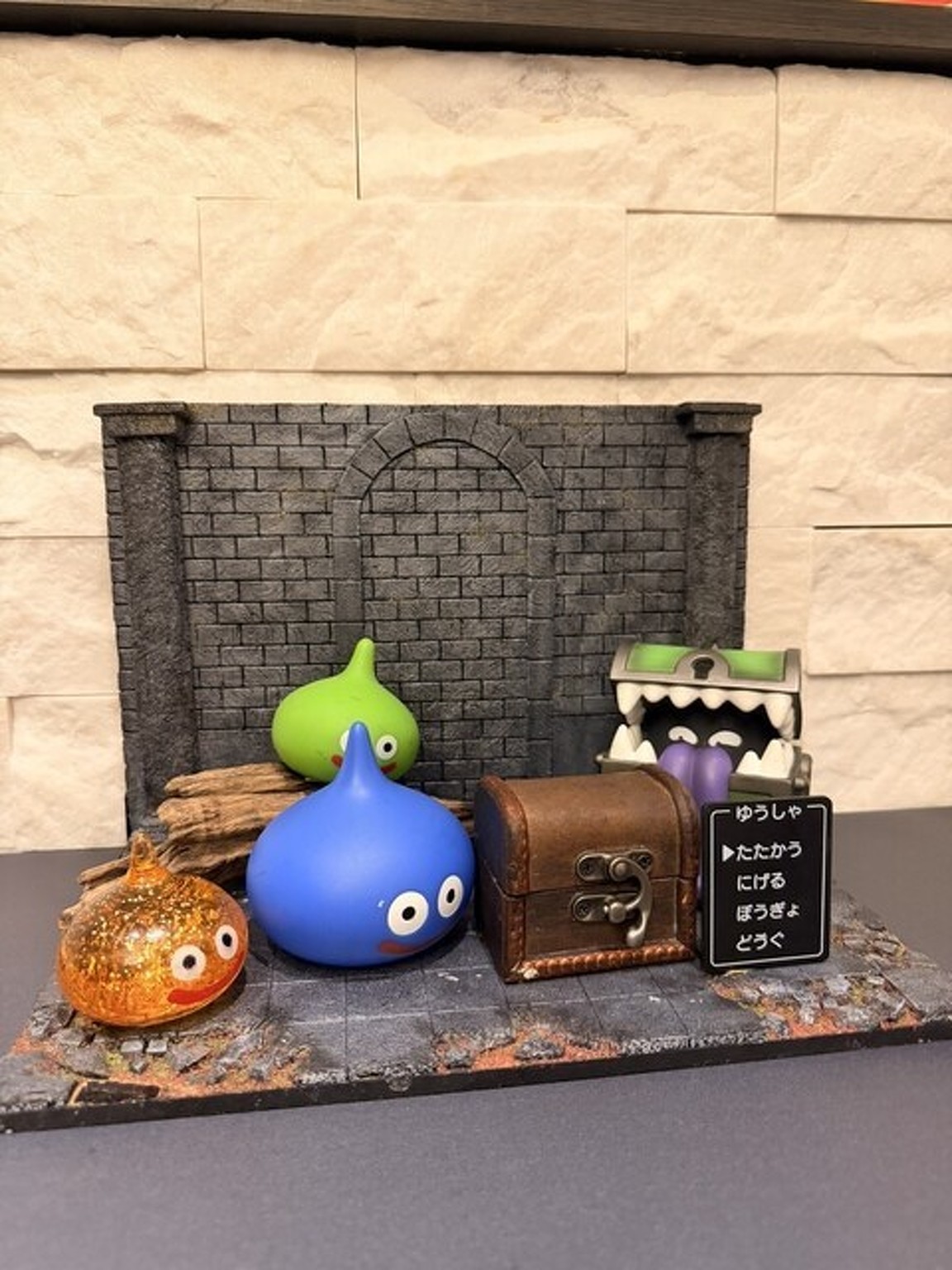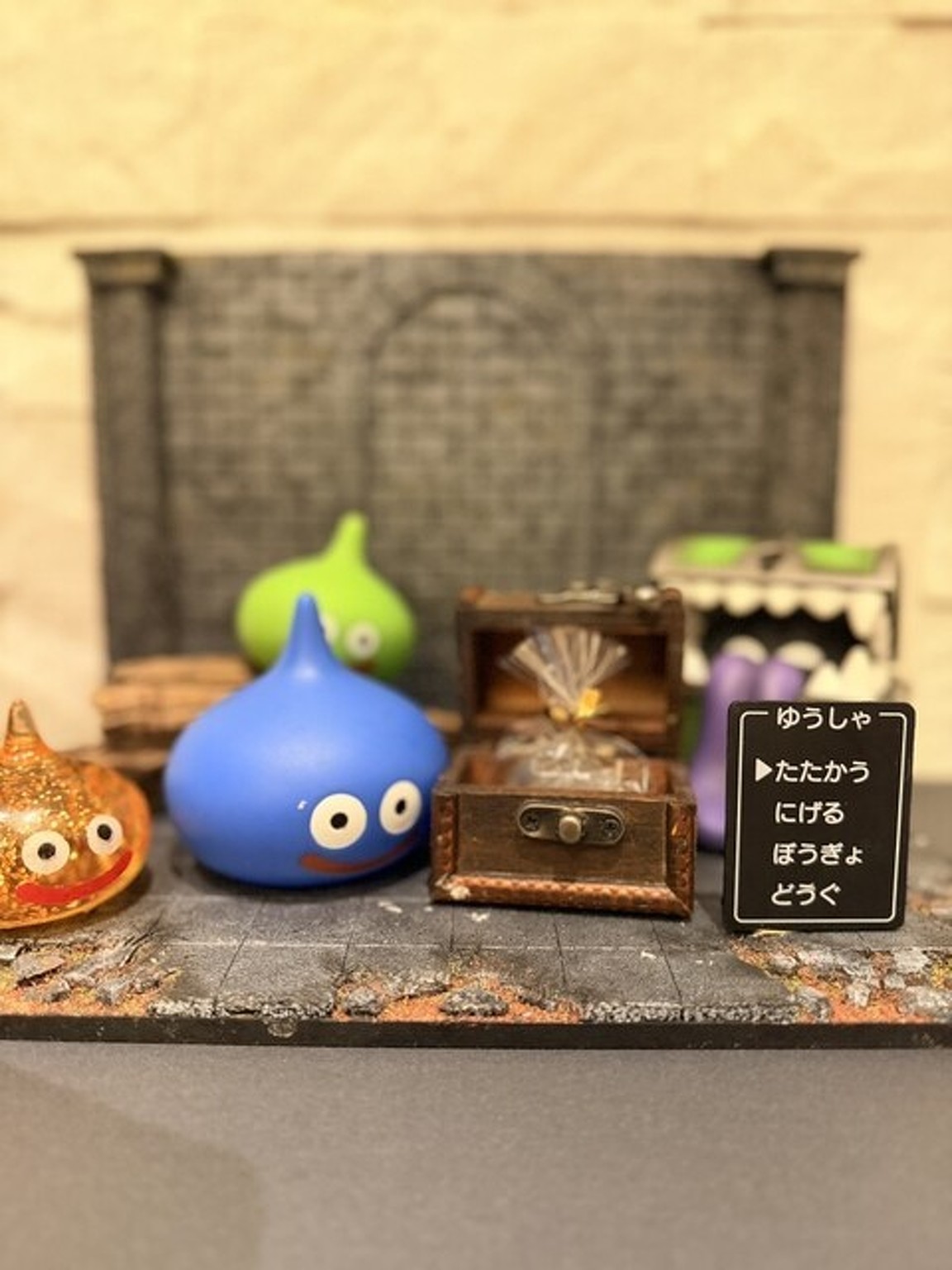
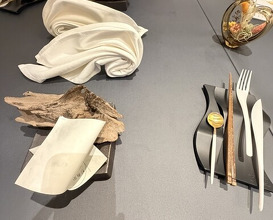
Sugi Course ¥25,300*Tax Included, Service Charge 10% ExtraWhat I experienced was something a bit different from a typical Italian course.Ingredients gathered from the sea, rivers, mountains, and fields of Chiba.Techniques such as fermentation, aging, drying, and pressure cooking.Moreover, the dishes incorporate the chef Sugioka's experiences and memories, along with the presentation and serving methods.Throughout the meal, Chef Sugioka personally comes to the dining area to explain the background of the ingredients and the stories behind each dish in great detail.It felt less like "eating" and more like taking a three-hour journey into Chef Sugioka's mind, one plate at a time.- **Stationary Tomato Candy** The first dish was a vibrant red tomato candy presented on a festive wreath.The moment I saw it, I was instantly transported back to my childhood. The thin candy shell provided a crisp texture, followed by the sweet and sour flavor of the tomato, with a hint of rose geranium aroma wafting through. Instead of surprising us with luxury ingredients, it created a sense of excitement about what was to come with the very first bite.- **Amuse Bouche with Spanish Mackerel** Next came a striking presentation featuring a fish head and a fishing lure.Chef Sugioka, who enjoys fishing himself, has a very close relationship with the ingredient. He thoughtfully considered how to preserve the Spanish mackerel he caught last year, transforming it into something akin to prosciutto and reinterpreting local Chiba cuisine. The concept of "how to cook fish" evolved into "how to express fish in different ways," which was fascinating.- **Blessings of the Earth** A dish combining honey from Japanese honeybees and rich milk.The honey, collected by the native Japanese honeybee, is extremely rare, making up less than 0.1% of the honey available in the market. While the composition appears remarkably simple, it allows the honey's fragrance and the sweetness of the milk to shine through directly. Including the vessel that evokes images of beehives and flowers, it was a dish that allowed us to savor the essence of the earth.- **Charm of Chiba** In the center of a plate resembling a massive geological layer, a small lobster tartlet was presented.The presence of the dish was striking. The original vessel depicted Chiba's geological layers using peanut shells, charcoal from wood-burning, and fossils of whales and small animals. On top of this, a bite featuring Boso's lobster was served. The lobster's rich sweetness combined with the depth and surprising sweetness of the lobster miso, evolving in flavor as I chewed. It was impressive how the theme of "eating Chiba" was expressed not just through the dish but also through the vessel.- **Foie Gras** The foie gras dish was not just about richness.By layering the richness of foie gras with herbs, plant aromas, and jelly, it avoided becoming overly heavy and led to a complex aftertaste. Instead of intensifying the richness of the ingredients, Sugioka expanded the dish by adding aromas, creating a unique experience. This was the easiest-to-eat foie gras I have ever encountered.- **Beyond Carrots** Carrots were cooked slowly, dehydrated, and their sweetness concentrated to the extreme. As a result, the carrot aroma was lost, replaced by a roasted sweet potato-like fragrance. By adding black powder, the appearance became unrecognizable as a carrot. When tasted, the sweetness of the carrot remained, yet it felt somewhat like roasted sweet potato or a dessert. If I hadn’t been told, I might have guessed it was roasted sweet potato.Coated and resembling a fritter, it was also entertaining, as it was inspired by Disneyland churros. Underneath, there was apple puree, black olives, and cinnamon, completing the apple-cinnamon flavored churro.This dish aimed not just to "cook carrots deliciously" but to truly explore the "beyond" of carrots.- **Exciting School Lunch** This dish seemed to embody Chef Sugioka's childhood memories.It had a nostalgic aroma reminiscent of fried bread from school lunches, yet was crafted entirely in a modern gastronomic style. What seemed like a kinako (roasted soybean flour) component was originally made from peanuts sourced from Chiba, but due to excessive oiliness, they used none other than "cicada larvae." This provided a peanut-like aroma and was surprisingly delicious.Eating such dishes makes it clear that at PRESENTE Sugi, high-end ingredients are not the only stars of the show.Even memories of what tasted good in childhood have become part of the dish.- **Fermentation** A dish that prominently features fermentation, a theme that symbolizes Sugi.The idea of extracting the umami from seafood and then returning it to the ingredient using techniques like gastroback is very intriguing.By combining this with acidity from fermented vegetables, a sharpness emerged within the rich umami.The umami that spread gently from within was impressive, something that could never be achieved by simply frying.- **Sea Bass Ham × Caviar** The visual of using the fish head as a vessel was striking.The sea bass was aged like ham, combined with caviar, the sweetness and acidity of vegetables, and aromatic oil.Instead of relying solely on the umami of the fish and the saltiness of the caviar, the dish was completed with acidity and aroma in each bite.- **Pike Conger** Even the mild pike conger received Sugi's unique touch.The idea of returning the umami extracted from bones and mushrooms back into the flesh before frying elevated the density of flavor while preserving the fish's elegance.As the crispy coating gave way to the tender flesh, the nutty aroma provided a delightful accent.- **GV Bonito** This dish was particularly visually stunning.The umami extracted from bonito bones was returned to the flesh using gastroback, combined with raspberry acidity.The beautiful presentation featured red turnips shaped like roses.It was not just an "Instagrammable dish"; the colors, aromas, acidity, and umami formed a cohesive story.- **Wild Eel** Suddenly, an exceptionally well-executed eel dish appeared.After thoroughly drying the skin, it was grilled to achieve an astonishingly crispy surface. Meanwhile, the flesh remained moist, creating a wonderful contrast in texture.This dish drew out the deliciousness of eel from an entirely different direction than the usual kabayaki.Despite being a course dish, it provided the satisfaction of a specialty eel restaurant; rather, it transcended that.- **Sugi Sushi Type-R** When you hear "sushi," what is presented is entirely different from ordinary sushi.Fish, risotto, and aromatic seaweed are combined in a style that you eat with your hands.Rather than simply replicating traditional Japanese sushi, it felt like a reimagining of the sushi structure from an Italian culinary perspective.- **Sugi Fruit** You harvest and eat purple fruits hanging from branches.This was more akin to an attraction than a dish.The essence of fully ripe fruits was encapsulated in small spheres, bursting with concentrated sweetness and acidity when eaten.It was fascinating how it recreated the sensation of picking and eating wild fruits from childhood.- **WILD B.B.Q (Filet Mignon)** The meat dish was meticulously prepared.It was slowly cooked at low temperatures to ensure even doneness, finishing with a strong flame for added crispness.The center was a beautiful rosy color, retaining the meat's moisture.Combined with wild mushrooms and homemade sauce, the dish was surprisingly delicate, contrasting with its wild name.- **Sugi Sushi Type-S** This was a different approach to "Sugi Sushi" than Type-R.Fish, shiso leaves, fermented vegetables, and mushrooms were combined, leaving a crispy exterior and moist texture inside.Despite being called sushi, it felt like both Italian cuisine and local fare when eaten.The very act of trying to categorize it seemed meaningless.- **Sugi Field on a Plate** A small field literally appeared on the plate.Colorful vegetables, micro herbs, and edible flowers. As you eat, the bitterness, sweetness, acidity, and aromas change with each bite.With the addition of a cold dressing and a popping texture, it was far from just a salad.It was a dish that felt like you were eating a field with all five senses.- **Today's Pasta** Despite having eaten a considerable number of dishes, there was still room for pasta.The rich umami extracted from seafood clung to the thin pasta, while the aromas of fermented vegetables and herbs lightened the aftertaste.It had a pesto-like quality, but without an overwhelming amount of cheese, it felt light with basil oil. The umami was strong yet didn’t linger heavily.It was a perfect balance for the end of the course.- **Peach, Potato, and Nutmeg** Now we move on to dessert.The sweetness of the peach combined with the acidity from fermentation, the chewy texture from the potato, and the nutty aroma of nutmeg.Normally, these ingredients wouldn’t be served together, yet they somehow came together beautifully when eaten.Even as a dessert, the enjoyment of wondering "What is this?" continued.- **Air Ice** A very light ice that disappears the moment it enters your mouth.With aromas of wild mushrooms, it ventured far from the fixed notion of "ice = sweet."The sensation of nuttiness emerging from the light melt was intriguing.- **Looks Inedible but Is Edible** Finally, a dish resembling a Moai statue appeared on the plate.At first glance, it certainly didn’t look like food.However, it was actually a financier made from nuts and sesame.This dish perfectly embodied the name "Looks Inedible but Is Edible."- **And Finally, Dragon Quest** Slime, treasure chests, and,"Hero ▶ Fight Escape Defend Item"At this point, it felt more like entertainment than a meal.Chef Sugioka's playful spirit was thoroughly evident in his efforts to entertain guests until the very end.What left a lasting impression at PRESENTE Sugi was that the focus was not solely on extravagant presentations or unusual ingredients.The fish caught by Chef Sugioka himself, mushrooms foraged from the mountains, vegetables grown by local producers, fermented seasonings, and memories from childhood.Each of these experiences was transformed into a dish, scientifically exploring "how to make it even more delicious."That’s why the time spent listening to the chef explain the dishes was so engaging.In fact, I believe the entire experience—dishes, explanations, vessels, and presentations—comes together as a single work of art.At first glance, the price of ¥25,300 may seem high for a fine dining restaurant.However, considering the number of dishes, ingredient sourcing, preparation, cooking techniques, custom vessels, presentation, and Chef Sugioka's personal explanations for each dish, it’s hard to measure it simply by how much one pays for a meal.This is a restaurant where you travel to Sakura and spend hours experiencing a unique world.When the meal concluded, what came to mind was not just "It was a delicious restaurant" but rather, "I can’t believe a restaurant like this exists."As the seasons change, I find myself wanting to return to see what Chef Sugioka discovers and how he transforms it into dishes.
We use cookies on this site to enhance your user experience.