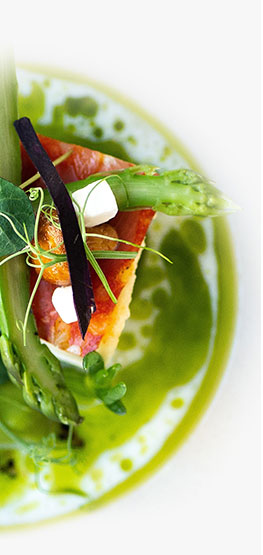
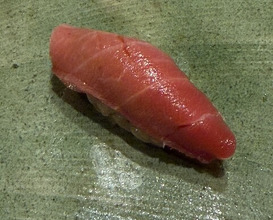
On the second day in Fukuoka, we had dinner here.Sakai has been a popular restaurant with reservations fully booked for a year, so I made a reservation at their second location, Gaho Jin, two months in advance.Located on the second floor of a stylish, compact building in Nakasu, Sakai's second and third branches are here. You take off your shoes to enter. There are two counters with seating for six each, accommodating a total of 36 guests at once.You’ll be seated at the counter where Yoshida Tsubasa prepares the sushi.Unfortunately, two women with strong perfume sat right next to my husband. They seemed quite accustomed to sushi dining, but perhaps they were unaware of proper etiquette. My husband became a bit grumpy because of it. ^^;◆ Here’s the sushi selection:◇ Junsai (Akita), Scallop (Miyagi), Iridashi◇ Sea Bream (Tejima), belly and back◇ Bonito (Nagasaki)◇ Red Sea Urchin (Imabari)◇ Herring (Abashiri), Hairy Crab (Funka-wan), Caviar, Tosa Vinegar Jelly◇ Octopus (Kujukushima)◇ Purple Sea Urchin (Rishiri), Botan Shrimp (Mashike)◇ Sea Eel (Yatsushiro), grilled white, cucumber with sesame◇ Anko Liver Paste, Nara Pickles◆ Sandfish (Tokyo Bay), kelp-marinated◆ Spear Squid (Karatsu)◆ Kohada (Gizzard Shad)◆ Lean Tuna (Oma)◆ Chutoro (Medium Fatty Tuna)◆ Otoro (Fatty Tuna, between belly and marbled)◆ Sweet Shrimp (Amakusa), freshly boiled◆ Nodoguro (Blackthroat Sea Perch, Tsushima, Akane)◆ Horse Manure Sea Urchin (Rishiri)◆ Anago (Conger Eel, Tsushima)◆ Dried Gourd Roll◆ Tamago (Egg)It was an impressive course. The chef (everyone calls him Sakai) seems to excel not only in his craft but also in training his apprentices, as all the staff were very well-mannered. When I asked about him, I found out he is younger than I am.On our way out, I saw the chef seeing guests off on the second floor. He had a gentle demeanor with romantic gray hair, which was quite different from the typical sushi chef image I had expected.After enjoying sushi in Takamatsu and Fukuoka, I concluded that popular restaurants ranked highly on Tabelog tend to source ingredients from all over the country (especially in summer, when fish from Kyushu is scarce and they rely on Hokkaido), resulting in Edo-style sushi.
We use cookies on this site to enhance your user experience.